How SEBI’s Review Of Atanu Chakraborty’s Exit Letter Is Part Of India’s Unfinished War Over Corporate Governance!
By the time SEBI opened the file on Atanu Chakraborty's resignation letter, the damage had already been done. The question now is whether anything beyond damage control is possible — or whether India's most powerful securities regulator is once again better at reviewing history than shaping it.

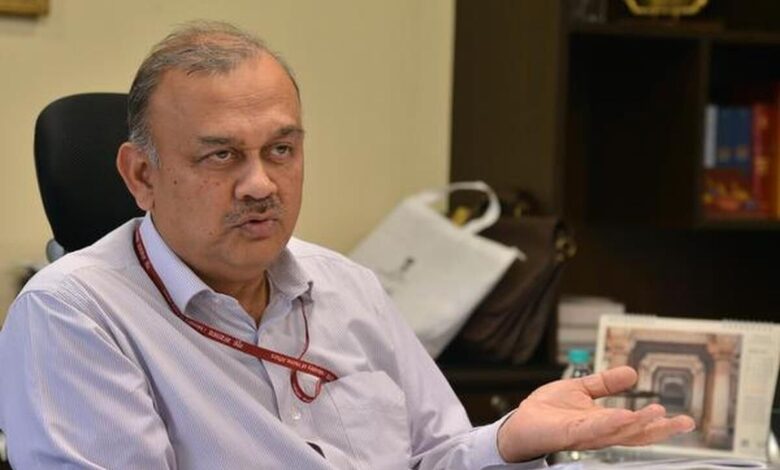
There is a particular genre of sentence that has become familiar to anyone who watches India’s corporate governance landscape closely. It is precise enough to feel meaningful, vague enough to be undeniable, and carefully constructed to communicate serious dissatisfaction while providing no actionable information whatsoever. Atanu Chakraborty, who resigned as part-time non-executive chairman of HDFC Bank on March 18, 2026, after five years in the role, produced a piece of the form. In his resignation letter, Chakraborty cited “certain happenings and practices within the bank” that he said were “not in congruence” with his personal values and ethics. He did not elaborate.
Six words — “not in congruence with my values” — were enough to send one of India’s largest, most systemically important, most closely scrutinised private sector banks into a week of institutional crisis. The letter triggered an 8.7 per cent slide in the stock the following day and wiped $16.3 billion in market value over three sessions. Retail and institutional investors, left to speculate about the nature and severity of what a former Economic Affairs Secretary and 1985-batch IAS officer found so troubling that he walked away from the chairmanship of a bank with a market capitalisation exceeding ₹12.35 lakh crore, sold first and asked questions later.
India’s markets regulator has now begun a preliminary review of the resignation letter of former HDFC Bank chairman Atanu Chakraborty for possible violations of rules governing directors of listed companies, two sources familiar with the matter said. A department of the Securities and Exchange Board of India that oversees corporate disclosures and governance is examining the former chairman and other directors for alleged failures to do their fiduciary duties. “We are also checking if there was any misreporting of any events which could impact minority investors,” a source said, adding that SEBI was reviewing the adequacy of disclosures by both the bank and Chakraborty.
Chakraborty’s own response to this news carries its own eloquence. He told Reuters by text that he had not made any insinuations in his letter. He added that no one from the regulator had contacted him and that he was unaware of any SEBI review.
The man whose departure letter shook the market was simultaneously insisting he had said nothing particularly alarming, while the market regulator was examining whether what he said, or more precisely, what he did not say, constituted a disclosure failure. The gap between those two positions is not a personal dispute. It is the fault line in Indian corporate governance that has never been definitively resolved, and the HDFC Bank episode has cracked it open again with unusual force.
The Regulatory Architecture and Its Inherent Contradiction
To understand why SEBI is reviewing a letter that its author insists contains no insinuations, you need to understand the regulatory architecture that governs director departures at listed Indian companies, and the deeply uncomfortable contradiction embedded in that architecture.
Under SEBI’s Listing Obligations and Disclosure Requirements Regulations, the resignation of an independent director must be accompanied by the full letter of resignation along with detailed reasons, and a confirmation that there is no other material reason other than those provided, to be disclosed to the stock exchange within seven days. This is not a new requirement. It has been in the regulatory framework since significant amendments were made to the LODR regime, and it was strengthened further through amendments in 2021 that mandated disclosure of the entire resignation letter along with a list of all present directorships.
The appointment or resignation of key managerial personnel, including directors, is not just a small event, but considered a material event. Such events must be disclosed within 24 hours of the occurrence. The framework is clear on timing. What it is less clear on, and this is where the HDFC Bank episode exposes the gap most painfully, is the quality of what must be disclosed. The regulations require “detailed reasons.” Chakraborty provided a characterisation of his ethical state in relation to unnamed “happenings and practices.” Whether that characterisation constitutes “detailed reasons” within the meaning of the LODR regulations is precisely the question SEBI is now trying to answer.
The contradiction embedded in this framework is architectural rather than incidental. On one side, the regulations require specificity, investors in a listed company are entitled to know why a senior director is leaving, because that departure may be material information affecting the value of their investment.
On the other side, directors who resign often do so precisely because they have been unable to change something they believe is wrong, and providing specific details in a public filing may expose them to legal liability, damage the institution they are leaving, and, as SEBI Chairman Tuhin Kanta Pandey himself suggested, harm minority investors by triggering volatility based on unverified concerns. Pandey, without commenting on individual cases, said independent directors must follow the code of conduct set out in regulations. “No one can make insinuations without proper evidence being recorded,” Pandey said.
This is the regulator simultaneously telling departing directors to be specific and to be careful about making unsubstantiated specific claims. It is a genuinely difficult instruction to follow, and the fact that it is being delivered after the market has already experienced $16.3 billion in value destruction rather than before suggests that the framework has a significant design flaw.
The History That Makes This Episode Familiar
The HDFC Bank situation did not arrive without precedent or warning. India’s corporate governance landscape is littered with senior departures from prominent institutions whose publicly stated reasons were later revealed, through court proceedings, regulatory investigations, journalistic investigation, or simple passage of time, to have been significantly incomplete.

The Infosys governance crisis of 2017 was perhaps the most high-profile modern instance of this dynamic. When independent directors on the Infosys board began resigning in circumstances that were clearly connected to the escalating public dispute between the board and co-founder N.R. Narayana Murthy over executive compensation and alleged governance lapses, the departures were characterised in terms that satisfied the letter of disclosure obligations while conveying almost nothing specific about what was actually happening inside one of India’s most celebrated technology companies.
SEBI’s 2018 strengthening of the LODR resignation disclosure requirements was a direct regulatory response to the inadequacy of what was communicated during that episode. The regulation was amended. The underlying problem, that directors facing institutional conflict have powerful incentives to say as little as possible, was not.
The RBL Bank episode of 2021 provides an equally instructive parallel. The RBL and HDFC Bank episodes underscore the need for greater care in how sensitive information is communicated about systemically important institutions. Especially when recent incidents involving private banks have already spooked investors and depositors.
When the RBI made the unexpected intervention of appointing its own executive director as additional director on the RBL Bank board on Christmas Day 2021, and when the bank’s CEO abruptly took medical leave simultaneously, the resulting market panic and depositor anxiety demonstrated exactly what happens when institutional communication is inadequate or opaque in the banking sector. The RBI was forced into an unusual public statement to calm the markets. No regulatory action addressed the underlying communication failure in any systemic way.
More recently, the accounting irregularities disclosed at IndusInd Bank in 2025 led to significant balance-sheet adjustments, leadership exits including that of the chief executive officer and action by the Securities and Exchange Board of India on insider-trading allegations. Earlier this year, IDFC First Bank disclosed a ₹590-crore suspected fraud at its Chandigarh branch involving unauthorised transactions linked to certain Haryana government accounts. The pattern is consistent: India’s banking sector governance failures do not arrive without prior signals. Those signals are systematically under-disclosed, inadequately responded to, and reviewed by regulators only after market damage has already occurred.
What The Power Struggle Reveals
The particular circumstances of Chakraborty’s departure, as they have emerged in the days since the resignation, add a dimension to this story that pure regulatory analysis cannot fully capture. The resignation of Atanu Chakraborty as chairman of HDFC Bank was due to a power struggle with Chief Executive Officer Sashidhar Jagdishan, the Financial Times reported. Chakraborty, who had been non-executive chairman since 2021, stepped down last week. In his resignation letter, he cited “ethical differences” with the bank. However, sources quoted by the report said the issue went beyond compliance concerns and reflected a broader clash over leadership style, strategy and decision-making. A key flashpoint was the renewal of Jagdishan’s tenure as CEO, which requires regulatory approval.
Sources, as quoted by the news report, said Chakraborty had also raised concerns about compliance and internal accountability at the bank. HDFC Bank has faced regulatory scrutiny on multiple fronts in recent years. These included penalties related to know-your-customer norms and action by Dubai’s regulator over procedural lapses linked to the sale of Credit Suisse AT1 bonds. Earlier this month, the bank said it had taken action against employees involved in the issue.
What this account reveals is that the resignation letter’s studied vagueness was not the product of indifference or carelessness. It was the deliberate output of a situation in which a chairman, a man with a distinguished public service career who served as Economic Affairs Secretary between 2019 and 2020, found himself in irreconcilable conflict with executive management over matters he considered material to the bank’s governance, but chose to communicate that conflict in language calibrated to say something without saying enough to be actionable. The result was the worst of both worlds: specific enough to trigger a market crisis, vague enough to provide no basis for institutional response or investor decision-making.
Following Chakraborty’s resignation, the Reserve Bank of India approved veteran board member Keki Mistry as interim chairman. The bank has also appointed external legal firms to review the circumstances around the resignation. Despite these steps, management faced tough questions from investors and analysts in a recent call, where it struggled to clearly explain the sudden departure.
The image of HDFC Bank’s management struggling to explain its own chairman’s exit in a call with analysts, at a bank with a market capitalisation of over ₹12.35 lakh crore, with six independent directors on its board, with the full apparatus of modern corporate governance in formal operation, captures something important about the gap between the form of Indian corporate governance and its substance.
SEBI’s Investigation and Its Structural Limitations
HDFC Bank moved quickly to manage the fallout and reassure stakeholders. On March 24, 2026, the bank announced it had appointed three external law firms, two domestic firms, Trilegal and Wadia Ghandy & Co, and one US-based firm, to conduct an independent review of the concerns raised in the resignation letter. Chakraborty, however, told Reuters that the firms had not contacted him.
This detail is not a minor administrative footnote. The man who wrote the letter, the chairman whose departure is being investigated, whose concerns are being reviewed, has not been contacted by the law firms the bank itself appointed to review those concerns. This is either an early-stage procedural matter that will be corrected, or it is a signal about the orientation of the review: whether it is genuinely designed to understand what Chakraborty found troubling, or whether it is designed to produce a clean bill of health for the bank’s governance.
SEBI’s own review faces a different but equally significant structural constraint. The examination is to verify claims made in the resignation letter and whether other directors were aware of any material information and did not document them. This is the right question to ask. But the regulator’s capacity to answer it is limited by the nature of what it is examining.

A resignation letter that says “happenings and practices not in congruence with my values” without specifying what those happenings were gives SEBI’s examiners very little to work with. They can establish whether the letter met the formal requirements of the LODR regulations. They can examine board minutes to see whether any material concerns were documented. What they cannot do, without Chakraborty’s active cooperation and specific testimony, is reconstruct what he actually observed and whether it was material information that should have been disclosed.
The corporate governance framework, overseen by the Ministry of Corporate Affairs along with SEBI, mandates all listed companies to have independent directors to uphold transparency, accountability, and fair decision-making. That mandate exists in the regulations. What it consistently fails to produce in practice is a culture of genuine independence, one in which a chairman who identifies governance concerns has a clearly defined, legally protected, institutionally supported pathway to raise those concerns in a manner that is simultaneously specific enough to be actionable and procedurally appropriate enough to withstand legal challenge.
The Independent Director Problem and SEBI’s Own Warning
Speaking at the 2025 Annual Directors’ Conclave, SEBI chief Tuhin Kanta Pandey said that independent directors must be “viewed and treated as stewards of accountability.” “We cannot continue to view them as honorary appointees or friendly critics,” Pandey had said.
That speech, delivered less than a year before the HDFC Bank episode, reads differently in retrospect. Pandey was describing an aspiration, what independent directors should be, against a backdrop of what they frequently are in practice: directors appointed from networks of professional relationships, dependent on board fees and reputational association with prominent institutions, and structurally disinclined to create the kind of conflict with executive management that genuine independent oversight requires.
The HDFC Bank situation is in some ways the exception that proves the rule: Chakraborty did exercise independent judgement. He did identify what he considered to be governance concerns. He did resign rather than acquiesce. And the result was a market crisis, a regulatory review, a public rebuke from the SEBI chairman about making insinuations, and a law firm investigation that had not yet spoken to him.
According to LODR Regulation, an independent director who tenders his resignation has to disclose to stock exchanges the reason for his resignation along with the confirmation that there is no other material reason for his resignation. This has to be done by the independent director within seven days of his resignation. SEBI has enhanced the transparency with respect to the resignation of independent directors by mandating independent directors to disclose the entire resignation letter along with a list of all present and past directorships and membership in the board committees.
The regulation requires the entire resignation letter. Chakraborty disclosed the entire resignation letter. The entire resignation letter contained a sentiment rather than a specification. The regulation, as currently drafted, cannot compel a departing director to be more specific than he chooses to be — and the current situation demonstrates that a director who is specific risks being accused of making insinuations, while one who is vague risks being accused of inadequate disclosure. This is a regulatory framework that has created no safe harbour for honest, specific communication about governance concerns.
What India’s Boardrooms Need to Understand From This Episode
The HDFC Bank episode should not be read narrowly as a story about one bank and one chairman. It is a story about the structural incentives that govern boardroom behaviour at every major listed Indian institution, and about whether the regulatory framework governing those incentives is fit for purpose.
The regulators need to be more proactive in monitoring the corporate governance framework to uphold the trust of investors and shareholders, increase efficiency and maintain financial stability, boost capital markets, and create an unblemished business environment. This is true and insufficient. Proactive monitoring of governance requires access to information that currently flows through informal channels, board room conversations, and undisclosed concerns — information that the formal regulatory framework is not designed to capture until a crisis makes it impossible to ignore.
What India’s corporate governance framework needs, and consistently fails to develop is a protected disclosure mechanism specifically for senior directors of listed companies: a channel through which a chairman or independent director who identifies material governance concerns can communicate those concerns to the regulator directly, confidentially, and with legal protection from retaliation, without triggering a market crisis and without being exposed to accusations of making unsubstantiated insinuations. Several jurisdictions have developed such mechanisms for whistleblowers generally; none has developed one specifically calibrated to the peculiar position of a non-executive director who is simultaneously an insider, an independent fiduciary, and a public figure whose words move markets.
The SEBI review of Chakraborty’s letter is being conducted after the market has already absorbed a $16.3 billion shock, after the bank’s management has publicly struggled to explain what happened, after a global brokerage exited the stock, and after the institution’s reputation for governance quality — built over decades — has been meaningfully damaged. The regulator is doing archaeology when it needs to build infrastructure. It is examining yesterday’s letter when it needs to be designing tomorrow’s disclosure system.
The episode reinforces an important lesson. Twice in five years, RBL Bank in 2021 and now HDFC Bank, abrupt signals from regulators or board leaders without adequate context have imposed immediate costs on the system.
Twice in five years. The lesson has been available for at least that long. India’s regulatory response to boardroom governance failures has, for three decades of capital market development, followed a consistent pattern: crisis, review, amended regulation, period of relative quiet, next crisis. The LODR resignation disclosure requirements were strengthened after Infosys 2017. The HDFC Bank episode of March 2026 demonstrates that the strengthened requirements have not solved the underlying problem. A third round of regulatory amendment, without structural reform of the incentive environment in which independent directors operate, will produce the same result: better-drafted regulations, no better disclosure.
The real war over corporate governance in India — the one between the logic of institutional self-protection that governs boardroom behaviour and the logic of investor protection that is supposed to govern listed company disclosure — remains unfinished. SEBI reviewing a letter is not winning that war. It is acknowledging, in the most cautious possible terms, that the war is still going on.
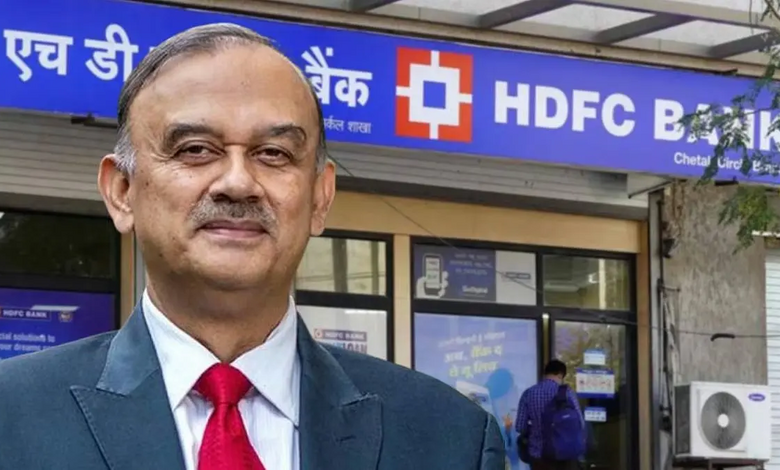
Until the regulator develops both the institutional capacity and the political independence to go beyond reviewing letters and actually hold boards accountable for what those letters conceal — through reformed incentive structures, protected disclosure channels, genuinely consequential enforcement action, and a framework that rewards specific honesty rather than penalising it — the gap between India’s world-class governance regulations and its boardroom reality will continue to produce exactly the kind of expensive, avoidable, reputationally damaging crisis that unfolded at HDFC Bank in the third week of March 2026.
The door to genuine accountability has been built. SEBI is standing outside it, reviewing the letter that someone slid underneath.