Even The Newly Formed Cockroach Janta Party Have Held A Press Conference, When Will Modi Hold His First Press Conference?

Even The Newly Formed Cockroach Janta Party Have Held A Press Conference, When Will Modi Hold His First Press Conference?
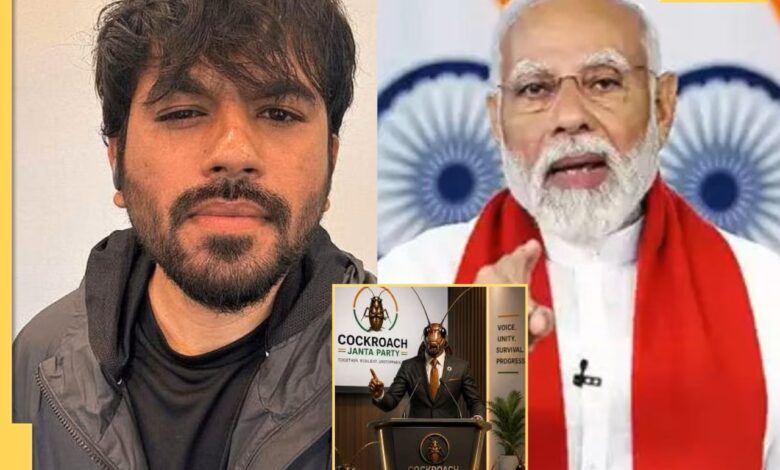
In the raucous, meme-driven arena of Indian politics in 2026, even a satirical online movement that began as a tongue-in-cheek response to a judicial remark comparing unemployed youth to “cockroaches” has managed to organise itself, issue statements, and engage publicly with the media. The Cockroach Janta Party (CJP), founded in mid-May 2026 by Abhijeet Dipke, exploded into a cultural phenomenon with millions of followers almost overnight. It has held public-facing events, issued demands, and courted press attention on issues ranging from education policy failures to youth unemployment.
Yet the Prime Minister of the world’s largest democracy — a man who has held uninterrupted power since May 2014 — has never once stood before the Indian press corps for a full, open, unscripted solo press conference in twelve long years. This is not a minor procedural quirk. It is a structural departure from every previous Prime Minister of independent India.
Twelve Years Without a Single Solo Press Conference
Narendra Modi became Prime Minister on 26 May 2014. Since that day, through three general elections, a global pandemic, border standoffs, economic upheavals, and countless national crises, he has not held one traditional, open-ended press conference on Indian soil where journalists from across the spectrum could ask follow-up questions without prior vetting or scripting.
This is not a matter of interpretation. Multiple independent tallies, media archives, and even government records confirm the absence. Previous Prime Ministers treated regular interaction with the press as a democratic obligation. Dr. Manmohan Singh, often labelled the “silent PM,” still addressed or interacted with the press more than 114 times during his ten-year tenure — including annual press conferences, interactions during foreign trips, and domestic briefings. Jawaharlal Nehru held around 75. Rajiv Gandhi crossed 60. Atal Bihari Vajpayee, Indira Gandhi, and Lal Bahadur Shastri all regularly faced the press gallery.
Modi’s approach has been radically different. He has favoured one-on-one interviews with selected (often sympathetic) anchors, pre-submitted questions in some cases, carefully choreographed joint appearances abroad, and his monthly Mann Ki Baat radio address. These formats allow message control. They do not allow the unpredictable, adversarial, follow-up-heavy scrutiny that defines a genuine press conference in a democracy.
The First Prime Minister to Set This “Unbreakable” Record
What makes Modi’s record historically singular is that he is the first Prime Minister of independent India to complete more than a decade in office without ever holding a single solo, open press conference at home. Every predecessor, regardless of party or ideology, eventually stood before the press and answered questions — sometimes uncomfortably, sometimes at length.
This is not because earlier leaders enjoyed friendlier media environments. Nehru faced hostile questions on China and economic policy. Indira Gandhi dealt with Emergency-era criticism. Manmohan Singh endured relentless grilling on scams and inflation. They still showed up. Modi’s complete avoidance has created what critics now openly call an “unbreakable record” — not because it is admirable, but because it has normalised the idea that the most powerful elected official in the country can govern for twelve years while treating the press as an optional extra rather than a constitutional stakeholder.
At the International Level Too — The Norway Walk-Away
The pattern has extended beyond India’s borders. On 18 May 2026, during his visit to Oslo — the first by an Indian Prime Minister in 43 years — Modi participated in a joint press appearance with Norwegian Prime Minister Jonas Gahr Støre. It was billed as a press meet. In practice, no questions were taken from the assembled journalists on the Indian side.
As Modi began walking out of the room after the prepared statements, a Norwegian journalist from the daily Dagsavisen, Helle Lyng Svendsen, raised her voice and asked a direct, pointed question: “Prime Minister Modi, why don’t you take some questions from the freest press in the world?”
Norway consistently ranks number one in the World Press Freedom Index. The question was not shouted in anger; it was delivered clearly in a setting where foreign leaders are routinely expected to engage. Video footage shows Modi continuing to walk away without stopping, without turning, and without offering any response. He simply left the room. Lyng later stated she was certain he heard her and that they had made eye contact.
The moment went viral worldwide. It crystallised, for international observers, a criticism that Indian journalists and opposition leaders have made for years: that Modi prefers to avoid unscripted encounters with the press, especially when difficult or follow-up questions might arise. Later the same day, when Lyng pressed an Indian diplomat on human rights concerns, the official responded with civilisational talking points rather than direct answers and grew visibly agitated when interrupted.
This was not an isolated diplomatic awkwardness. It was the latest and most visible international manifestation of a consistent domestic pattern.
Why This Record May Prove Difficult to Break
The deeper concern is not merely the past twelve years but the precedent being set for the future of Indian democracy. Once a Prime Minister normalises governing without regular, open press scrutiny, the institutional expectation weakens. Future leaders — regardless of party — may find it convenient to adopt the same model: speak directly to the public via social media and curated events, bypass adversarial questioning, and treat the press as a transmission belt rather than a check on power.
Modi’s own explanations, offered in interviews, centre on changing media dynamics, the need to reach citizens directly, and a reluctance to participate in what he has described as an older “culture” of media control by those in power. Supporters argue this is strategic communication in the age of digital direct outreach and that traditional press conferences are outdated rituals dominated by hostile or sensationalist questioning.
Critics counter that these justifications do not address the core democratic deficit. In a country of 1.4 billion people with a fiercely competitive media landscape, the absence of regular unscripted accountability sessions concentrates narrative power in the hands of the executive. It reduces the press’s ability to perform its constitutional role. It also sends a signal to every other institution and future office-holder that avoiding difficult questions is acceptable governance.
Even a brand-new satirical movement like the Cockroach Janta Party — born from frustration, memes, and social media — has already demonstrated more willingness to engage publicly and face media attention than the sitting Prime Minister has shown in twelve years. That contrast is not merely ironic; it is indicative of a broader shift in how power communicates (or refuses to communicate) in contemporary India.
The Unanswered Question
Twelve years into his tenure, Narendra Modi remains the only Prime Minister of independent India to have maintained a perfect record of zero solo, open press conferences on home soil. He has walked away from direct questions even on foreign soil when pressed by a journalist from the world’s freest press environment.
The Cockroach Janta Party, for all its satirical origins, has already held space in the public square and engaged with the media ecosystem. The question that now hangs over Indian democracy is no longer whether Modi will hold his first press conference — it is whether any future Prime Minister will feel institutionally compelled to do so, or whether this twelve-year experiment in controlled communication has permanently altered the expectations of accountability in the world’s largest democracy.
The record stands. The precedent is being watched. And the clock on twelve years without a single open press conference continues to tick.