Why ED & CBI Must Investigate BPTP & Its Much Larger Web Of Network Shell Companies
BPTP The Most Notorious Real Estate Company Of NCR Has Much Larger Network Of Shell Companies

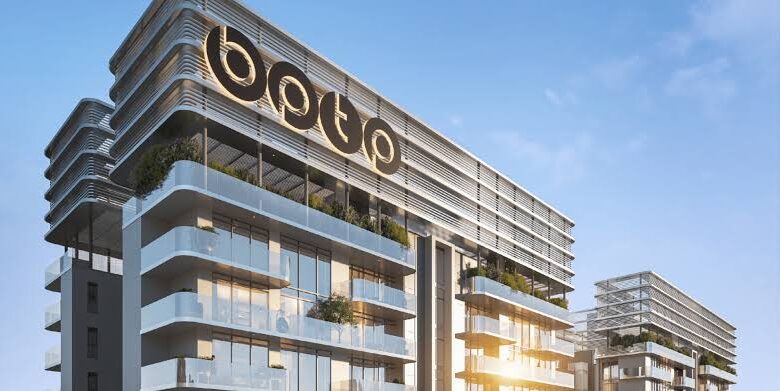
BPTP markets itself as a builder of homes, communities and premium urban spaces. Its own website claims a journey across Faridabad, Gurugram and Noida, stating that it has delivered over 24,500 units and crafted 50 million square feet. It lists active and legacy projects such as SkyNest Towers, Downtown 66, GAIA Residences and Amstoria Verti-Greens, The Deck, Parklands Pride, Discovery Park, Amstoria, Astaire Gardens, Spacio, Fortuna Plots at Astaire Garden, Capital City, Pedestal @70A, Mansions, Astaire Sanctuary Club, Pride Sanctuary Club and Amstoria Sanctuary Club.
But behind the glossy website, project brochures and luxury branding lies a much harsher public record: ED searches, CBI proceedings, multiple FIRs, consumer-forum refunds, RERA disputes, allegations of delayed possession, allegations of fund diversion, and a sprawling corporate architecture that demands explanation rather than public-relations polish.
The central question is no longer whether BPTP has projects. It clearly does. The question is whether BPTP’s corporate machinery is transparent enough for buyers, regulators, banks, tax authorities and investigation agencies to know who owns what, who collected what, who promised what, who failed where, and where the money moved.
A clean real-estate group publishes a map.
A questionable real-estate group sells fog as complexity.
The Corporate Maze: Why Does One Real Estate Brand Need This Many Entities?
The uploaded corporate material identifies a large BPTP-linked and director-associated ecosystem. It records 23 subsidiaries of BPTP Limited as on 31 March 2022, including ASG Overseas Private Limited, Countrywide Promoters Private Limited, Garnish Colonisers Private Limited, BPTP Resort Private Limited, Business Park Maintenance Services Private Limited, Remarkable Estate Private Limited, Super Belts Private Limited, Well Worth Developers Private Limited, Five Star Promoters Private Limited, BPTP International Trade Centre Limited, Digital IT-Park Infracon Private Limited, Outlook Infracon Private Limited, Rose Infracon Private Limited, Genious Promoters and Developers Private Limited, Triangle Builders and Promoters Private Limited, Gracious Buildcon Private Limited, Gateway Infraprojects Private Limited, BPTP Parklands Pride Limited, Lunar Developers Private Limited, Moonlight Buildmart Private Limited, Delhi Strong Build Infrastructure Private Limited, Worldwide Colonisers Private Limited and Worthy Maintenance Services Private Limited.
The same uploaded material identifies Gallant Infrastructure Private Limited, Perpetual Infracon Private Limited, Jubilant Infracon Private Limited, Green Star Infratech Private Limited and BPTP Special Economic Zone Private Limited as joint ventures, and Eventual Builders Private Limited and Native Buildcon Private Limited as associate companies in the March 2022 classification. It also notes that later data mentioning 24 subsidiaries, 1 joint venture and 4 associates would require reconciliation with updated filings.
This is not ordinary buyer-facing transparency. This is a corporate labyrinth. Some of it may be commercially explainable: land-holding companies, license-holding entities, SPVs, collaborators, maintenance arms, township entities, FDI-linked vehicles, joint ventures and project-specific companies are common in real estate. But a structure may be common and still be opaque. It may be legal and still be buyer-hostile. It may be explainable and still deserve scrutiny.
The sharper question is this: if every company is genuine, active, compliant and commercially necessary, why has BPTP not published a simple company-wise matrix showing each entity’s purpose, office, project, RERA registration, land parcel, directors, shareholders, beneficial owners, ROC filings, tax status, bank accounts, buyer collections and litigation exposure?
The Shell-Company Question: Not a Conclusion, But a Serious Investigative Hypothesis
A company is not a shell merely because it is private, part of a group, or not publicly visible. But when a real-estate ecosystem contains dozens upon dozens of entities, repeated director overlaps, similar names, similar objects, related-party possibilities, old incorporations, new incorporations, maintenance companies, land companies, development companies, investment-linked companies and director-associated entities, the shell-company question becomes legitimate.
The question is not: “Is every BPTP-linked company a shell?” That would be legally reckless without a forensic audit.
The question is: how many of these companies have real business substance?
Do they have active offices? Employees? Statutory books? Independent bank operations? Board minutes? Audited accounts? Tax filings? GST filings where applicable? Active RERA projects? Land licenses? Buyer obligations? Real commercial contracts? Or are some merely paper compartments inside a larger corporate machine?
A real operating company leaves footprints. A shell-like company leaves paperwork without pulse.
BPTP’s answer should not be indignation. It should be disclosure.
The ED FEMA Raid: The Corporate Web Became an Enforcement Issue
The Enforcement Directorate’s official press release dated 29 August 2025 states that ED’s Gurugram office carried out searches on 26 and 27 August 2025 under FEMA at multiple locations in Delhi-NCR and Noida in connection with a FEMA investigation against BPTP Limited, formerly Business Park Town Planners Private Limited. The ED states that searches were conducted at BPTP offices and at the residences of Chairman and Managing Director Kabul Chawla and Whole-Time Director Sudhanshu Tripathi.
The ED release says the FEMA investigation was initiated on information that BPTP received more than ₹500 crore in FDI from Mauritius-based entities. ED specifically states that BPTP received ₹322.5 crore from CPI India I Ltd., Port Louis, Mauritius, and ₹215 crore from Harbour Victoria Investment Holding Ltd., Mauritius. According to ED, these investments were made under the automatic route in FY 2007–08 and were structured with “put/swap” options that allegedly provided foreign investors guaranteed exit returns in violation of FEMA regulations.
The same ED release states that searches resulted in freezing of bank lockers and seizure of documents and digital evidence. ED further alleged that despite RBI directions to amend the shareholders’ agreement and remove the impermissible put-option clause, BPTP failed to comply. ED also stated that Kabul Chawla was found to be the beneficial owner of multiple foreign entities, one of which had allegedly been used to acquire a costly immovable property in New York, and that the foreign entities, overseas property and source of funds were under examination.
Most damagingly for the public narrative, ED’s own press release says its investigation revealed that multiple FIRs are registered against BPTP Limited and its directors across various police stations in Delhi-NCR for non-completion of projects for a long period and diversion of funds, which ED says are also a subject of investigation.
That sentence alone should worry every regulator. ED is not merely talking about a technical FEMA issue. ED is pointing to a wider pattern involving project non-completion and alleged fund diversion.
The CBI Angle: Subvention Schemes, FIR RC2192026E0001 and the Supreme Court Context
In M/s BPTP Limited v. Central Bureau of Investigation, a Supreme Court order dated 20 April 2026 records that CBI registered FIR No. RC2192026E0001 at Police Station Economic Offence Wing-I, New Delhi, against BPTP-related petitioners. The order records that petitioner No. 1 was developer of Pedestal @70A, Sector 70-A, Gurugram, and that the FIR was registered in purported compliance with Supreme Court directions in the broader batch concerning alleged collusion and connivance between real-estate developers/builders and financial institutions in the context of subvention schemes.
The Supreme Court order also records BPTP’s side: senior counsel for the petitioners submitted that 180 units had been developed and completed in the project and that, barring the two homebuyer respondents, no other homebuyer had lodged a complaint against them in that matter. The Court disposed of the writ petition with liberty to BPTP to place material before CBI because CBI was already investigating the issues comprehensively.
This is important balance. The FIR is not a conviction. BPTP was allowed to produce its defence material. But the existence of a CBI FIR in a Supreme Court-monitored builder-bank subvention investigation is not a small matter. Subvention schemes are precisely where homebuyers often become trapped between the builder and bank: the builder markets “No EMI till possession,” the bank disburses large sums to the builder, the project stalls, the builder stops paying pre-EMIs, and the buyer is left with a damaged credit profile and an incomplete home.
NDTV reported in April 2026 that CBI teams conducted a search at real-estate company offices in Faridabad, including a BPTP-linked search context, with a four-member CBI team examining bank-related documents and papers linked to homes sold to buyers for nearly ten hours. NDTV also reported that the action formed part of a wider CBI operation across 77 locations in 8 states/UTs, after 22 new cases were registered in builder-financial institution nexus matters under Supreme Court-directed investigation.
If BPTP’s position is that everything was clean, then the answer is simple: publish the project-wise subvention ledger. Which buyers were sold under subvention? Which banks funded them? How much was disbursed? On what construction milestone? Where did the disbursed money go? Which entity received it? Which entity booked the liability? Which company controlled the escrow? Which project account used the funds?
Until those answers are public, the suspicion remains alive.
Past FIRs and Criminal Allegations: The Trail Did Not Begin in 2025
The BPTP controversy did not start with ED’s 2025 search or CBI’s 2026 FIR.
A Times of India report from December 2011 stated that a non-bailable warrant was issued against BPTP managing director Kabul Chawla by the Patiala House court after a case was registered against the company for criminal breach of trust, cheating, fraud and criminal misappropriation of ₹40 lakh. According to the report, Delhi Police had registered an FIR on a complaint by businessman Suresh Goel, who alleged he paid ₹40 lakh for a 200 sq yd commercial plot in Faridabad and later discovered that BPTP had not obtained site approval from HUDA’s town-planning department before taking money. BPTP officials declined an on-record comment, but a senior official denied wrongdoing and said the company was not a fly-by-night operator.
A Hindustan Times report from May 2014 stated that Faridabad police registered a case of cheating, fraud and criminal conspiracy against Kabul Chawla, then managing director of BPTP Ltd, and Bhavna Puri, VP customer services, on court directions following a complaint by two plot buyers. The complainants alleged that they had booked plots in Parkland Colony, objected to incomplete plot-buyer agreement formats, and had not received possession despite payments.
A Times of India report from December 2016 stated that three FIRs were registered in Gurugram against eight persons and BPTP Ltd after three investors alleged they had been duped of about ₹3 crore after booking plots in BPTP’s SVP project in Sector 102. The report said the FIRs were registered under IPC sections including 406, 420, 418, 467, 468, 471 and 120-B. It further reported that the booked persons included Kabul Chawla, Sudhanshu Tripathi, Anupam Bansal, Rakesh Narang, Gagan Randev, Abhishek Kapoor, Rajiv Gupta and Sushil Goel. BPTP’s response, as reported, was that the buyers had filed frivolous complaints, possession was ready within a month, and most development work stood complete.
In 2024, the Delhi High Court dealt with FIR No. 0137/2016 under Section 420 IPC in a BPTP Parklands plot dispute. The Court recorded that the matter had been settled and quashed the FIR, observing the settled legal principle that a mere breach of contract does not automatically become cheating unless fraudulent or dishonest intention existed at inception. The Court also noted that, on the facts, it could not be conclusively said that the petitioners had dishonest intention from inception.
That quashing order is important. It shows that not every FIR survives criminal scrutiny. It also shows why this article must distinguish allegation from conviction. But the quashing of one FIR after settlement does not erase the wider pattern of FIRs, consumer cases, RERA disputes, ED allegations and CBI proceedings. Settlement may end a case. It does not answer the system-level question.
Consumer Cases and RERA Disputes: The Homebuyer Pattern
The BPTP story is not only about enforcement agencies. It is also about homebuyers who paid large amounts and then entered years of litigation.
In BPTP Limited v. Sanjay Rastogi, the Supreme Court recorded that the NCDRC had directed BPTP to refund ₹1.19 crore with interest to a flat buyer. The Supreme Court observed that despite receiving ₹1.19 crore, BPTP took the position that there was no flat-buyer agreement; that position was disbelieved. The Court recorded that BPTP failed to deliver possession within the contractual period and directed compliance with refund at 9% interest, reducing NCDRC’s 10% rate to 9%.
In Raghbir Singh v. BPTP Limited, the NCDRC recorded allegations that BPTP had utilised the complainant’s money in other projects, used one-sided clauses, and failed to give a specific possession date or refund the deposited money. The Commission held that BPTP had failed to substantiate force-majeure reasons, that the complainant could not be made to wait indefinitely, and that BPTP’s reliance on the force-majeure clause while retaining buyer money amounted to deficiency in service and unfair trade practice.
In Virender Kumar Kataria v. BPTP Ltd., the NCDRC reiterated that where a builder fails to deliver possession within the committed period and cannot justify the delay, this amounts to defect or deficiency in service and the Commission can direct refund with compensation.
In Sunil Kumar Doodraj v. BPTP Ltd., the Commission held that the complainant could not be made to wait indefinitely because construction was yet to be completed, and held the opposite parties deficient in service for failing to hand over possession within the prescribed time and arbitrarily cancelling the allotment.
In Shweta Singhal v. BPTP Ltd., a 2024 consumer order recorded that BPTP’s counsel stated the company was willing to refund the entire amount with 9% interest and that the company intended to demolish the structure/units in the lane where the complainants’ unit was located because it still had not obtained the occupancy certificate.
In March 2026, Times of India reported that Haryana RERA directed BPTP Limited to refund ₹18.12 lakh with interest to a homebuyer in the Park Terra project, rejecting BPTP’s limitation plea and treating the failure to refund as a continuing liability.
This is the buyer-facing reality that no brochure can beautify. When litigation repeatedly involves delay, refund, possession, buyer-money retention, one-sided clauses and deficiency-of-service findings, the issue is no longer isolated grievance management. It becomes a pattern requiring regulatory mapping.
The Active-Project Puzzle: BPTP Has Projects, But Which Entity Is Liable?
BPTP’s website lists 16 properties across statuses such as accepting EOIs, under construction, OC received, delivered and completed. That public-facing list includes projects in Faridabad, Gurugram and Noida.
HRERA records show current registrations involving BPTP and BPTP-linked entities. Downtown-66 is listed with promoter BPTP Limited and registration GGM/981/713/2025/84. Gaia Residences at Amstoria 102 is listed with promoter BPTP Limited and registration GGM/963/695/2025/66. BPTP The Amaario, however, appears under Countrywide Promoters Private Limited with registration GGM/820/552/2024/47.
This is precisely why the corporate map matters. A buyer may see “BPTP” as the brand, but the legal promoter may be BPTP Limited in one project and Countrywide Promoters Private Limited in another. That may be lawful, but it must be made unmistakably clear. Buyers should not discover the responsible entity only when they enter litigation.
The question is not whether BPTP has active projects. It does. The question is: how many of the many companies in the BPTP/director-linked ecosystem have active projects, how many merely hold land or licenses, how many are dormant, and how many are being used to isolate liabilities?
Active Offices: One BPTP Office Does Not Answer for the Whole Web
BPTP’s website lists its office at BPTP Capital City, 6th Floor, Plot No. 2B, Sector-94, Noida, and its registered office at OT-14, 3rd Floor, Next Door, Parklands, Sector-76, Faridabad.
But this does not answer the real question. Do all subsidiaries, associates, joint ventures and project entities have their own active offices? Do they operate from common addresses? Are documents maintained properly company-wise? Are statutory registers kept separately? Are the books audited independently? Are directors actually supervising these companies, or are they merely signing names across a corporate conveyor belt?
If dozens of companies operate from the same few addresses, regulators must ask whether those companies are commercially independent or only legal shells around the same operational core.
The Questions BPTP, Kabul Chawla and Sudhanshu Tripathi Should Answer
BPTP, Kabul Chawla, Sudhanshu Tripathi and every responsible director/promoter in the ecosystem should publicly answer the following:
What is the current full corporate structure of BPTP and all companies operating under, around or through the BPTP brand?
Which companies are subsidiaries, which are associates, which are joint ventures, which are LLPs, which are land-holding entities, which are maintenance companies, which are project SPVs, and which are merely historical director associations?
Which companies are active under MCA records? Which are active in substance? Which are dormant? Which are struck off? Which are under merger or amalgamation? Which have ceased to have any real BPTP connection?
Which companies have active offices? A registered office is not enough. BPTP should disclose company-wise operational office, accounting office, statutory-record location, authorised signatories, employees and service arrangements.
Which companies have active projects? Every company should be mapped to RERA registrations, DTCP licenses, land parcels, project names, construction status, escrow accounts, completion certificates, occupancy certificates and buyer obligations.
Which companies collected money from buyers? Which bank accounts received booking amounts, instalments, EDC/IDC, PLC, club charges, maintenance charges, GST and other sums?
Was buyer money transferred between companies? If yes, under what contracts, approvals, board resolutions and accounting treatment?
Who are the shareholders and ultimate beneficial owners of each entity? Are any companies connected through family members, nominee holdings, trusts, foreign entities, LLPs, investor vehicles or layered shareholding?
What is the status of all ROC/MCA filings? Publish AOC-4, MGT-7/MGT-7A, board reports, auditor reports, related-party disclosures, charge records, beneficial-ownership declarations and director KYC status company-wise.
What is the company-wise litigation matrix? Publish all FIRs, consumer complaints, RERA complaints, civil suits, criminal complaints, NCLT/NCLAT proceedings, arbitration matters, execution petitions and settlements.
What is the status of ED’s FEMA investigation? Respond specifically to the allegations of Mauritius FDI, put/swap options, RBI directions, foreign entities, New York property and fund-source examination.
What is the status of the CBI subvention-scheme FIR? Publish project-wise subvention arrangements, bank disbursement trails, pre-EMI obligations, default history, buyer complaints and fund utilisation.
A serious developer should not need to be forced into transparency by FIRs and raids.
Why ED, CBI, SFIO, MCA, Revenue Authorities and RERA Must Look Deeper
ED should continue examining FEMA compliance, FDI instruments, put/swap options, assured-return arrangements, RBI compliance, beneficial ownership, foreign entities, overseas assets and the source of funds for foreign property acquisitions.
CBI should examine subvention schemes, builder-bank-buyer tripartite arrangements, premature or excessive bank disbursements, due diligence failures, buyer representations, diversion of loan proceeds and whether officials of financial institutions colluded or acted negligently.
SFIO and MCA should examine the corporate maze: incorporation patterns, common directors, beneficial ownership, related-party transactions, inter-company loans, advances, fund transfers, dormant entities, compliance defaults, auditor remarks, asset transfers and whether any company lacks real commercial substance.
Income Tax and GST authorities should examine buyer collections, GST treatment, TDS, land transactions, inter-company reimbursements, revenue recognition, capitalisation of project costs, related-party services, investor exits and whether money moved without commercial basis.
RERA and DTCP should examine whether project funds were used project-wise, whether escrow norms were followed, whether the legal promoter matched buyer-facing advertisements, and whether every project disclosure was complete and honest.
This is not harassment of a business. This is the minimum audit burden for a real-estate group facing ED allegations, CBI proceedings, multiple FIR references, consumer findings and a large corporate web.
Deduplicated Company / Entity Register Extracted From the Supplied Material
The following register removes duplicate names and normalizes obvious variants. Inclusion in this register does not prove that every entity is a BPTP subsidiary, a shell company or involved in wrongdoing. It means the name appears in the supplied BPTP/director-associated/group-company material and therefore belongs in the investigative universe to be classified, verified and mapped.
A: AAROGYADHAM BUILDCON PRIVATE LIMITED; AGRYA CONSTRUCTIONS PRIVATE LIMITED; ANGLE INFRABUILD PRIVATE LIMITED; ANJALI PROMOTERS AND DEVELOPERS PRIVATE LIMITED; ANTARIKSH CONSTRUCTION COMPANY PRIVATE LIMITED; ANUPAM TOWERS PRIVATE LIMITED; ANYTHING SKOOL LIMITED; ARCHER REALTY PRIVATE LIMITED; ASG OVERSEAS PRIVATE LIMITED; ASHIRBAD BUILDWELL PRIVATE LIMITED.
B: BABUPUR INFRACON LLP; BEACH WHITEWARE LIMITED; BPTP INFRASTRUCTURE DEVELOPMENT COMPANY PRIVATE LIMITED; BPTP INTERNATIONAL TRADE CENTRE LIMITED; BPTP LIMITED; BPTP PARKLANDS PRIDE LIMITED; BPTP RESORT PRIVATE LIMITED; BPTP SPECIAL ECONOMIC ZONE PRIVATE LIMITED; BRACE IRON & STEEL PRIVATE LIMITED; BRAINWAVE BUILDERS PRIVATE LIMITED; BRIGHT STAR BUILDERS PRIVATE LIMITED; BUSINESS PARK BUILDERS PRIVATE LIMITED; BUSINESS PARK CONSTRUCTION COMPANY PRIVATE LIMITED; BUSINESS PARK DEVELOPERS PRIVATE LIMITED; BUSINESS PARK MAINTENANCE SERVICES PRIVATE LIMITED; BUSINESS PARK OVERSEAS PRIVATE LIMITED; BUSINESS PARK PROMOTERS PRIVATE LIMITED.
C: CAPCITY REAL ESTATE PRIVATE LIMITED; CAPITAL CITY PROMOTERS LLP; CELEBRATION BUILDCON PRIVATE LIMITED; CORE INNOVATIVE DESIGNS LLP; CORPNEXUS SERVICES LLP; COUNTRYWIDE PROMOTERS PRIVATE LIMITED.
D: DELHI BUILDWELL PRIVATE LIMITED; DELHI REALTECH PRIVATE LIMITED; DELHI STRONG BUILD INFRASTRUCTURE PRIVATE LIMITED; DELICATE REALTORS PRIVATE LIMITED; DELIGENT REAL ESTATES PRIVATE LIMITED; DELITE REALTECH PRIVATE LIMITED; DESIGN INFRACON PRIVATE LIMITED; DESIGNER REALTORS PRIVATE LIMITED; DESIRE BUILDCON PRIVATE LIMITED; DHANLABH FINANCIAL MANAGEMENT PRIVATE LIMITED; DHANLAXMI INVESTMENT ADVISORY PRIVATE LIMITED; DIGITAL IT-PARK INFRACON PRIVATE LIMITED; DIGITAL SEZ DEVELOPERS PRIVATE LIMITED; DILIGENT DEVELOPERS PRIVATE LIMITED; DLF LIMITED; DRUZBA OVERSEAS PRIVATE LIMITED; DYNASTY CONSTRUCTION PRIVATE LIMITED.
E: EDGE REALTECH PRIVATE LIMITED; ELITE REALTECH PRIVATE LIMITED; ESTER BUILDERS PRIVATE LIMITED; EVENTUAL BUILDERS PRIVATE LIMITED; EVENTUAL REAL ESTATE PRIVATE LIMITED; EXCEL INFRAVENTURES PRIVATE LIMITED.
F: FAST TRACK INFRACON PRIVATE LIMITED; FIVE STAR PROMOTERS PRIVATE LIMITED; FOCUS BUILDERS PRIVATE LIMITED; FOLIAGE CONSTRUCTION PRIVATE LIMITED; FOOT-MART RETAIL INDIA LIMITED; FORTUNE INFRACON PRIVATE LIMITED; FRAGRANCE CONSTRUCTION PRIVATE LIMITED; FREEDOMFIRST DEBTSOL PRIVATE LIMITED; FUTURISTIC BUILDTECH PRIVATE LIMITED.
G: GAG CONSTRUCTIONS PRIVATE LIMITED; GALLANT INFRASTRUCTURE PRIVATE LIMITED; GARLAND INFRASTRUCTURE PRIVATE LIMITED; GARNISH COLONISERS PRIVATE LIMITED; GATEWAY INFRAPROJECTS PRIVATE LIMITED; GENIOUS PROMOTERS AND DEVELOPERS PRIVATE LIMITED; GITANJALI PROMOTERS PRIVATE LIMITED; GLAZE BUILDCON PRIVATE LIMITED; GLITZ BUILDERS AND PROMOTERS PRIVATE LIMITED; GOLF INFRACON PRIVATE LIMITED; GRACIOUS BUILDCON PRIVATE LIMITED; GREEN PARK ESTATES PRIVATE LIMITED; GREEN STAR INFRATECH PRIVATE LIMITED; GREEN VALLEY HOUSING & LAND DEVELOPMENT PRIVATE LIMITED; GREEN VALLEY TOWERS PRIVATE LIMITED; GREENERA COLONISER PRIVATE LIMITED; GREENERY BUILDWELL PRIVATE LIMITED; GROW HIGH REALTORS PRIVATE LIMITED.
H–I: HEAVEN INFRABUILD PRIVATE LIMITED; IAG PROMOTERS AND DEVELOPERS PRIVATE LIMITED; IMAGINE BUILDERS PRIVATE LIMITED; IMPARTIAL BUILDERS PRIVATE LIMITED; IMPOWER INFRASTRUCTURE PRIVATE LIMITED; INDIA INTERNATIONAL CENTRE PRIVATE LIMITED; INDO HOMES PRIVATE LIMITED; INDOHOMES REALTY LLP; INSILCO LIMITED; ISG ESTATES PRIVATE LIMITED; ISG OVERSEAS PRIVATE LIMITED.
J–L: JAGRITI PLASTICS LIMITED; JASMINE BUILDTECH PRIVATE LIMITED; JUBILANT INFRACON PRIVATE LIMITED; KA PROMOTERS & DEVELOPERS PRIVATE LIMITED; KKP CONSTRUCTION COMPANY PRIVATE LIMITED; KLJ INFOTECH PRIVATE LIMITED; KWALITY INFRABUILD PRIVATE LIMITED; LEGACY BUILDCON PRIVATE LIMITED; LIBERTY RETAIL REVOLUTIONS LIMITED; LIBERTY SHOES LIMITED; LIFELINE BUILDERS PRIVATE LIMITED; LITTLE WORLD CONSTRUCTIONS PRIVATE LIMITED; LOGICAL BUILDERS PRIVATE LIMITED; LUNAR DEVELOPERS PRIVATE LIMITED.
M–O: MALCHA PROPERTIES PRIVATE LIMITED; MAPLE INFRASTATE PRIVATE LIMITED; MATRIX INFRACON PRIVATE LIMITED; MEGA INFRAPROJECTS PRIVATE LIMITED; MERIT MARKETING PRIVATE LIMITED; MICRO TOWN PLANNERS PRIVATE LIMITED; MILESTONE SEZ PRIVATE LIMITED; MOONLIGHT BUILDMART PRIVATE LIMITED; MORTIMER INFOTECH PRIVATE LIMITED; NATIVE BUILDCON PRIVATE LIMITED; OCEAN BUILDMART PRIVATE LIMITED; OIL AND NATURAL GAS CORPORATION LIMITED; OUTLOOK INFRACON PRIVATE LIMITED.
P: PACIFIC MEDICARE ACADEMY; PARK FINCAP PRIVATE LIMITED; PARSVNATH BUILDWELL PRIVATE LIMITED; PARSVNATH DEVELOPERS LIMITED; PARSVNATH INFRA LIMITED; PARSVNATH LANDMARK DEVELOPERS PRIVATE LIMITED; PASSIONATE BUILDERS PRIVATE LIMITED; PAVITRA REALCON PRIVATE LIMITED; PAWAN IMPEX PRIVATE LIMITED; PERPETUAL INFRACON PRIVATE LIMITED; POONAM PROMOTERS AND DEVELOPERS PRIVATE LIMITED; PRADHI REALTECH PRIVATE LIMITED; PRAGYA PRODUCTS PRIVATE LIMITED; PRASTI CONSTRUCTIONS PRIVATE LIMITED; PRAYA BUILDTECH PRIVATE LIMITED; PRECISION INFRASTRUCTURE PRIVATE LIMITED; PRICEWATERHOUSECOOPERS PROFESSIONAL SERVICES LLP; PUSAN REALTECH PRIVATE LIMITED; PUSHPANJALI FINANCIAL CONSULTANCY PRIVATE LIMITED.
R–S: RAINBOW PROMOTERS PRIVATE LIMITED; REMARKABLE ESTATE PRIVATE LIMITED; RIDGECRAFT HOMES PRIVATE LIMITED; RIDHISIDHI INVESTMENT ADVISORY PRIVATE LIMITED; ROMANO BUILDTECH PRIVATE LIMITED; ROSE INFRACON PRIVATE LIMITED; SAI EXPO OVERSEAS PRIVATE LIMITED; SANCTUARY CITY CLUBS PRIVATE LIMITED; SARASWATI KUNJ INFRASTRUCTURE PRIVATE LIMITED; SHALIMAR TOWN PLANNERS PRIVATE LIMITED; SHRESTH FINCAP LIMITED; SHRINKHLA INFRASTRUCTURE PRIVATE LIMITED; STEADY BUILDMART PRIVATE LIMITED; SUNAINA TOWERS PRIVATE LIMITED; SUNGLOW OVERSEAS PRIVATE LIMITED; SUPER BELTS PRIVATE LIMITED; SUPERGROWTH CONSTRUCTIONS PRIVATE LIMITED; SVIIT SOFTWARE PRIVATE LIMITED.
T–W: TINKERBELL MAGICAL SOLUTION LLP; TRENDZ BUILDWELL PRIVATE LIMITED; TRIANGLE BUILDERS AND PROMOTERS PRIVATE LIMITED; TRINETRA RESOLUTIONS LLP; UAG BUILDERS PRIVATE LIMITED; UPKAR REALTORS PRIVATE LIMITED; URBAN BUILDERS PRIVATE LIMITED; URBAN REALTECH PRIVATE LIMITED; URBANEDGE COLONISER PRIVATE LIMITED; URBANGREENA REALTECH PRIVATE LIMITED; USG BUILDWELL PRIVATE LIMITED; UTKARSH REALTECH PRIVATE LIMITED; UTSAV REALTORS PRIVATE LIMITED; VASUNDRA PROMOTERS PRIVATE LIMITED; VICTOR AVIATION INFRACON PRIVATE LIMITED; VIDUR PROMOTERS AND DEVELOPERS PRIVATE LIMITED; VIRTUAL BUILDERS PRIVATE LIMITED; VISION TOWN PLANNERS PRIVATE LIMITED; VISUAL BUILDERS PRIVATE LIMITED; VITAL CONSTRUCTION PRIVATE LIMITED; VIVEK PROMOTERS PRIVATE LIMITED; WELL WORTH DEVELOPERS PRIVATE LIMITED; WESTLAND DEVELOPERS PRIVATE LIMITED; WORLDWIDE COLONISERS PRIVATE LIMITED; WORLDWIDE REALCON PRIVATE LIMITED; WORTHY MAINTENANCE SERVICES PRIVATE LIMITED.
Conclusion: BPTP Can No Longer Hide Behind “Complexity”
BPTP may ultimately explain every entity, every transaction, every FIR, every consumer dispute, every RERA complaint, every ED allegation and every CBI question. It may show that its corporate structure is legitimate, its fund flows are clean, its delays are explainable, its foreign investments complied with law, its directors acted properly, and its buyers were treated fairly.
But until that happens, the burden of explanation lies heavily on BPTP.
Because the public record is no longer a whisper. It is a stack: ED search, FEMA allegations, Mauritius FDI questions, foreign-entity questions, CBI FIR, Supreme Court-monitored subvention probe, past FIRs, consumer refunds, RERA refund orders, delayed-possession findings and a sprawling company network.
A builder that sells homes must not behave like a maze-maker.
A buyer pays for a roof, not a riddle.
If BPTP is clean, it should publish the map.
If the companies are real, publish their purpose.
If the offices exist, publish their addresses.
If the compliances are complete, publish the filings.
If the money trail is proper, publish the fund-flow certificate.
If the projects are clean, publish the project-company-RERA matrix.
And if BPTP will not do this voluntarily, then ED, CBI, SFIO, MCA, Revenue authorities, RERA and DTCP should do what public-interest enforcement exists to do: pull every thread until the full fabric is visible.