Dark Stores- The Infrastructure Bomb That Quick Commerce Should Fear
The infrastructure that made 10-minute delivery possible may ultimately become the industry's biggest obstacle to profitability.

India’s Quick-Commerce Boom Has a Dark Store Problem
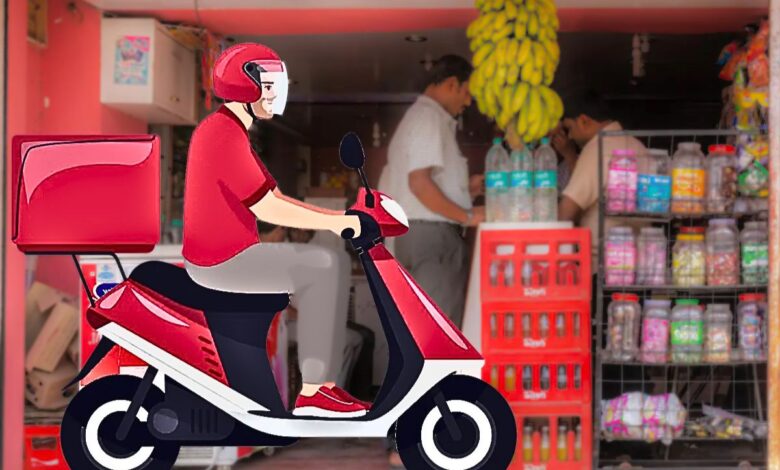
Somewhere in the back lanes of Koramangala, tucked between a laundry and a shuttered boutique, there is a room you will never visit. It is approximately 1,000 square feet. The lights are always on. There are no windows facing the street. No signage that a customer might read. A few scooters idle outside, their drivers glancing at phones. Every few minutes, one of them picks up a small bag and disappears into traffic. Within ten minutes, someone in an apartment building two kilometres away will open a door and receive onions, curd, and a packet of biscuits.
This is a dark store. And there are thousands of them now, hidden in plain sight across India’s cities. Most consumers never see them. Most investors barely think about them. They are the unglamorous physical substrate beneath the algorithms and the branding and the quarterly earnings calls. Yet these anonymous little warehouses may ultimately determine whether India’s most celebrated consumer innovation turns out to be a genuinely transformative business or merely a very expensive experiment in moving groceries quickly.
As of early 2026, India has more than 6,000 operational dark stores, according to Bernstein research. Blinkit, the market leader owned by Eternal Ltd (formerly Zomato), operates roughly 2,100 dark stores and has publicly committed to reaching 3,000 by March 2027. Zepto and Swiggy Instamart each maintain networks of approximately 1,100 to 1,200 stores. Even Flipkart has crossed 800. Amazon, arriving characteristically late but lavishly, is building toward 300 in the top three cities alone. The sector collectively controls what is estimated to be tens of millions of square feet of urban real estate — a physical footprint that would make any traditional retailer blush.
The paradox at the heart of all this is one that the industry’s most enthusiastic backers have not yet fully confronted. The more successful quick commerce becomes, the more dark stores it requires. The more dark stores it requires, the more fixed costs it accumulates. And fixed costs, unlike software, do not scale elegantly.
Dark Store- The Hidden Real Estate Empire
To understand what quick commerce has actually built, it helps to set aside the language of technology and look at what these companies physically are. A dark store is, at its core, a micro-warehouse positioned within a two to three kilometre radius of a dense residential cluster, stocked with between 3,000 and 8,000 SKUs, staffed around the clock, and designed for order fulfilment rather than customer experience. It is not a store in any meaningful retail sense — there is no foot traffic, no visual merchandising, no ambient music. It is a logistics node dressed up as a warehouse.
What quick-commerce companies have done, with remarkable speed and very little public acknowledgement, is become some of the largest occupiers of urban commercial real estate in India. Not office buildings. Not factories. But the kind of mid-level commercial space that used to house pharmacies, small grocers, and neighbourhood convenience shops. Dark stores typically occupy between 600 and 2,000 square feet in premium micromarkets — locations where proximity to affluent, high-ordering consumers justifies the rent. In Bandra, Indiranagar, Sector 14 Gurgaon, Jubilee Hills. The very neighbourhoods where rent is highest.
This is a structural fact about the business that tends to get lost in the excitement over order volumes. Quick-commerce platforms are not, as they sometimes imply, pure software businesses that have layered a delivery capability on top of a marketplace. They are, to a far greater extent than their valuations suggest, logistics and real estate businesses — companies whose competitive advantage depends critically on the physical density of their store networks, and whose cost structures are therefore anchored to long-term lease obligations in the country’s most expensive rental markets.
Urban commercial rents have been rising. Competition among quick-commerce players for the same premium locations has driven rents further. In several high-demand micromarkets, dark store operators have reportedly outbid traditional retailers for ground-floor commercial space, an irony that would have seemed improbable five years ago. The industry that was supposed to make physical retail irrelevant has become one of physical retail’s most aggressive landlords.
As the networks expand beyond the initial Tier-1 concentration — Blinkit now serves 172 cities, Instamart over 100 — the question of location quality becomes more complicated. Finding the right combination of population density, order frequency, and rental affordability in Nashik, Visakhapatnam, or Jabalpur is a fundamentally different exercise from replicating what works in south Mumbai. And yet the expansion must continue. Which brings us to the mathematics.
The Mathematics Nobody Can Escape
There is a version of the quick-commerce story that sounds straightforwardly like progress. Order volumes are rising. Average order values are increasing as platforms expand into electronics, beauty products, and higher-margin categories. Blinkit reported contribution margin positivity in 2024. Zepto’s newly opened stores reportedly reach profitability in approximately nine months, down from 15 to 18 months earlier. These are real improvements. But they are improvements in a particular kind of metric — one that, looked at closely enough, tends to flatter without fully illuminating.
Each dark store carries a fixed cost base that runs regardless of order volume. Rent is the most visible, but it is far from the only component. Each location requires a store manager and a team of pickers who must be present across multiple shifts. It requires an inventory investment — working capital tied up in perishables, FMCG, and increasingly in electronics that sit on shelves waiting for orders that may or may not arrive.
It requires technology systems: warehouse management software, inventory tracking, cold storage where applicable, surveillance and security. It requires a fleet of delivery personnel, either employed or contracted, who must be compensated for their time whether or not they are delivering. Utilities. Maintenance. The accumulated cost of breakage and spoilage in perishables that do not sell before their window closes.
The unit economics of a mature, high-throughput dark store in a dense urban micromarket can look attractive. A store processing 1,500 orders per day at an average order value of ₹500 generates respectable revenue against its fixed cost base. But the industry is not composed entirely of mature, high-throughput stores in dense urban micromarkets. It is composed of thousands of stores at various stages of ramp-up, in various geographies, many of them cannibalising each other’s order density because multiple platforms have planted stores within walking distance of the same apartment buildings.
The deeper issue is structural. Software businesses have a peculiar and valuable property: once the marginal cost of serving an additional user approaches zero, scale produces tremendous leverage. Every additional subscriber to a streaming service, every additional user on a social network, costs almost nothing to serve. Revenue grows; costs do not. This is why technology investors are so willing to fund losses — they are investing in the expectation that growth today will produce nearly free incremental profit tomorrow.
Quick commerce cannot work this way. Every additional order, in every additional city, requires a proportional expansion of physical infrastructure. The marginal cost does not approach zero. It approaches the cost of another dark store — another lease, another inventory investment, another payroll, another set of scooters idling outside another anonymous commercial premises. Scale in quick commerce does not produce the same leverage as scale in software. It produces more warehouses.
The Telecom Parallel
There is a historical precedent for what happens when industries build infrastructure-heavy networks faster than their underlying economics can justify, and it is instructive in ways the quick-commerce industry would prefer not to dwell on.
In the early 2000s, India’s telecom boom generated extraordinary investor enthusiasm and extraordinary infrastructure expansion. Operators raced to build towers, acquire spectrum, and penetrate new geographies. More towers meant better coverage. Better coverage meant more subscribers. More subscribers meant stronger revenue growth. The logic was impeccable, right up to the point where it wasn’t.
The tower build-out created fixed costs that required sustained high revenue to service. When competitive pressure on tariffs intensified, India’s telecom market famously compressed call rates to some of the lowest in the world, the revenue side of the equation changed dramatically, while the infrastructure costs did not. Towers do not become cheaper when your ARPU falls. Leases do not renegotiate themselves when your margins compress. The result was an industry-wide crisis, a wave of consolidation, debt restructuring, and eventual rationalisation that left a market of dozens of operators reduced to three. The infrastructure that had accelerated growth became, once growth slowed, a burden that only the largest and most capitalised players could sustain.
The parallel is not exact; it never is, but the structural logic is similar. Dark stores are to quick commerce what towers were to telecom: the physical infrastructure that makes the service possible, the competitive differentiator that drives expansion, and the fixed-cost liability that makes profitability elusive when markets mature and pricing pressure intensifies. Just as Reliance Jio’s entry into telecom destroyed the revenue assumptions of every other operator, a sufficiently aggressive pricing war among quick-commerce platforms could expose the fragility of networks built on expensive urban real estate.
Blinkit’s own chief executive, Albinder Dhindsa, has publicly warned that the industry has relied heavily on what he called “relentless fundraising” to cover steep losses, and that companies would face limits on how long they could continue absorbing them. This is a remarkable statement from the market leader, the equivalent of the tower industry’s largest operator acknowledging that the network might be bigger than the business can sustain.
The Race Nobody Can Stop
And yet the expansion continues. This is perhaps the most revealing feature of the quick-commerce story: even as evidence accumulates that infrastructure build-out is straining profitability, every major platform is accelerating rather than moderating its dark store rollout. The reason is not irrational. It is the product of a competitive logic that is, individually, entirely sensible and, collectively, potentially ruinous.
If Blinkit has 2,100 stores and commits to 3,000, Zepto cannot afford to stay at 1,100. If Instamart enters 124 cities, a competitor that remains in 50 will lose the ability to claim national relevance to both brands and investors. If Flipkart, backed by Walmart’s balance sheet, pushes to double its 800-store network by the end of 2026, Amazon cannot be seen ceding the market by building its 300 stores too cautiously.
Every act of expansion is simultaneously strategic and defensive. Companies are not building stores because they have calculated that each incremental store will deliver adequate returns. Many of them know it won’t, at least not immediately. They are building stores because not building them — falling behind in coverage, losing pincode presence, watching order density migrate to a competitor’s store around the corner — is worse. Growth in this environment is less a choice than a condition of survival. And that is precisely the kind of dynamic that produces infrastructure overbuild.
India’s top three quick-commerce firms have collectively lost more than ₹12,300 crore (approximately $1.4 billion) over four years. Zepto’s losses widened to ₹3,367 crore in FY25 from ₹1,215 crore the year before — a near-tripling of losses even as revenues grew impressively. Swiggy reported a net loss of ₹3,117 crore in FY25, up from ₹2,350 crore the year prior. These are not small numbers, and they are growing in the wrong direction even as management narratives emphasise improving unit economics.
The companies are not lying about their unit economics. A profitable store is a profitable store. But a network of 2,100 stores — some of them mature and performing, many of them still ramping up, several in geographies where the economics may never fully work — is not simply 2,100 times a profitable store. It is a complex, heterogeneous portfolio of bets, most of which require sustained capital to reach maturity, and some of which will never reach it.
The Geography Problem
Quick commerce, as it was originally conceived, was a model built for a specific kind of geography: dense, affluent, urban micromarkets where the concentration of orders within a small radius makes dark store economics work. The canonical quick-commerce customer is someone in a high-rise apartment in Bandra West, or a gated community in Whitefield, or a DLF colony in Gurgaon — someone with disposable income, a smartphone, low patience, and a willingness to pay a modest delivery fee for the convenience of not going downstairs.
The model works brilliantly in this context. A single dark store serving a two-kilometre radius in south Mumbai may receive 2,000 orders a day. Delivery distances are short. Basket sizes are reasonable. The customer base is willing to buy not just tomatoes and milk but olive oil, protein bars, Greek yogurt, and specialty coffee — the high-margin items that make the economics substantially more attractive. It works less well everywhere else.
As platforms expand into tier-3 cities, the fundamental assumptions of the model begin to erode. Population density falls. Order frequency drops. Average basket sizes are smaller, reflecting lower purchasing power and more conservative shopping habits. Delivery routes are longer relative to order density. And the competitive intensity that exists in Mumbai and Bangalore is not there to force operational discipline — meaning stores may continue operating at sub-optimal throughput without the immediate threat of a rival store two streets over.
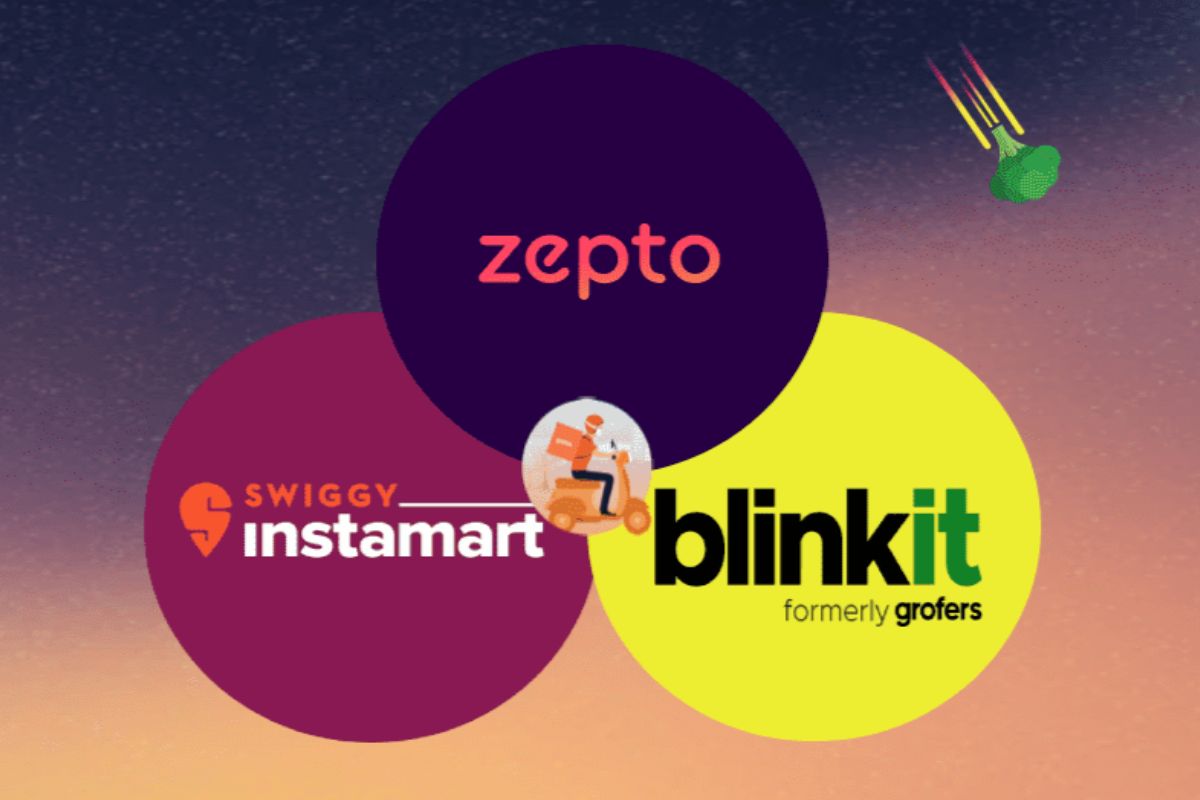
Blinkit now serves 200+ cities. Instamart operates in over 100. Zepto, notably more conservative, remains in about 73, having largely declined to venture aggressively beyond major metros — a strategic restraint that may reflect a sober assessment of tier-2 economics rather than a failure of ambition. As the expansion frontier moves deeper into India’s smaller cities, each new dark store faces structurally weaker unit economics than the one before it.
There is also an infrastructure dimension to the geography problem that receives insufficient attention. A dark store in Bengaluru benefits from a functioning supply chain — regular replenishment from distributors and direct-from-manufacturer channels, reliable electricity, and a reasonably dense network of delivery partners familiar with the city’s layout. Many tier-2 markets offer none of this. Supply chain reliability is lower. Power infrastructure is less consistent. The talent pipeline for store management is thinner. These are not insurmountable problems, but they are real costs that show up in operational complexity and reduced margins, even before accounting for lower order density.
The Inventory Trap
There is a problem embedded within the dark store model that rarely appears in earnings presentations or investor calls, partly because it is diffuse and hard to quantify, and partly because acknowledging it would complicate the growth narrative considerably. It is the problem of inventory duplication.
Every dark store carries its own stock. A platform with 2,000 dark stores in 100 cities is not running one warehouse with 2,000 branches; it is running 2,000 warehouses with 2,000 separate inventory positions. Each of those positions requires working capital. Each must be replenished with sufficient frequency to maintain on-shelf availability, the metric that platforms watch obsessively, because a stockout in a category as fundamental as milk or rice is catastrophic for retention. Each carries spoilage risk in perishables. Each carries obsolescence risk in the faster-moving FMCG categories where product formulations and packaging change regularly.
At 500 stores, this is a complex but manageable challenge. At 5,000 stores — the number the sector is approaching — it becomes a different kind of problem. The aggregate working capital tied up in micro-warehouse inventory across thousands of locations is an enormous sum. The aggregate spoilage from perishables that do not sell before their window closes is an enormous write-off that shows up in cost of goods. The aggregate cost of managing 5,000 separate replenishment cycles, with 5,000 separate supplier relationships and 5,000 separate risk of either stockout or overstock, is a logistical burden of a different order than running consolidated fulfilment.
This is not hypothetical. Dunzo, the quick-commerce pioneer that shut down in early 2025, reported losses of ₹230 per order delivered during the first half of 2022. Its consolidated loss surged to ₹1,801 crore in FY23. The company, which at its peak operated 120 dark stores across 15 cities, struggled not because it lacked the concept or the brand — it had both — but because the operational and financial complexity of maintaining distributed inventory at scale proved beyond its capital base to sustain against better-funded competitors. It is a cautionary story that the survivors of the market have largely filed under “mismanagement” and moved on from. They should perhaps dwell on it longer.
When Growth Stops
The most important question for India’s quick-commerce industry is one that nobody particularly wants to ask while valuations are high, capital is available, and order volumes are growing: what happens when growth slows? Infrastructure-heavy businesses have a particular vulnerability that becomes visible only at inflection. During expansion, fixed costs are easy to justify — each new store is an investment in future revenue, each lease is a bet on accelerating demand. Capital markets tolerate losses when growth is the story. Investors do not need profitability when they have momentum.
But momentum is not permanent. Markets mature. Consumer acquisition becomes more expensive as the early adopters have been acquired and the next tier of users is harder to reach and less profitable to serve. Delivery frequency stabilises. Average order values plateau. Competition on price, the most dangerous variable in any consumer business can compress unit economics with brutal speed.
When growth slows in a capital-light business, the adjustment is relatively painless. Fewer engineers hired, fewer ads run, slower product development. When growth slows in a business with 2,000 dark stores carrying long-term lease obligations, the adjustment is far more complicated. Leases do not dissolve when orders dry up. Staff cannot be shed immediately without disrupting remaining operations. Inventory systems do not become less expensive simply because throughput is lower. The fixed cost base, built up during expansion, becomes visible in a way it never was during growth.
WeWork is the obvious and overused comparison, but it remains instructive. The company that convinced investors it was a technology business (and received a technology valuation) turned out, on closer examination, to be an aggressive lessee of premium office real estate — a business model that looked elegant during expansion and catastrophic during contraction. At its peak, WeWork was valued at $47 billion. It filed for bankruptcy in 2023 with nearly $19 billion in debt. The infrastructure that had accelerated its growth became, when market conditions changed, the mechanism of its destruction.
Quick commerce is not WeWork. The sectors are different. The products are non-discretionary — people will always need groceries. But the structural principle is the same: when a business builds its competitive advantage on the rapid accumulation of fixed-cost physical infrastructure, it is making a bet that the revenue environment will remain favourable long enough for that infrastructure to generate adequate returns. That bet is not guaranteed.
The Profitability Mirage
Management teams in quick commerce have become fluent in a particular vocabulary, contribution margins, adjusted EBITDA, store-level profitability, dark-store payback periods — that is designed, sometimes consciously and sometimes not, to make the economics sound better than they are at the system level.
A contribution margin is a real and meaningful number. It represents revenue minus the variable costs directly associated with fulfilling orders — delivery costs, packaging, platform discounts, and the cost of goods. When Blinkit or Zepto report that they are contribution-margin positive, or that a certain percentage of their stores are profitable, they are reporting something real. They are not lying.
But contribution-margin positivity at a store level, or even at a network level, is not the same as genuine profitability. It excludes corporate overhead — the teams of engineers maintaining the platform, the product managers, the marketing spend, the finance and legal functions, the logistics coordination layer. It excludes the cost of building new stores, which is treated as capital expenditure rather than operating cost but is nonetheless a real drain on cash. It often excludes the cost of customer acquisition through discounts and promotional offers, which in a market this competitive is not a temporary investment but a structural requirement.
When Zepto says that 60% of its stores are profitable, it is using a definition of profitable that excludes a great deal of what it costs to run Zepto. The remaining 40% of stores — which are presumably loss-making even by this favourable definition — are absorbing capital that must be drawn from somewhere. At the network level, accounting for the full cost structure of building, staffing, stocking, and operating thousands of micro-warehouses while simultaneously competing aggressively on price and delivery speed, the industry’s profitability picture looks quite different from the store-level metrics that dominate the public narrative.
This is not unusual for a growth-stage industry. The problem arises when store-level metrics become the primary lens through which investors and analysts evaluate the business, creating a structural incentive to expand the network — because every new high-performing store improves the visible metrics — while the total cost of that expansion accumulates in ways that are less immediately visible.
The Coming Consolidation
Industries built on infrastructure-heavy competitive dynamics tend, over time, toward consolidation. Telecom consolidated. Banking consolidated. Airlines consolidated — repeatedly and painfully. The hyperlocal delivery wave of 2015 to 2016 consolidated within two years, as LocalBanya, PepperTap, and Grofers in its original form discovered that their unit economics were untenable. Dunzo, the last survivor of that generation, eventually succumbed in 2025. The question is not whether quick commerce will consolidate. History is fairly clear on this. The question is when, at what cost, and who will be left standing.
The most likely outcome, played out over the next three to five years, involves a significant rationalisation of dark store networks as platforms move from coverage maximisation to density optimisation. HSBC research has already suggested that leading companies will focus on optimising capacities after reaching 1,000 stores, and that the sector’s store capacity will likely meet projected throughput demands for several years after the expansion phase ends. This is a polite way of saying that the industry may be building more infrastructure than it needs.
Mergers and acquisitions are already part of the industry’s history — Zomato’s acquisition of Blinkit being the defining example. Further consolidation will compress the number of meaningful players. The weaker balance sheets will face the hardest choices: continue burning capital in a competition they cannot win, or exit in some form. Amazon and Flipkart, backed by parent companies with essentially unlimited capital, can sustain losses indefinitely. Zepto, heading toward an IPO but carrying widening losses, faces a different kind of pressure. The public market is less patient with infrastructure build-out than the private market has been.
It is also worth noting that consolidation does not necessarily solve the dark store problem. A market with two or three dominant players, each operating 2,000 to 3,000 stores, may still be carrying more infrastructure than its revenue base can comfortably support. Fewer competitors does not mean fewer stores, at least not immediately. And mergers have a habit of combining two sets of overlapping infrastructure into one entity that is, temporarily, even more expensive to operate.
The Warehouse Behind the Miracle
The next time someone in a Mumbai apartment receives a packet of almonds twelve minutes after ordering it, consider what made that possible. Not the algorithm, which is real but not unique. Not the brand, which is a product of marketing. Not the network effects, which are genuine but fragile. What made it possible is a specific building, in a specific location, with specific people in it, carrying specific inventory, under a specific lease that runs for a specific number of years regardless of what happens to the order volume on any given day.
India has spent the last four years convincing itself that quick commerce is a technology story. It is, in part. But beneath the technology is a physical infrastructure story — one that involves thousands of urban leases, hundreds of thousands of square feet of premium commercial real estate, billions of rupees of inventory tied up in perishable goods, and fixed costs that accumulate whether the platform’s monthly active users are growing or not.
Consumers see convenience. Investors see a total addressable market of $35 to $40 billion by the end of the decade and a growth story that has so far exceeded every sceptical forecast. Both of these things are true. But the industry’s future will not be determined by consumer enthusiasm or addressable market size. It will be determined by whether, and when, the revenues generated by those 6,000-plus dark stores can cover what it actually costs to build, operate, and eventually either renegotiate or exit from them.
The greatest risk to quick commerce is not regulatory overreach, though regulation is coming. It is not the entry of Amazon or Walmart, though they will make life more difficult. It is not consumer fickleness, though the Indian consumer’s appetite for discounts creates a structural dependency on promotional spending that borders on addiction. The greatest risk is simpler, and more structural, and harder to solve with an app update.
It is that every promise of faster delivery requires another dark store, every dark store requires another lease, and every lease is a fixed obligation that will outlast the enthusiasm that created it. The miracle of ten-minute delivery is real. The warehouse behind the miracle is also real. And at some point — perhaps soon — the second reality will require a more honest accounting than the first.
What India has built, in the space of four extraordinary years, is a vast network of anonymous little warehouses scattered across the back streets of its cities, each one a testament to ambition and capital and consumer desire. Whether that network is the foundation of a genuinely profitable industry, or a monument to infrastructure built faster than the economics that were supposed to justify it, remains genuinely open. The scooters will keep running. The orders will keep arriving. The leases will keep accumulating. And somewhere in a building you will never visit, the answer is being quietly counted.