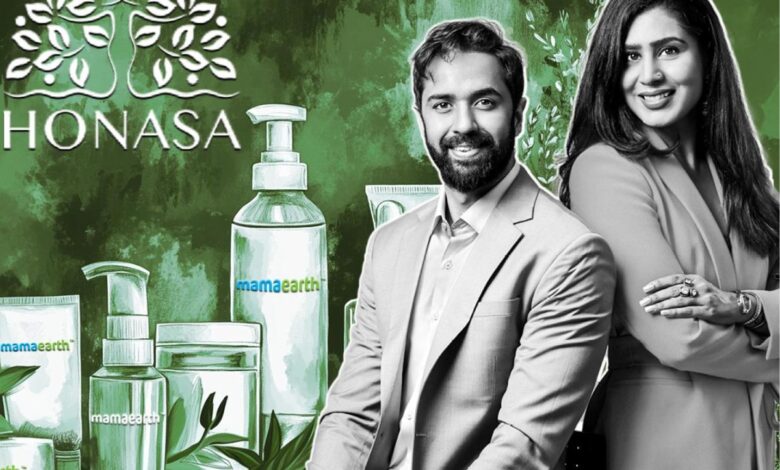
There is a particular kind of corporate audacity in being named India’s biggest advertising violator not once, not twice, but for multiple consecutive years, and continuing to spend ₹743 crore annually on the very marketing machine that keeps getting flagged. That is, in essence, the Mamaearth story that rarely makes it into the brand’s carefully curated Instagram grid.
Honasa Consumer, the parent company of Mamaearth, emerged as the most flagged mainstream beauty and personal care company in the Advertising Standards Council of India’s (ASCI) Annual Complaints Report for FY26, with 24 influencer advertising cases requiring modification. If that sounds like a one-off stumble, it isn’t. It is the latest chapter in what has become a disturbingly consistent pattern of regulatory non-compliance by one of India’s most aggressively marketed consumer brands.

A Serial Offender, Not an Accidental One
In FY24, ASCI processed complaints against a staggering 187 advertisements from Honasa Consumer, making it the single biggest advertising violator in the country that year. Of these, 175 were specifically for violations of ASCI’s Influencer Guidelines. The brand’s own response at the time was telling: Honasa told Storyboard18 that “almost 94% of these flagged cases were around influencer content, whose dynamics have been rapidly evolving,” and promised to enhance internal protocols.
Those internal protocols, evidently, did not work. The violations continued into FY25, where a total of 29 Honasa advertisements required modifications, with 22 specifically flagged for influencer disclosure violations. And now FY26 brings yet another round of corrections. Three consecutive years. The same violations. The same category of non-compliance.
What ASCI requires is not complicated. Influencers must display clear, prominent labels, #Ad, #Sponsored, #Collab, or #PaidPartnership, in the first viewable portion of their content. This is not a grey area. It is a legal obligation under both the ASCI Code and the Consumer Protection Act. When an influencer uploads a glowing review of Mamaearth’s onion hair oil without disclosing she was paid to do so, a consumer watching that video is being systematically deceived about the nature of the recommendation they are receiving. ASCI’s CEO and Secretary-General, Manisha Kapoor, stated it plainly: in law, these influencer posts are company advertisements, and the company bears ultimate responsibility.
Mamaearth cannot claim ignorance. It has been told, repeatedly and formally, what it is doing wrong. Continuing the same practices is not a learning curve, it is a business model calculation.
The Architecture of Deception: Mamaearth’s “Toxin-Free” Claims Under Scrutiny
The non-disclosure violations are troubling enough on their own. But they sit on top of a deeper, more structurally dishonest foundation: the brand’s core marketing claims themselves.
Mamaearth built its identity on being “Asia’s First Made Safe Certified Brand” and offering “100% toxin-free” products. This was the emotional hook that persuaded anxious new parents to pay a premium for what was, in many cases, a contract-manufactured product using base formulations available to any brand that approached the same factory.
A detailed academic analysis by researchers at CNLU noted that Mamaearth’s website lists only 23 products as Made Safe certified, without supporting documentation, and that Made Safe itself does not recognise Mamaearth as a currently certified brand across its entire range. Yet the “toxin-free” and “Made Safe” language appears as a blanket brand identity, not a product-specific qualifier.
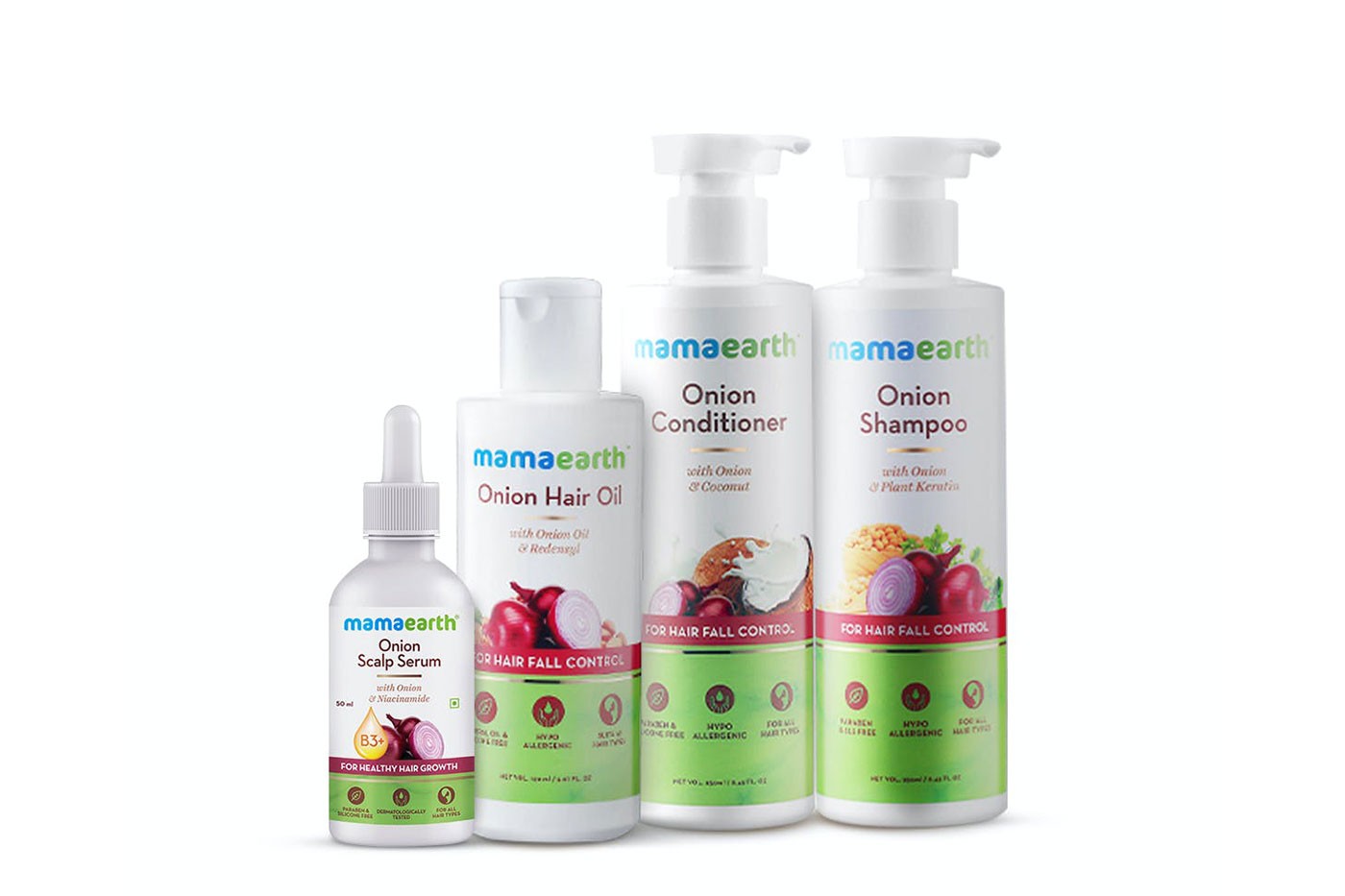
The onion hair oil, arguably Mamaearth’s most famous product was marketed as a hair growth solution. A closer look at its ingredient list places actual onion extract far down the order, with the product primarily consisting of standard carrier oils like sesame, castor, and coconut. The “hero ingredient” is present in trace quantities, leveraging consumer association with onion’s supposed benefits rather than any meaningful concentration.
Claims like “Reduces Hair Fall” or “Boosts Hair Growth” were being amplified by hundreds of paid influencers who neither disclosed their commercial relationship nor, in many cases, had any scientific basis to make such assertions. This is not fringe behaviour — it is what produced 175 influencer-related violations in a single financial year.
The Structural Enabler: Spend First, Comply Later
To understand why this pattern persists, follow the financial logic. Mamaearth’s parent company spent ₹743 crore on advertising in FY25, which is 36% of its total revenue. The business runs on marketing velocity. New products are launched using base formulations provided by contract manufacturers (the company outsources 100% of its production to 37 third-party manufacturers under non-exclusive arrangements, meaning the same factories serve competing brands simultaneously). These products have no patents, no proprietary formulations, and no structural differentiation. What they have is a brand story. And that brand story is assembled, product by product, through thousands of influencer posts, celebrity endorsements, and digital ad campaigns.
In this context, non-disclosure violations are not accidents; perhaps, they are an almost inevitable by-product of deploying marketing at this scale and speed. When you are seeding hundreds of influencers simultaneously to create the appearance of organic buzz around a new product, some — many — will fail to disclose. The brand knows this. The economics of viral launch strategy depend on it. An #Ad tag at the top of a reel immediately signals commercial intent and reduces the perceived authenticity that makes influencer marketing valuable. The violation is, in a very real sense, the strategy.
Why Enforcement Remains a Blunt Instrument
What makes this pattern particularly concerning from a public interest standpoint is the near-total impunity with which it continues. ASCI is a self-regulatory body, it can require modification of ads, but it cannot levy criminal penalties, impose fines, or suspend a brand’s right to advertise. The Consumer Protection Act does theoretically empower the Central Consumer Protection Authority (CCPA) to act against misleading advertisements, but enforcement against D2C brands at this scale has been limited.
The result is a compliance cost that is trivially small relative to the marketing benefit. If a hundred undisclosed influencer posts generate significant brand awareness and sales lift, and the penalty is merely modifying those posts after the fact — after the content has already been seen by millions — then the rational calculation for a marketing-led brand is to keep running the playbook and manage violations reactively.
This is a regulatory gap that is actively being exploited, and Mamaearth is its most prominent beneficiary.
The Public Interest Stakes
There is a reason advertising standards exist. When a young mother in a Tier-2 city watches a creator she trusts rave about a baby-safe moisturiser without knowing that creator was paid ₹30,000 for that video, she is making a purchasing decision based on fraudulent social proof. When a teenager with acne spends money on a face wash with “clinically tested” written across the label — a claim that ASCI has repeatedly found to be unsubstantiated across the D2C beauty industry — they are being misled about what they are buying. The harm is real, diffuse, and invisible.

Mamaearth has built its brand on the language of trust — “goodness inside,” toxin-free, safe for babies, transparent about ingredients. It has used that trust-language to charge premium prices for products manufactured in the same factories as its competitors, with no proprietary formulas and no patents to distinguish them. And it has reinforced that trust through an influencer ecosystem that has been flagged, year after year, for not disclosing the commercial nature of its endorsements.
Being the country’s biggest advertising violator for multiple consecutive years is not a regulatory footnote. It is a verdict on how a company has chosen to grow. Mamaearth’s goodness, it seems, stops at the bottle.