The Great Gold Illusion: How Rajesh Exports Inflated Revenues And Rerouted Funds?

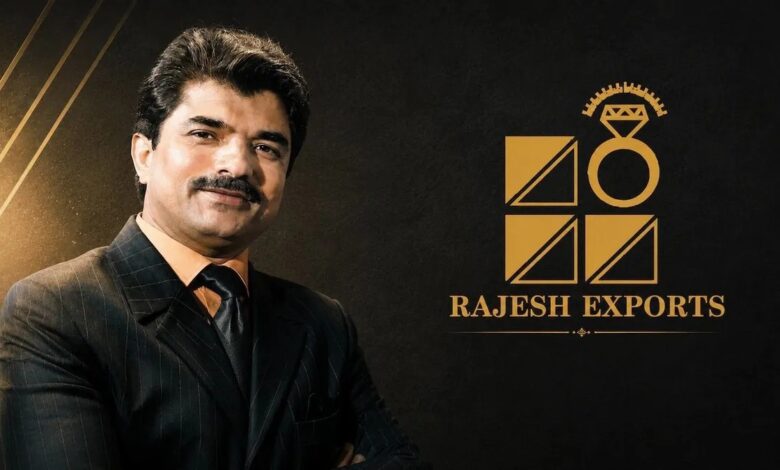
A Man in Bengaluru- A Story That Should Not Have Existed!
Venkatesh Rao is sixty-one years old. He retired from a nationalised bank in Bengaluru in 2022 after thirty-two years of service. Years spent, with the particular discipline of someone who has watched money carefully all his professional life, putting aside a fixed sum every month into a portfolio of blue-chip stocks and a handful of what he called “solid large-cap India stories.” Rajesh Exports was one of them. It was not a speculative bet.
It was a company listed on both the NSE and the BSE, audited by a registered firm, covered by brokerage research, and, the part that mattered most to a man who had spent his career in banking; a company that appeared routinely in lists of India’s largest companies by revenue. It sat alongside Reliance Industries and Indian Oil on those lists. It was, by that measure, one of the most productive businesses in the country.
Venkatesh held the stock for four years. He watched it drift, shrugged at the drift, and held. He believed in the India gold story, aka the country consumes more gold per year than almost any other nation on earth, the demand seemed structural, and Rajesh Exports, which owned the Shubh Jewellers retail chain and a Swiss gold refinery called Valcambi, seemed well positioned to capture it. He had done what every financial literacy guide tells you to do: he had checked the company’s size, its listing status, its auditor, its sector fundamentals.
He had not checked the one thing that would have told him everything: whether the revenues he was reading were real. On June 3, 2026, the Securities and Exchange Board of India issued an interim order against Rajesh Exports Limited and its CEO, Rajesh Mehta. The order runs to 109 pages. It alleges, with specificity that is as impressive as it is damning, that the company misrepresented approximately ₹15,15,385 crore, roughly ₹15.15 lakh crore, or about $158 billion; in subsidiary-linked revenues between FY21 and FY25. That figure represents 99.80% of all revenues attributed to the company’s overseas subsidiaries during that period.
This is not a story about one company. It is a story about what happens when the entire architecture of financial disclosure, including auditors, stock exchanges, listing rules, regulatory surveillance fails simultaneously, and about who pays the price when it does. Venkatesh Rao knows who pays. He is still holding the stock.
The Company and the Gold Illusion: Who Is Rajesh Exports?
To understand why SEBI’s order is so consequential, not just for shareholders of this specific company but for every retail investor in the Indian equity market- it is necessary to understand precisely how large and how credible Rajesh Exports appeared to be.
The company was founded by Rajesh Mehta and his brother Prashant Mehta and is incorporated in Bengaluru under CIN L36911KA1995PLC018425. Its stated business covers the full value chain of gold: manufacturing jewellery, refining bullion, and selling through its Shubh Jewellers retail chain across India. Its flagship asset in terms of international credibility was Valcambi SA, a Switzerland-based gold refinery that it acquired and which is genuinely one of the world’s most recognised gold-refining brands. Below Rajesh Exports in the corporate structure sat REL Singapore, a wholly owned subsidiary described by the company as a holding vehicle, which in turn controlled Global Gold Refineries AG (GGR), the Swiss entity through which most of the consolidated revenue was channelled.
For the better part of the late 2010s and early 2020s, Rajesh Exports reported revenues that placed it among the top five companies in India by turnover, not by market capitalisation, not by profit, but by the headline revenue figure that appears on the first line of a profit and loss statement and that most casual investors take as a proxy for the size of the business. At its peak, consolidated revenues reached figures that placed the company in the same breath as Reliance Industries, Indian Oil Corporation, and Bharat Petroleum, companies that operate refineries, petrol stations, and thousands of employees across the country.
This is where the first red flag was always embedded, waiting to be noticed. A gold jewellery and refining company generating revenues in the range of ₹2,00,000 crore to ₹2,50,000 crore requires an explanation. The gold trading business does legitimately involve high gross revenues relative to value added, when you sell a kilogram of gold at ₹60,000 per 10 grams, the full gross value flows through your books, even if your margin is a fraction of a percent.
This is known, and it is often used as a justification for the sector’s apparently extraordinary turnover figures. But there is a range within which even this explanation is plausible, and there is a range beyond which it demands scrutiny. Rajesh Exports was operating well beyond that range.
The ratio between the company’s reported revenue and its net profit was so extreme, and the gap between its consolidated revenue and the independently audited standalone financials of Valcambi SA was so large, that several analysts who examined the numbers closely found no coherent underlying business logic. Valcambi SA, the principal Swiss operating entity, disclosed negligible standalone revenues in its own audited financial statements — figures that bore no resemblance to the enormous turnover attributed to the subsidiary in the Rajesh Exports consolidated accounts.
The company’s argument, when pressed, was that Valcambi recognised only processing revenue or value addition, while the consolidated entity recognised the gross value of gold transactions. SEBI examined this explanation and found it, in the language of the order, “prima facie unsupported.”
The company’s market capitalisation during its peak years was several thousand crores, supported by the narrative of revenue scale and gold sector exposure. The post-SEBI order market reality — SEBI estimated shareholder wealth erosion at ₹12,726 crore (approximately $1.5 billion) attributable to the misrepresentation and fund diversion — represents the distance between the market’s valuation of a story and the valuation appropriate for the underlying reality. That distance was paid for entirely by public shareholders.
The question SEBI set out to answer, beginning formally in October 2024 when an investigating authority was appointed, was the one that had always been there: where was the gold actually going, and where was the money actually coming from?
The SEBI Order: What the Regulator Found
The interim order issued on June 3, 2026 is the product of a two-year investigation that began, almost modestly, with a single email.
How It Started
On March 11, 2024, a shareholder, not a whistleblower, not a former employee, not an activist investor, but an ordinary shareholder sent a complaint to SEBI. The focus was technical and seemingly narrow: large trade receivables that had remained outstanding for more than two years.
Receivables are amounts a company records as money owed to it by customers. When receivables stay unpaid for extended periods, it raises the question of whether the underlying sales were real in the first place. SEBI examined the complaint, found it credible, and formally appointed an investigating authority on October 23, 2024. On December 3, 2024, BDO India Services was appointed as forensic auditor. What began as a receivables query expanded into one of the most significant corporate governance investigations in India’s recent market history.
On Revenue Inflation
The central finding of SEBI’s order concerns the company’s consolidated revenue — specifically, the revenues attributed to its overseas subsidiaries, principally the Swiss entities REL Singapore and Global Gold Refineries AG (GGR).
SEBI found that 97% to 99% of Rajesh Exports’ consolidated revenue was attributed to these overseas subsidiaries. The company’s Indian standalone operations, by contrast, represented a small fraction of the reported group revenue. This alone is not inherently suspicious, many Indian multinationals derive a majority of their revenue from overseas. What is suspicious, and what SEBI found prima facie indefensible, is that Valcambi SA’s own audited standalone financial statements disclosed revenues dramatically lower than the figures attributed to it in the Rajesh Exports consolidated accounts.
The total alleged misrepresentation across FY21 to FY25 amounts to ₹15,15,385 crore, representing 99.80% of subsidiary-attributed revenue during that five-year period. To contextualise this figure: ₹15.15 lakh crore is larger than India’s entire central government expenditure budget for several recent fiscal years. It is not a rounding error. It is not a difference in accounting convention. It is, according to SEBI, a systematic misrepresentation that was either knowingly constructed or so egregiously negligent in its oversight that the distinction barely matters for the shareholders who lost money.
On the Affluence Transactions
Among the most specifically documented findings in the order concerns a broker called Affluence Shares and Stocks Private Limited. According to SEBI, Rajesh Exports recorded sales of approximately ₹11,487 crore and purchases of approximately ₹11,488 crore with Affluence between FY22 and FY24. These transactions accounted for roughly two-thirds of the company’s standalone turnover during that period, a staggering concentration.

When SEBI contacted Affluence Shares and Stocks as part of its investigation, the broker categorically denied that any such transactions had occurred. No sales. No purchases. The transactions, SEBI alleges, were fictitious entries — recorded in Rajesh Exports’ books to inflate standalone turnover and, crucially, to provide cover for what were actually personal derivative trades conducted by Rajesh Mehta himself. The company’s books, in other words, were allegedly used as a vehicle for the promoter’s personal speculative activity, dressed as company transactions.
On Fund Rerouting
SEBI’s findings on fund diversion are equally specific. The regulator alleges that ₹3.39 billion (approximately ₹339 crore) in company funds were transferred to Rajesh Mehta’s personal bank accounts, including funds used for his derivative trades, without board approval, without audit committee approval, and without proper related-party disclosures. The total quantum of funds routed without approvals or adequate disclosures, across all identified transactions, was ₹9.26 billion (approximately ₹926 crore). These transfers were moved through personal accounts and related entities, layered in a manner that SEBI characterised as lacking transparency and proper documentation.
On the Promoters
SEBI’s interim order has barred Rajesh Mehta from trading in the securities of Rajesh Exports until the investigation concludes. The company and its owner did not immediately respond to a Reuters request for comment at the time of the order. The order also directs the company to present true and fair financial statements, including all related-party transactions, and instructs the company to correct earlier LODR disclosures on related-party dealings and fund flows. The order additionally refers the conduct of the auditors to the NFRA (National Financial Reporting Authority) for possible action, a referral whose significance is examined in detail in Section 6.
On Non-Cooperation
The SEBI order explicitly records that Rajesh Exports did not provide full access to key records during the investigation, including subsidiary financial statements, customer and vendor details, and certain accounting documents, despite repeated requests. Non-cooperation with a regulator during an ongoing investigation is itself a violation of SEBI’s powers — and it slowed the investigation at every stage.
The headline number for every retail investor to know is this: ₹15.15 lakh crore in alleged misrepresentation, across five financial years, involving fictitious transactions, undisclosed fund transfers, and the obstruction of a regulatory investigation. The estimated destruction of shareholder wealth is ₹12,726 crore. These are prima facie findings in an interim order — they are not final conclusions — but no investor who holds or is considering holding this stock can afford to treat them as anything other than extremely serious.
The Retail Investor’s Loss: Who Actually Paid for This?
The ₹12,726 crore wealth erosion figure in SEBI’s order is not an abstract regulatory calculation. It is a sum of thousands of individual losses distributed across the company’s public shareholder base — the people who bought shares on the NSE or BSE, trusting that the numbers on the exchange filings reflected something that had actually happened.
The profile of the investor who was most likely to have been harmed by the Rajesh Exports case is specific and worth understanding. First, there is the revenue-rank investor: someone who, like Venkatesh Rao, uses India’s largest companies by turnover as a heuristic for size, stability, and institutional credibility. Rajesh Exports appeared routinely on those lists.
Revenue rankings generate media coverage, and media coverage generates retail interest, and retail interest generates buying pressure, and buying pressure generates a stock price that appears to confirm the underlying legitimacy of the revenue number. This is the self-reinforcing logic that inflated revenue exploits, and it works precisely because the heuristic being exploited “large companies are credible companies” is almost always correct. The Rajesh Exports case is the exception that made the rule lethal.
Second, there are the investors who came through systematic investment plans or mutual funds that had exposure to the stock. If any fund manager’s research process was anchored to consolidated revenue figures without independently verifying the subsidiary structure, the investors in those funds absorbed losses that originated in the misrepresentation. The concentration of retail and non-institutional shareholders in the company’s public float means that a significant portion of the ₹12,726 crore erosion sits with individuals, not with institutions that have the resources to absorb it.
Third, and perhaps most insidiously, there is the credibility signal problem. A company listed on India’s premier exchanges, audited by a registered firm, and covered by brokerage research carries what functions as an implicit regulatory stamp of approval for the retail investor who is not equipped to perform independent forensic analysis. This is not irrational on the investor’s part.
The entire purpose of listing requirements, disclosure obligations, and auditor sign-offs is to create an environment where ordinary investors can make reasonably informed decisions without having access to forensic accountants and legal teams. The Rajesh Exports case demonstrates that this environment failed completely, and that the cost of its failure was borne entirely by the shareholders it was supposed to protect.
The revenue figures were the product, in the most cynical sense of that word. The gold jewellery was almost secondary. What was being sold to the market was not a business. It was a number, a ₹2,00,000 crore revenue figure that conferred legitimacy, generated coverage, and sustained a share price for years while the underlying reality diverged further and further from what was being disclosed.
How Gold Makes Fraud Easier: The Sector-Specific Vulnerability
Understanding why the gold sector is structurally more susceptible to this type of misrepresentation than most others is not an exercise in excusing the conduct. It is an exercise in equipping investors to apply appropriate scepticism to similar claims in the future.
Gold is a high-value, relatively fungible commodity. When a gold trading or refining company records revenue, it records the full gross sale price of the metal, not the margin it earns on the transaction. A company that buys one kilogram of gold for ₹60,00,000 and sells it for ₹60,06,000 records ₹60,06,000 in revenue and ₹6,000 in gross profit. The revenue is real; the economic contribution is the ₹6,000. This means that even entirely legitimate gold trading businesses carry revenues that appear enormous relative to their actual value addition.
A genuine gold trading operation of meaningful scale can legitimately report revenues in the tens of thousands of crores. This structural feature creates cover — an unusual large number looks more plausible in gold than it would in, say, a pharmaceutical company or an IT services firm, where revenue and value added track each other far more closely.
Circular trading is the mechanism that weaponises this cover. In circular trading, gold (or the paper record of gold) is sold to a connected party, who sells it back to the original entity, or passes it further through a chain of related companies before it completes the circle. Each leg of the transaction generates a revenue entry. The gold or the commodity it represents may move minimally or not at all.
The revenue entries multiply. This is the gold equivalent of what Enron did with energy contracts in its “round-trip” trading schemes in the early 2000s: Enron and a counterparty would simultaneously agree to buy and sell energy at the same price, generating revenue for both parties without any actual economic exchange. The structure created the appearance of a large, active business while masking what was, in substance, an accounting fiction.
The introduction of GST in 2017 and mandatory PAN linkage for gold transactions above threshold values improved the formal tracking of gold flows significantly, and SEBI’s current investigation appears to have benefited from the data that post-GST formalisation enabled. But the full formalisation of the gold economy remains incomplete, and in cross-border gold transactions involving Swiss refineries and Singapore holding companies, the regulatory trail is inherently more complex to follow than in a purely domestic transaction.
The Audit Failure: Where Were the Watchdogs?
Of all the failures exposed by the Rajesh Exports case, the audit failure is the most systemically important — because auditors are the last private-sector line of defence before a company’s financial statements reach the public, and their failure here was not a failure of a single audit engagement. It was a failure of a model.
The company’s statutory auditor during the relevant period was obligated under the Companies Act, 2013 and SEBI’s LODR (Listing Obligations and Disclosure Requirements) Regulations to provide an opinion on whether the financial statements gave a true and fair view of the company’s financial position. The specific red flags that should have triggered either a qualified opinion or an adverse finding were not obscure or difficult to identify: revenue growth of a magnitude that no coherent business model could sustain, an extreme mismatch between consolidated revenue and the standalone financials of the principal operating subsidiary, related-party transactions of enormous scale without adequate commercial explanation, and trade receivables outstanding for periods that exceeded any credible payment timeline.
These were not subtle signals buried in footnotes. They were structural features of the accounts that any competent auditor reviewing the consolidated financial statements of a gold company with a Swiss refinery subsidiary was obligated to investigate, document, and — if a satisfactory explanation was not provided — flag. The fact that the accounts received clean opinions year after year is, at minimum, a profound failure of professional judgment.
SEBI’s order refers the auditor’s conduct to the NFRA (National Financial Reporting Authority) for possible action. The NFRA was established in 2018 specifically to provide independent oversight of the audit quality of listed companies in India — a function that the ICAI’s (Institute of Chartered Accountants of India) self-regulatory model had demonstrably failed to perform with adequate rigour. NFRA has taken action against auditors in a handful of prior cases. Whether it acts meaningfully in this one will be a test of whether audit accountability in India has genuinely changed or whether referral to NFRA functions as a pressure-relief valve rather than an accountability mechanism.
The broader context matters and must not be avoided. The IL&FS collapse of 2018, in which a systemically important financial institution accumulated off-balance-sheet liabilities of over ₹94,000 crore while receiving clean audit opinions, was enabled in part by audit failure. The DHFL fraud, in which ₹34,615 crore was diverted from a housing finance company, went undetected by auditors for years. The Punjab and Maharashtra Co-operative Bank crisis involved financial misreporting that auditors failed to surface despite the regulator’s subsequent finding of widespread fraud. Rajesh Exports is the latest chapter in a pattern that is not coincidental. It is structural.
The structural argument is this: auditor liability in India remains insufficient as a deterrent. An auditor that signs off on revenues of ₹2,00,000 crore or more that subsequently prove to be fictitious faces, at most, professional disciplinary proceedings that may result in a suspension or cancellation of licence — consequences that are real but that are not calibrated to the quantum of investor harm caused. Until auditors face civil liability proportionate to the losses their negligence enables, the incentive structure of audit practice will continue to privilege client retention over professional scepticism. The watchdog will keep sleeping because the cost of sleeping is lower than the cost of barking.
SEBI’s Record: Credit Where It’s Due, and Questions That Remain
Intellectual honesty in assessing the Rajesh Exports case requires giving SEBI the credit it is owed before applying the scrutiny it deserves. The interim order is, by any reasonable measure, a serious piece of regulatory work. A 109-page order documenting specific fictitious transactions, specific fund flows, specific entities, and specific rupee amounts is not a vague regulatory gesture — it is a forensic finding that required sustained investigative effort, the use of an independent forensic auditor (BDO India Services), and the willingness to act against one of India’s highest-revenue listed companies.
SEBI’s overall enforcement trajectory over the past five years has been meaningfully more aggressive than the decade before it: prosecutions for insider trading have increased, front-running cases have been pursued vigorously, and the surveillance architecture at both NSE and BSE has been upgraded in ways that generate faster triggers for investigation. The regulator is not the somnolent institution it was in the early 2000s.
And yet. The harder questions must be asked, because the purpose of examining SEBI’s performance is not to praise or criticise the regulator as an institution — it is to understand what must change so that the next Rajesh Exports case is caught faster and costs investors less.
Rajesh Exports reported revenues placing it in the top five of India Inc. by turnover for multiple consecutive financial years. Those numbers were filed with both NSE and BSE. They appeared in quarterly financial results. They were covered by brokerage research. They were processed by mutual fund research teams making investment decisions. They were reported in financial media. At every stage of this information chain, a company reporting revenues comparable to Reliance Industries while operating a gold jewellery chain and a Swiss refinery — and disclosing no subsidiary-level financial detail that would allow independent verification — was treated as a legitimate and credible entity.
The shareholder complaint that triggered SEBI’s investigation was filed on March 11, 2024. The investigating authority was appointed on October 23, 2024, more than seven months later. The forensic auditor was appointed on December 3, 2024, and the interim order was issued on June 3, 2026: more than two years after the complaint, and years after the revenue figures that SEBI now describes as egregiously misrepresented had been publicly available on exchange filings.
SEBI’s SCORES (SEBI Complaints Redressal System) whistleblower mechanism is designed to receive exactly the kind of complaint that triggered this investigation. Whether any prior complaints about Rajesh Exports were filed and what happened to them is a question the public record has not yet answered. It deserves an answer.

The fair verdict is this: SEBI’s Rajesh Exports order is evidence that enforcement is possible, and it should be welcomed without reservation. But enforcement after the fact does not restore a single rupee of the ₹12,726 crore that shareholders have lost. The regulatory priority must shift from a culture of reaction to a culture of prevention, and the tools for prevention — real-time revenue anomaly detection, mandatory subsidiary-level disclosure for overseas entities above a threshold, enhanced audit oversight through NFRA, and a functioning whistleblower reward mechanism — exist or can be built. The question is whether they will be deployed with the urgency that this case demands.
The Steel Man: Is There Another Explanation?
Before closing the case against Rajesh Exports, intellectual rigour requires engaging seriously with the strongest version of the alternative narrative, not because it is persuasive, but because presenting it and then dismantling it is how this article earns the credibility to make the argument it is making.
The company’s position, when pressed on the revenue figures, has been that the gold trading and refining business legitimately operates on enormous gross revenues relative to economic value added, because the metal is priced at global rates and flows through the books at full value. Valcambi‘s recognised revenues reflect processing fees and value addition, while the GGR consolidated accounts recognise the gross value of gold throughput. On this reading, the discrepancy between consolidated and standalone figures reflects an accounting methodology difference rather than a misrepresentation.
This argument has some surface plausibility. It is true that revenue recognition methodology in commodity businesses can produce large apparent discrepancies between entities in a corporate group, depending on whether each entity records gross or net revenues. It is also true that the gold refining business genuinely processes enormous volumes of metal.
The argument fails, however, on a specific and decisive point. If the revenue recognition methodology produces a ₹15.15 lakh crore figure that is supported neither by Valcambi’s own audited financial statements nor by any independently verifiable transaction records, and SEBI found that neither support existed; then the methodology is not merely different from what the market assumed. It is unsupported by evidence. Additionally, the Affluence Shares transactions, entries of ₹11,487 crore in sales and ₹11,488 crore in purchases with a broker that denied those transactions ever occurred, are not explicable by any accounting convention. They are either real transactions that Affluence is incorrectly denying, or they are fictitious entries. SEBI has concluded, prima facie, that they are fictitious.
The question is not whether some portion of Rajesh Exports’ business was commercially real. Some of it clearly was Valcambi exists, Shubh Jewellers exists, gold was processed and sold. The question is whether the disclosures made to public shareholders over five years were accurate representations of what that business actually was. On that question, SEBI’s 109-page interim order provides a detailed and specific answer. The answer is no.
The Verdict: Enforcement Is Not Enough
The SEBI order against Rajesh Exports is justice. It is also delayed justice. And in capital markets, delayed justice is not meaningfully different from injustice for the investor who sold at a loss in the years between the misrepresentation and the order, or who is holding a position that has already collapsed. The order confirms, on a prima facie basis, that the fraud occurred. It does not restore a single rupee of the ₹12,726 crore that public shareholders have lost. The regulator’s action arrives after the harm is done, which is better than the regulator’s action never arriving, but it is a far cry from the prevention that the ₹12,726 crore should have bought.
What India’s capital market ecosystem demonstrably needs, and what the Rajesh Exports case makes viscerally clear, in numbers too large to contextualise with comfort is a structural shift from enforcement culture to prevention culture. This requires specific changes, not general commitments. The NFRA must be empowered and funded to conduct regular, risk-based audit inspections of the highest-revenue listed companies, with mandatory public reporting of its findings; an audit that signs off on revenues comparable to India’s largest conglomerate must receive proportionately intense scrutiny, and that scrutiny must be independent of the company being audited.
SEBI’s surveillance systems must incorporate revenue anomaly detection as a formal trigger for accelerated investigation — a company reporting top-five revenues in India Inc. while showing net profits of a few hundred crores and disclosing no meaningful subsidiary-level financials should generate an automatic red flag within months, not years. The SCORES whistleblower mechanism must be strengthened with enforceable timelines for initial response and, critically, with a whistleblower reward system that provides meaningful financial protection for the people who surface these cases at personal risk.
And disgorgement orders must be sized proportionately to the harm caused — fines of a few crores against frauds of thousands of crores are not deterrents. They are rounding errors in the profit calculation of the scheme.
India is building a capital market it intends the world to take seriously. The Zerodha and Groww generation of retail investors, tens of millions of first-time equity investors who entered the market during and after the pandemic, is investing in Indian stocks for the first time, anchored to an expectation that the system has been designed to protect them.
Foreign institutional investors, whose participation at scale is central to India’s ambition to deepen its capital markets, are watching every major corporate governance case as a signal about whether India’s regulatory ecosystem is mature enough to be trusted with serious capital. Every Rajesh Exports-type case that is exposed, investigated with rigour, and followed by meaningful consequences is evidence that the system works. Every one that is not caught in time — every case where the shareholder complaint languishes for months before an authority is appointed and years before an order is issued — is evidence that it does not work well enough.
The goal is not a market where SEBI never needs to issue another order like this one. Fraud will always find its way into markets — every exchange in the world has learned that. The goal is a market where SEBI issues this order eighteen months earlier, where the forensic auditor is appointed within weeks not months, where the revenue anomaly is flagged by exchange surveillance before a shareholder complaint is necessary, and where the disgorgement order, when it comes, is large enough to guarantee that the promoter who ran the scheme ends up materially worse off than if he had never run it.

The question is not whether SEBI caught them. The question is how many retail investors lost how much money before it did — and what we are prepared to change so that the answer to that question keeps getting smaller.