The Premium Food Paradox: Anveshan Has The Believers, But Does It Have The Market?
IIT Graduates, IFC Money, and a Bottle of Ghee: Inside Anveshan's Ambitious Farm-to-Fork Bet

The Story Behind the Ghee Jar
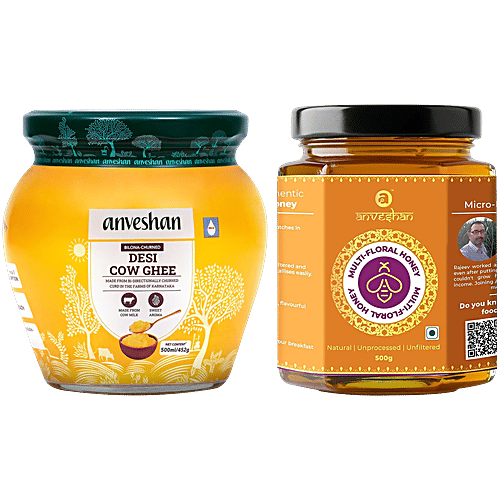
There is something deliberately symbolic about the packaging Anveshan chose for its flagship A2 ghee: a mason jar, handwritten-style labels, the kind of container your grandmother might have used. It is a deliberate visual language that communicates exactly what the brand is trying to say, that this is not factory food, that it is connected to something older, slower, and more honest than the commodity ghee sitting on a hypermarket shelf.
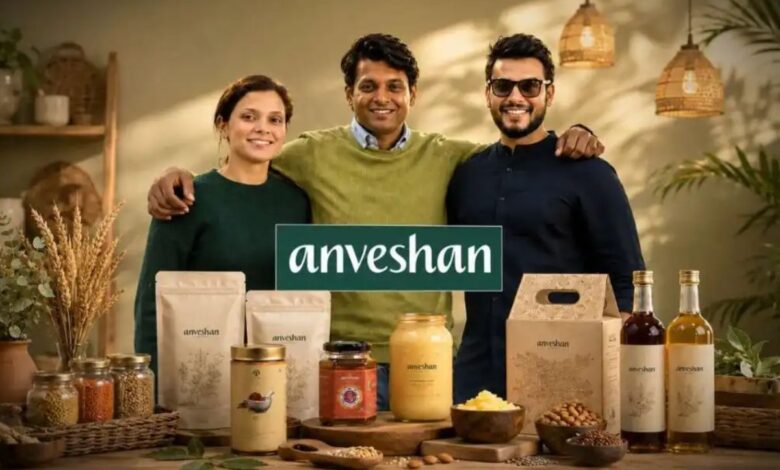
The company behind that jar is Anveshan Farm Technologies Private Limited, founded in 2019 and legally incorporated on January 22, 2020, by three IIT Guwahati alumni: Kuldeep Singh Parewa (CEO), Akhil Kansal, and Aayushi Khandelwal. Their founding premise was as straightforward as it was ambitious. India’s food supply chain is broken by adulteration, opaque supply chains, and a loss of traditional processing methods, and there is a growing class of Indian consumers who know this, fear it, and will pay a meaningful premium to escape it.
From that premise, Anveshan has built a direct-to-consumer business offering cold-pressed oils, A2 Vedic Bilona Ghee, raw honey, organic spices, millets, sattu, and most recently atta — a gradual but deliberate expansion from a ghee-and-oil brand toward something with greater ambition: the trusted natural kitchen for the Indian urban household. It sells primarily through its own website and major e-commerce platforms Amazon and Flipkart, with a selective offline presence in premium retail stores across Mumbai, Delhi NCR, and Bengaluru. As per Tracxn data, it employs 92 people, operates 13 active GST numbers across 12 states, and has raised a total of approximately $23.6 million, roughly ₹196 crore, across 9 rounds.
Anveshan’s fundraising journey is a textbook case study in how a D2C brand scales through the Indian startup capital system, round by round.
/entrackr/media/post_attachments/wp-content/uploads/2022/06/anveshan.jpg)
It began modestly with ₹1.15 crore from Titan Capital in October 2020 as pre-seed, largely for R&D and supply chain basics. By September 2021, a ₹3.67 crore Seed II round added DSG Consumer Partners and boAt to the cap table. In September 2022, the company raised its Pre-Series A of $2 million (~₹16 crore) led by DSG, Force Ventures, and We Founder Circle, pulling in strategic angels from Netgraph, Vardhman Group, and Zetwerk. Bridge rounds in 2023 and 2024 maintained the momentum without a headline number.
Then came the inflection. In April 2025, a Series A of ₹48 crore was led by Wipro Consumer Care Ventures, with the boAt co-founders and existing backers joining. The company was valued at approximately ₹430 crore, a meaningful step-up, and Wipro Consumer Care’s lead position was particularly notable given Wipro’s distribution muscle in the FMCG space.
The most recent and largest round came in May 2026. A Series B of ₹150 crore (~$16 million) led by Vertex Ventures Southeast Asia & India, with the International Finance Corporation (IFC), the World Bank Group’s private investment arm contributing ₹31 crore. Swiggy co-founder Sri Harsha Majety also joined as an angel investor. Entrackr estimated this valued the company at over $90 million, or approximately ₹750-846 crore.
Each of these rounds tells a different chapter. The early rounds tell a scrappy origins story. The Series A, led by a Wipro-affiliated vehicle, begins to hint at the manufacturing and distribution leverage that a serious FMCG player needs. The Series B, with IFC’s ESG-rigorous due diligence stamp and Majety’s distribution instincts on board suggests Anveshan is now being evaluated not just as a startup, but as a potential platform-scale food brand with international and quick-commerce distribution potential.
What has all of this capital actually produced in revenue terms?
The Financials
In FY23, operating revenue was approximately ₹31.3 crore against a net loss of ₹7.4 crore, a loss ratio of about 24%. In FY24, revenue jumped 85% to ₹58 crore while the net loss narrowed to ₹5.7 crore, bringing the loss ratio down to roughly 10%. That is the trajectory a D2C brand needs to demonstrate: revenue growing faster than losses, operating leverage showing up in the numbers.
Then FY25 disrupted the narrative. Revenue grew 65% to ₹77 crore, which is strong. But losses nearly doubled, to ₹11.88 crore, which is a loss ratio back up to about 15%. The likely explanation is deliberate. Any founder rational enough to raise a large Series A will typically spend aggressively in the year preceding it, to show investors a compelling growth velocity curve. Marketing spend and headcount additions ahead of a funding round are a well-understood pattern in the D2C ecosystem. Whether FY25’s loss widening is a one-time investment cycle or the beginning of a structural cost problem is a question that only FY26 full-year results will settle.
What makes the post-FY25 numbers simultaneously exciting and difficult to verify is the company’s own claim. An annualised revenue run rate of ₹280-300 crore as of mid-2026, with a target of ₹1,000 crore in revenue within 24-30 months. If the run rate figure is accurate, it represents a roughly 3-4x acceleration from FY25’s reported ₹77 crore, which is an extraordinary jump that would require either massive customer acquisition, significant expansion into offline retail, or a rapid scaling of the atta and commodity categories that have broader addressable markets than premium bilona ghee.
The ₹1,000 crore target, while aspirational, would place Anveshan in a competitive bracket alongside established organic food brands, and the economics at that scale look materially different from the economics today.
The Premium Positioning: Strength and Ceiling
The most strategically interesting question about Anveshan is not whether its products are good, they clearly are. Third-party lab testing platform Unbox Health gave its A2 Cow Ghee a perfect 10/10 on both non-toxicity and label accuracy. Customer reviews across Flipkart and Amazon are overwhelmingly positive, with recurring praise for purity, aroma, and packaging. Repeat purchase rates in early D2C cohorts are reported at 35-45%, which is exceptional for a premium food brand and means the product earns its keep once a customer has tried it.
The deeper question is whether the premium positioning can scale, or whether it functions as a ceiling as much as an asset.
India’s premiumisation story is real and accelerating. The organic and natural food market is growing at over 20% annually. The post-COVID health consciousness wave has made urban, educated consumers not just interested in, but actively seeking products with verified purity claims. Anveshan’s blockchain-backed QR traceability is not marketing theatre; it is the actual mechanism that justifies the price. When a consumer scans the QR code on their ghee jar and sees the specific farmer family, the test results, the processing date, they are not just purchasing a food product; they are purchasing trust made tangible. In a market where FSSAI data has repeatedly confirmed widespread adulteration in edible oils and dairy products, that trust has genuine, defensible monetary value.
But the segment of Indian consumers who will act on that trust, and pay the resulting premium, is concentrated. It skews urban, metro, and upper-middle-class. Estimates place this addressable segment at roughly 30-50 million households, which is a large number in absolute terms, but a real ceiling for a brand that needs to reach ₹1,000 crore in revenue. At an average customer basket of perhaps ₹1,500-2,000 per order, two to three orders a year, the math requires either millions of customers within this premium segment, or expansion into a broader demographic where the price sensitivity calculus is meaningfully different.
This is precisely what the atta launch, the millets, the spices, and the sattu categories are perhaps trying to solve. They are not premium-for-premium’s-sake additions; they are strategic attempts to deepen the per-household wallet share and build what brand strategists call a “household penetration play.” If Anveshan can become the default kitchen brand for its existing 300,000+ customers, the source of their flour, their spices, their oils, and their ghee, the revenue per customer climbs dramatically without the brand needing to find millions of new premium converts. That is a defensible and logical strategy. Whether it can be executed at the pace the ₹1,000 crore target demands is the open question.
The Tier-2 expansion, when it comes, will be the true test. In cities like this, health consciousness exists and is growing, but the willingness to pay ₹1,200 for bilona ghee over ₹600 for commercial ghee is genuinely lower, and the social-proof networks that validate premium purchases in South Delhi or Koramangala are thinner. Getting the pricing architecture right for Tier-2 without diluting the brand promise built in Tier-1 is a challenge that has tripped up many Indian D2C companies at exactly this stage of growth.
The composition of Anveshan’s Series B cap table is arguably as informative as the financial metrics. IFC does not participate in rounds lightly, its investment process involves ESG due diligence, impact measurement frameworks, and a thesis about whether the business model genuinely benefits underserved communities. The fact that IFC backed Anveshan validates not just the commercial opportunity but the farmer-empowerment model at the core of the business. Anveshan claims its micro-entrepreneur network adds meaningful income to rural farming families; IFC’s participation suggests that claim withstands scrutiny.
Sri Harsha Majety’s angel involvement is a different kind of signal, more strategic than impact-driven. Swiggy’s quick commerce arm, Instamart, is one of the most aggressive distributors of packaged food in urban India. An investor who also controls one of the largest last-mile distribution networks in the country, backing a premium food brand, creates natural synergy potential that goes beyond a financial return.
Wipro Consumer Care’s continued participation into the Series B further strengthens the manufacturing and institutional-distribution hypothesis. Wipro Consumer Care has significant expertise in scaling FMCG brands through traditional retail channels, the exact capability Anveshan will need if it is serious about reaching ₹1,000 crore in a market where D2C revenue alone cannot carry that weight.
Anveshan is not, by any serious measure, a troubled company. It has strong product-market fit in its core categories, verified product quality, a repeat customer base that speaks to genuine brand loyalty, a carefully assembled and strategically coherent investor roster, and a founder team whose IIT background and operational rigour are evident in the governance and traceability infrastructure they have built.
What Anveshan is, precisely, is a company at the hardest inflection point in the D2C lifecycle: the moment where “this is a very good brand with a loyal niche” must become “this is a platform-scale business with hundreds of crores in sustainable revenue.” That transition requires things the company does not yet fully control, the pace of India’s premiumisation at Tier-2 and beyond, the competitive response from established FMCG brands who are watching the clean-label category with increasing interest, and the ability to deploy ₹150 crore of fresh Series B capital into the right levers without losing the operational intimacy that makes the brand trustworthy in the first place.
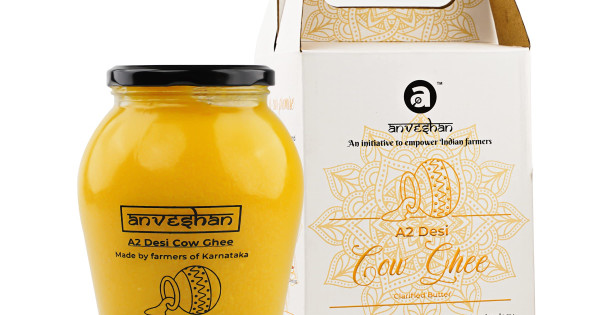
The losses, by themselves, are not the story. The story is whether the losses are building something durable. The mason jar, the QR code, the Hallikar cow, the farmer’s name on the label, these are not just aesthetics. They are the bones of a brand proposition that a growing segment of India is genuinely hungry for. Whether Anveshan can build the business architecture to match that proposition at scale, before investor patience runs its natural course, is the question that the next two financial years will begin to answer.