The Zepto IPO Saga: Revenue Doubles, Losses Triple. Will Quick Commerce Ever Make Money?
Zepto Is Burning ₹3,367 Crore a Year, and Still Asking You to Buy Its IPO...

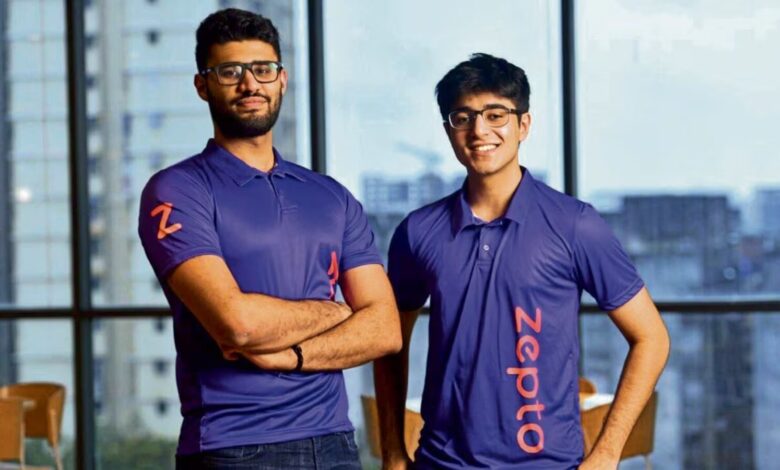
There is a number buried in Zepto’s FY25 audited financials that deserves more attention than it has received. The company’s total sales rose 129% year-on-year to ₹9,668.8 crore. That is the number Zepto would like you to focus on. The number they would rather you not linger over is this: over the same period, net losses widened 177% to ₹3,367.3 crore, from ₹1,214.7 crore the year before. Revenue nearly doubled. Losses nearly tripled.
In any industry, this asymmetry would trigger alarm. In Indian startup finance, it has become so normalised that it barely registers as news. But with Zepto’s IPO, targeting a raise of ₹11,000–₹12,000 crore, with SEBI approval on the way and a listing window targeting 2026, public market investors now need to reckon with what these numbers actually mean. The question is not whether Zepto is growing. It demonstrably is. The question is whether growth, at this cost, is building something durable, or whether it is simply purchasing market share with money it cannot yet afford to spend.
Layer 1: What the Revenue Number Is Actually Telling You
The ₹9,668.8 crore figure that Zepto reports as “total sales” is not the same as what most people instinctively understand as revenue. Quick commerce platforms like Zepto are structured differently from conventional retailers, and understanding this distinction is the first step to reading the numbers honestly.
In the quick commerce model, Zepto buys inventory, sells it to customers, and keeps the margin. It also earns delivery fees, platform commissions from brand partners, and advertising income from FMCG companies paying for sponsored placements. The “total sales” figure aggregates all of these, but it is not the same as Gross Merchandise Value (GMV), which is the total value of orders flowing through the platform. In Zepto’s case, Entrackr reported an annualised gross order value (GOV) approaching $4 billion as of July 2025, which at current exchange rates translates to roughly ₹33,000–₹35,000 crore annually. Yet reported total sales are ₹9,668.8 crore.
This gap is not accounting sleight of hand; it reflects the take rate, which is the percentage of GMV that converts into recognised revenue. Industry estimates cited by BW Retail World suggest quick commerce companies typically recognise 15–20% of GMV as operating revenue. Applied to Zepto, this implies actual operating revenue, before other income, is likely in the range of ₹1,500–₹2,000 crore, meaning the ₹9,668.8 crore figure includes a significant inventory pass-through that flatters the top line.
Why does this matter? Because if Zepto’s take rate is not improving meaningfully despite massive volume growth, it suggests the company is not extracting more economic value per rupee of goods it moves, but it is simply moving more goods. Revenue quality, not just revenue quantity, is what determines whether scale translates to profit. The fact that Zepto lost ₹3,367 crore while generating ₹9,668 crore in sales means it spent approximately ₹1.35 for every ₹1 it earned. In FY24, that ratio was approximately ₹1.29 per rupee earned. The direction is wrong.
Layer 2: Where the Money Goes, and Why It Cannot Stop Going There
To understand why Zepto’s losses are widening faster than its revenue, you need to understand what kind of business quick commerce actually is. Strip away the app, the 10-minute promise, and the venture capital mythology, and what you have is a logistics and real estate operation of considerable complexity and cost.
Zepto operates approximately 950–1,100 dark stores across 70+ Indian cities; micro-warehouses of roughly 1,800 to 8,000 square feet, each stocking up to 45,000 SKUs. Each dark store requires a lease, fit-out capital, inventory financing, a full-time picking and packing workforce, and ongoing technology integration. According to Contrary Research, Zepto’s advertising revenue run rate grew from $40 million to $200 million in a single year as of April 2025, which is a promising signal, but the cost of expanding the dark store network from ~700 stores to 1,100+ simultaneously required enormous capital outlay that outpaced even this growth.
The delivery side of the operation is where the economics get particularly uncomfortable. Last-mile delivery in quick commerce is expensive precisely because the promise is speed, not efficiency. A conventional e-commerce delivery can be batched, scheduled, and routed optimally across dozens of stops. A 10-minute grocery delivery cannot: riders make single trips on fixed routes, often carrying one or two items, because customer expectation of speed makes batching impossible. This structural constraint means delivery cost per order is relatively fixed regardless of basket size. Zepto’s average order value (AOV) is approximately ₹550. Analysts estimate the company loses roughly ₹40–46 per order at the current stage, an improvement from earlier, but a loss nonetheless on every transaction it fulfils.
Customer acquisition cost adds another layer. In a three-way war between Zepto, Blinkit, and Swiggy Instamart, discounts function less like a marketing strategy and more like a permanent structural subsidy. Removing discounts unilaterally risks immediate customer defection to a competitor who has not removed them. This creates a Nash equilibrium of sorts, all three platforms know the discounts are economically damaging, none can blink first, and so the subsidies continue while everyone bleeds. Zepto’s FY25 loss being 35% of revenue, up from 29% in FY24 is the arithmetic consequence of this dynamic.
Layer 3: Can Scale Fix This? The Unit Economics Reckoning
The bull case for Zepto and for every loss-making consumer internet business before it, is, perhaps, the J-curve argument, which says losses today are investments in the infrastructure and market position that will generate profit tomorrow. Once dark stores reach sufficient order density, fixed costs get spread across more orders, contribution margin turns positive, and the business flips to profitability. This argument deserves rigorous examination rather than reflexive acceptance or rejection.
There is genuine evidence that the J-curve thesis has some validity in quick commerce. Zepto itself has claimed that more than 60% of its mature dark stores are now operating at EBITDA-positive levels at the store level. If true, this is meaningful, it hints that the problem is not that the model is fundamentally broken, but that the company is in a permanent state of transition, constantly opening new stores that drag the blended average down while older stores improve. The question an investor must ask is: at what point does the mature store cohort become large enough relative to new store openings that the aggregate tips positive?
Blinkit, which as part of the listed Eternal Ltd. (formerly Zomato) group discloses considerably more than Zepto, and that provides a useful benchmark. Despite operating over 1,301 stores in Q4 FY25, Blinkit’s contribution margin was only 3.8–3.9% of Net Order Value. Its adjusted EBITDA loss in Q4 FY25 alone was ₹178 crore. It was not until Q3 FY26 that Blinkit achieved adjusted EBITDA profitability for the first time, posting a razor-thin ₹4 crore profit, on a business that Zomato has injected ₹4,300 crore into since its 2022 acquisition.
Blinkit achieved this milestone with over 2,027 dark stores and a business that has been running for several years. Zepto is earlier in its maturation curve with a lighter balance sheet: cash reserves estimated at $600–700 million versus Blinkit’s $1.7 billion and Swiggy’s $1.9 billion.
The competitive structure of Indian quick commerce also makes the path to profitability structurally harder than the bull case assumes. Quick commerce in India is concentrated. 73% of dark stores are located in the top four cities, meaning the competition is most intense precisely where the economic opportunity is greatest. If all three players are fighting for the same customer in Bengaluru, Mumbai, Delhi, and Hyderabad, the winner of that market takes all, but the cost of winning it may exceed the value of what is won.
Layer 4: What Public Market Investors Will Actually Demand
Zepto filed its draft IPO papers confidentially with SEBI on December 26, 2025. The company is targeting a listing in the July–September 2026 window, seeking to raise ₹11,000–₹12,000 crore at a valuation that was privately set at $7 billion in 2024. However, analysts cited by Whalesbook have already suggested the public market may apply a haircut to that private valuation, pricing the IPO in the $5.6–$5.95 billion range given current market sentiment around loss-making consumer technology businesses.
This valuation gap, between what private investors paid and what public investors may be willing to pay is, perhaps, the central drama of Zepto’s IPO. It is not unique to Zepto. Paytm listed at ₹2,150 per share in 2021 and fell to ₹439 within a year. Zomato itself listed at ₹76, fell to ₹40, and only recovered after demonstrably improving its unit economics and turning profitable. The market has seen this movie before and knows how it often ends.
Zomato’s post-IPO journey is the most instructive template for what Zepto will face. When Zomato listed, public investors were initially enthusiastic about growth, then punitive about losses, then rewarding again only when the company showed concrete margin improvement. The pattern of charge first, reward proof is now well-established. What it means practically is that Zepto’s IPO valuation will be heavily discounted unless it can show two things convincingly. The first is a credible and near-term path to contribution margin positivity at the consolidated level, and evidence that revenue growth is coming from genuine demand rather than discount-induced purchases that will evaporate when subsidies are reduced.
On current numbers, Zepto has not yet demonstrated either conclusively. The IPO prospectus will need to make the case that FY26, the financial year ending March 2026, shows meaningful improvement in operating metrics, because public investors will not accept FY25’s 177% loss expansion as the last data point before they are asked to buy shares. Management has stated a goal of reaching EBITDA breakeven by FY26. Whether that target has been met, or approached credibly, will be the single most important question at the IPO roadshow.

Layer 5: The Structural Question — Is Indian Quick Commerce a Real Business?
Pulling back to the widest lens, the deepest question about Zepto is not whether it can manage its costs better or open its next 100 dark stores more efficiently. It is whether the business model of 10-minute grocery delivery is structurally viable in the Indian market, or whether it is a convenience habit manufactured by subsidy, sustained by venture capital, and vulnerable to collapse when the money runs out.
The Indian market has characteristics that are both favourable and unfavourable for quick commerce in ways that Western analogies do not fully capture. On the favourable side, India’s urban density is extraordinary, which compresses delivery distances and makes the dark store model more economically feasible than in dispersed Western suburbs. The India quick commerce market was valued at approximately ₹64,000 crore (~$7.6 billion) in FY25 per CareEdge estimates cited by Reuters, with projections to triple by 2028. Zepto itself reports 16 million monthly transacting customers and 1.5–1.6 million daily orders as of August 2025 — numbers that represent genuine, habitual usage by a meaningful slice of urban India.
On the unfavourable side: India’s consumers are extremely price-sensitive, average order values are structurally lower than in Western markets, and the informal kirana store network, which competes on proximity, credit extension to regular customers, and personalised service, has proven more resilient than optimistic tech investors initially assumed. Critically, the question of whether quick commerce demand is organic or discount-manufactured remains unresolved. Studies on Indian consumer behaviour consistently show high price sensitivity; which implies, when delivery fees rise from ₹0 to ₹30 and discounts disappear, order frequency drops meaningfully. This suggests a significant portion of current demand is price-elastic in ways that threaten unit economics the moment platforms try to improve them.
The international precedent is sobering. Gorillas, the German quick-commerce unicorn, raised $1.3 billion and collapsed within four years. Getir, the Turkish pioneer that expanded aggressively across Europe and the US, retrenched dramatically from multiple markets after burning through capital.
The mechanism of failure in both cases was identical. The unit economics never improved fast enough to reduce the cash burn rate before funding dried up. India’s quick commerce players have thus far been insulated from this fate by the depth of Indian venture and growth capital, and by the Zomato-Blinkit structure that gives Blinkit a listed parent to fund its expansion. Zepto does not have that backstop. Its $600–700 million in estimated cash gives it a runway — but not an infinite one.
The most honest assessment of Zepto’s long-term viability is that, the business model works in aggregate for a market leader with sufficient density in a small number of high-income urban micro-markets. It does not yet work across the full geographic and demographic canvas that Zepto’s valuation implies. The IPO, if it succeeds, will buy Zepto time to prove whether the former can become the latter — or whether the economics of 10-minute delivery will always be purchased at a price that consumers are unwilling to pay without subsidy.
For investors approaching the listing, the signals to watch are specific and quantifiable.
Monthly order frequency per active user– If it is rising without discount intensity, genuine habit formation is occurring.
Contribution margin at the consolidated level– If it crosses zero on a sustained basis, the J-curve thesis has statistical support.
Take rate trajectory– If it improves from the current 15–20% band. Zepto is monetising volume more effectively.
Cash burn per quarter– If it is decelerating faster than revenue growth, the company is approaching the efficiency threshold that profitability requires.
What Zepto has built in 5 years is genuinely remarkable. Over a billion dollars in annualised revenue, 16 million monthly users, and a dark store network that rivals built over decades. What it has not yet built is a business that makes money. The IPO will ask public investors to fund the distance between those two facts. Whether that distance is bridgeable, and at what valuation it should be priced, is the most important financial question in Indian consumer technology in 2026.