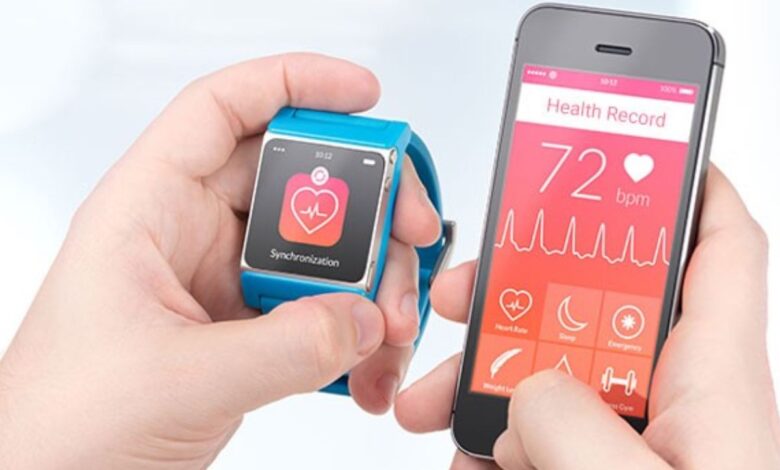
India’s wearable health technology market has undergone a remarkable transformation over the past few years. What was once a niche category dominated by fitness enthusiasts tracking step counts has evolved into a serious health monitoring ecosystem — one where devices measure blood oxygen saturation, detect irregular heart rhythms, monitor sleep stages, and even estimate blood glucose trends. The Indian market, now one of the fastest-growing wearable markets globally, is being shaped by a unique combination of rising health consciousness post-pandemic, an expanding middle class, and increasingly affordable domestic hardware alternatives to global brands.
This guide covers the top 10 wearable health tech devices available in India in 2026, evaluated on health monitoring accuracy, feature depth, battery life, software ecosystem, after-sales support, and overall value for Indian consumers.
1. Apple Watch Series 10
Best for: iPhone users who want the most comprehensive health monitoring available
The Apple Watch Series 10 represents the current gold standard in consumer health wearables globally, and it is widely available in India through Apple’s official retail channels and authorised resellers. What makes the Series 10 particularly significant from a health perspective is its clinically validated feature set — ECG (electrocardiogram) monitoring capable of detecting atrial fibrillation, blood oxygen (SpO2) measurement, skin temperature sensing, crash detection, and FDA-cleared irregular heart rhythm notifications.
The Series 10 introduced a thinner, wider display compared to its predecessors, along with faster on-wrist charging and improved water resistance rated to 50 metres. For Indian users, the addition of a double-tap gesture and enhanced sleep apnea detection (cleared in several markets) makes it one of the most medically credible wearables money can buy. The tight integration with the Apple Health ecosystem means data flows seamlessly into a unified health dashboard, and the device supports sharing health records with doctors — increasingly relevant as India’s digital health infrastructure grows under initiatives like ABDM (Ayushman Bharat Digital Mission).
Key Strengths: ECG + AFib detection, sleep apnea monitoring, crash detection, deep iOS integration, strong build quality, and wide Indian availability.
Limitations: Requires an iPhone; premium pricing (starting around ₹41,900); battery lasts only about 18 hours with always-on display enabled.
2. Samsung Galaxy Watch 7
Best for: Android users wanting flagship health monitoring with an open ecosystem
Samsung’s Galaxy Watch 7 is the most compelling Android-native health wearable available in India in 2026. Running on Wear OS with Samsung’s One UI Watch layer on top, the Galaxy Watch 7 brings a remarkable array of health sensors — including Samsung’s BioActive Sensor that simultaneously measures heart rate, SpO2, and body composition (skeletal muscle mass, body fat percentage, and body water) using bioelectrical impedance analysis. This level of metabolic insight from a wrist-worn device was unthinkable five years ago.
The watch also features an advanced sleep coaching system, continuous heart rate monitoring with AFib detection, and a temperature sensor for ovulation cycle tracking. Samsung has invested heavily in clinical partnerships to validate its health algorithms, which gives the Galaxy Watch 7’s readings more credibility than many competing Android-compatible smartwatches. In India, it works best paired with a Samsung Galaxy phone but functions with any Android device.
Key Strengths: Body composition analysis, AFib detection, sleep coaching, Wear OS app ecosystem, great AMOLED display, and competitive Indian pricing starting around ₹29,999.
Limitations: Full feature set requires a Samsung Galaxy phone; battery life of approximately 40 hours is decent but not class-leading.
3. Fitbit Charge 6
Best for: Fitness-focused users who want reliable health tracking without smartwatch complexity
The Fitbit Charge 6 occupies an interesting middle ground — it is more advanced than a basic fitness band but considerably simpler and longer-lasting than a full smartwatch. Now fully integrated into Google’s ecosystem since the acquisition, the Charge 6 works with Google Maps for guided running routes, Google Wallet for contactless payments, and Fitbit’s own Premium subscription for deeper health insights.
For Indian users particularly concerned about cardiovascular health, the Charge 6 offers an EDA (electrodermal activity) sensor for stress management, continuous ECG, SpO2 monitoring, and Active Zone Minutes — a proprietary metric that tracks time spent in cardio and fat-burn heart rate zones. The device’s slim form factor makes it comfortable for all-day wear, and its 7-day battery life is a significant practical advantage over smartwatches that need nightly charging.
Key Strengths: 7-day battery, ECG and SpO2, EDA stress sensor, slim comfortable form factor, Google ecosystem integration, and strong app maturity from years of Fitbit development.
Limitations: Fitbit Premium subscription required for full health insights; no onboard GPS (relies on phone GPS); relatively small display.
4. Garmin Venu 3
Best for: Serious fitness enthusiasts, runners, and health data power users
Garmin has built a reputation for producing wearables that go deeper into health and fitness analytics than almost any competitor, and the Venu 3 is its most health-comprehensive lifestyle smartwatch available in India. Where most wearables give you a sleep score and a few metrics, Garmin’s Body Battery system synthesises stress levels, heart rate variability (HRV), SpO2, and activity data into a single energy reserve metric — genuinely useful for athletes managing training load and recovery.
The Venu 3 also introduced wheelchair activity profiles and nap detection, showing Garmin’s expanding definition of inclusive health tracking. Its Pulse Ox sensor works round-the-clock, its stress tracking is among the most granular available, and the Health Snapshot feature generates a 2-minute summary of key vitals on demand. Garmin’s offline maps and GPS accuracy remain industry-leading for outdoor athletes. In India, the Venu 3 is available through authorised Garmin retailers and major e-commerce platforms, priced around ₹39,999–₹45,999.
Key Strengths: Body Battery energy tracking, HRV monitoring, nap detection, round-the-clock SpO2, excellent GPS, and Garmin’s proven health algorithm ecosystem.
Limitations: Wear OS is absent (Garmin runs its own OS with a more limited app store); aesthetics lean sporty; premium pricing.
5. boAt Wave Ultima Select
Best for: Indian consumers seeking a feature-rich health smartwatch at an accessible price
boAt has become one of the most dominant wearable brands in India by volume, and the Wave Ultima Select sits at the upper end of its smartwatch lineup — offering a surprising depth of health features at a price point that undercuts international brands by a wide margin. The watch features a 1.96-inch AMOLED display, 24/7 heart rate monitoring, SpO2 tracking, stress monitoring, menstrual cycle tracking, and over 100 sports modes.
What makes boAt’s growth story particularly relevant for Indian consumers is the brand’s investment in local after-sales service infrastructure — something that global brands have historically struggled to match in Tier 2 and Tier 3 Indian cities. The Wave Ultima Select is priced around ₹2,499–₹3,499, making health monitoring accessible to a demographic that simply cannot consider ₹30,000+ imports. While the clinical accuracy of its sensors does not match Apple or Samsung, for general wellness tracking, step counting, sleep monitoring, and heart rate trends, it is a genuinely capable device.
Key Strengths: Extremely accessible pricing, AMOLED display, broad sports mode coverage, strong Indian after-sales network, and solid battery life of 7–10 days.
Limitations: Sensor accuracy is lower than premium devices; the companion app lacks the analytical depth of Fitbit or Garmin Connect; not suited for clinical-grade health monitoring.
6. Noise ColorFit Ultra 3
Best for: Value-conscious buyers wanting Bluetooth calling + health features in one device
Noise (Go Noise) is another Indian brand that has established a commanding market presence, and the ColorFit Ultra 3 is among its most well-rounded health-focused smartwatches. A distinguishing feature of Noise’s lineup has been Bluetooth calling capability integrated directly into the watch — allowing users to take calls from their wrist, which has proven enormously popular in India’s urban commuter market.
Beyond calling, the ColorFit Ultra 3 offers continuous SpO2, heart rate monitoring, stress tracking, a 1.96-inch Always-On Display option, and a menstrual health tracker. It also includes an AI-powered readiness score that synthesises sleep, HRV, and activity data. At around ₹2,999, it represents an honest value proposition for users who want a connected health device without a significant financial commitment.
Key Strengths: Bluetooth calling, large AMOLED display, AI readiness score, comprehensive sensor suite for the price, and strong Indian brand support.
Limitations: Health sensor accuracy is consumer-grade; ecosystem app is less mature than global counterparts; build quality is not comparable to premium devices.
7. Amazfit Balance
Best for: Users who want premium health features at a mid-range price point
Amazfit (by Zepp Health, formerly Huami) has steadily elevated its product quality and the Balance is the clearest expression of that trajectory. Unlike many mid-range wearables that simply list sensor features without the algorithms to make them useful, Amazfit Balance incorporates Zepp’s AI health coaching platform — called Zepp Coach — that generates personalised workout and recovery recommendations based on your biometric trends.
The Balance features a dual-band GPS, continuous ECG, Afib detection, body composition measurement (via bioimpedance), stress monitoring through HRV analysis, and a sleep assessment system accurate enough to be compared favourably with polysomnography in independent studies. The AMOLED display is large and vivid, and the 14-day battery life is exceptional for a device this feature-rich. In India, it is available around ₹14,999–₹17,999, making it one of the strongest mid-tier health wearables available.
Key Strengths: Zepp AI coaching, dual-band GPS, body composition sensing, ECG + AFib detection, 14-day battery, and outstanding value relative to its feature set.
Limitations: Zepp OS has a smaller third-party app ecosystem than Wear OS; brand trust in India is still building compared to Samsung or Apple.
8. Titan Smart Pro 2
Best for: Indian consumers who prefer a domestic brand with strong offline retail support
Titan, India’s most trusted watch brand with over six decades of retail heritage, has continued to expand its smartwatch lineup through the Titan Smart range. The Smart Pro 2 is its most health-capable offering to date, featuring SpO2 monitoring, continuous heart rate tracking, stress measurement, sleep analysis, and guided breathing exercises. The watch is built with Titan’s characteristic attention to design aesthetics — offering a more traditional watch-like appearance that appeals to professionals and older users who want health monitoring without the sporty look of most smartwatches.
Titan’s greatest advantage in India is its unmatched offline retail network of over 700 World of Titan stores across the country, along with dependable warranty servicing. For consumers in cities and towns where ordering online feels uncertain or after-sales service from foreign brands is unreliable, Titan’s physical presence is a genuine differentiator. The Smart Pro 2 is priced around ₹7,999–₹9,999.
Key Strengths: Trusted Indian brand, excellent offline retail and service network, professional aesthetics, solid health feature set, and mid-range pricing.
Limitations: Health algorithm depth is below global premium brands; app ecosystem is more limited; no ECG at this price point.
9. Withings ScanWatch 2
Best for: Users who want medical-grade health monitoring in a classic analog watch design
Withings is a French health technology company with a unique approach to wearables — its devices look indistinguishable from traditional mechanical watches, yet pack in clinically validated health sensors. The ScanWatch 2 is the most medically rigorous device on this list after the Apple Watch, featuring an FDA-cleared ECG, medical-grade AFib detection, continuous SpO2 monitoring, skin temperature variation tracking, and an optical heart rate sensor that has been independently validated in clinical settings.
For Indian users who want health monitoring that is physician-shareable and clinically credible — for managing conditions like hypertension, sleep apnea, or arrhythmia — the ScanWatch 2 offers something none of the other devices on this list can match at its price point: the combination of analog watch design with genuine medical validation. Battery life extends to 30 days thanks to its hybrid digital-analog architecture. Available in India through authorised importers and online platforms, priced around ₹29,999–₹34,999.
Key Strengths: Medical-grade ECG and AFib detection, 30-day battery, elegant analog design, FDA-cleared health algorithms, and clinical-grade SpO2.
Limitations: No app-based GPS; smartwatch notifications are secondary to health focus; limited sports tracking compared to Garmin or Apple.
10. OnePlus Watch 2R
Best for: OnePlus users and Android enthusiasts wanting a well-integrated health wearable
OnePlus has steadily matured its smartwatch ecosystem, and the Watch 2R represents its most refined health-focused offering available in India. Running Wear OS, it benefits from Google’s full app ecosystem while OnePlus layers in its own health algorithms for sleep tracking, heart rate monitoring, SpO2 measurement, and stress detection. The dual-chip architecture — using a dedicated health processor alongside the main Snapdragon chip — allows the watch to deliver over 100 hours of battery in smart mode while keeping health sensors active continuously.
For Indian OnePlus smartphone users, the Watch 2R integrates deeply with OxygenOS, enabling features like quick settings sync, notification management, and seamless health data sharing. Priced around ₹14,999, it sits at a sweet spot that offers Wear OS’s app flexibility, good health monitoring capability, and strong battery life — all within a mid-range budget.
Key Strengths: Wear OS with full Google app support, 100+ hour battery in smart mode, continuous health monitoring, dual-chip architecture, and strong OnePlus ecosystem integration.
Limitations: Health algorithm accuracy is not yet at par with Samsung or Garmin; customer service outside metro cities can be inconsistent.
How to Choose the Right Wearable Health Tech Device in India
Understanding what you actually need before buying a health wearable will save you both money and disappointment. Here is how to think through the decision.
If you are primarily concerned about cardiovascular health — monitoring AFib, ECG, or irregular heart rhythms — the Apple Watch Series 10, Samsung Galaxy Watch 7, and Withings ScanWatch 2 are the only devices on this list with clinically validated cardiac monitoring. For general wellness tracking, any of the mid-range or budget options will serve you adequately.
If battery life is your priority because you travel frequently or simply dislike charging your devices daily, the Withings ScanWatch 2 (30 days), Amazfit Balance (14 days), and OnePlus Watch 2R (100+ hours) are the right conversation to have. Apple and Samsung watches, by contrast, require daily charging.
If price accessibility is the deciding factor, boAt and Noise have genuinely democratised health tracking in India — delivering step counts, sleep monitoring, heart rate trends, and SpO2 readings at price points under ₹3,500 that would have been unimaginable five years ago.

For athletes and serious fitness trainers, Garmin Venu 3’s depth of recovery analytics, HRV tracking, and GPS accuracy make it the professional’s choice regardless of its premium price.
Final Verdict
India’s wearable health tech market in 2026 offers something meaningful at every price tier, which is the most encouraging development in this space. At the premium end, the Apple Watch Series 10 and Samsung Galaxy Watch 7 deliver hospital-adjacent health monitoring on your wrist. In the mid-range, the Amazfit Balance offers extraordinary value, while Garmin Venu 3 leads for athletic users. For budget buyers, boAt and Noise have proved that health-conscious wearables no longer need to be expensive.
The most important advice for any Indian buyer is this: match the device to your actual health goals, not to feature lists. A ₹2,999 band that you wear every day will give you far more useful health data than a ₹45,000 watch that stays in a drawer because the battery is always dead.