When The Government Becomes The Problem: How MCD And DDA Turned Dabri Mor Into An Illegal Meat Market!
Rules Exist, Orders Exist, Courts Have Spoken — Yet Dabri Mor Still Suffers. Why?

There is a neighbourhood in South West Delhi that tells you everything you need to know about what happens when India’s civic machinery stops working; not because it can’t, but because it won’t.
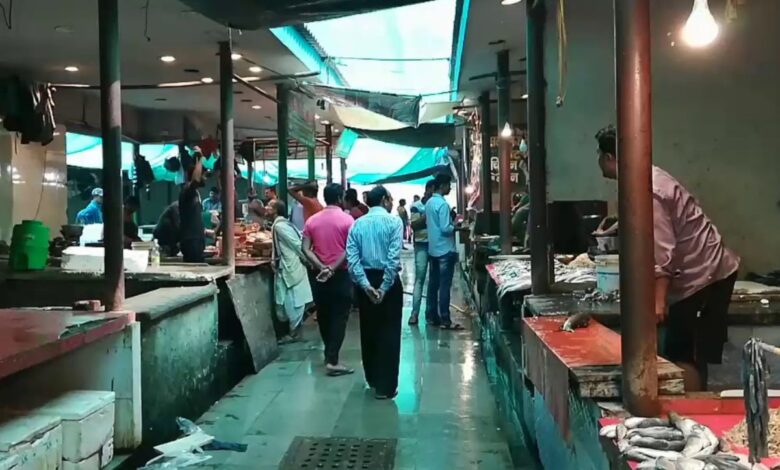
Dabri Mor. A population of around 40,000 people. Located minutes from Janakpuri, one of the most densely inhabited localities in West Delhi. Home to a government school, multiple hospitals, a temple, a mosque; and, for years now, an unauthorised meat market that sits in the middle of all of it, operating brazenly, defying multiple court orders, ignored by the very authorities whose job it is to act.
This is not a story about a market that got out of control. This is a story about governance that was never in control. And the difference matters enormously.
Meat Market at Dabri Mod: The Problem That Shouldn’t Exist
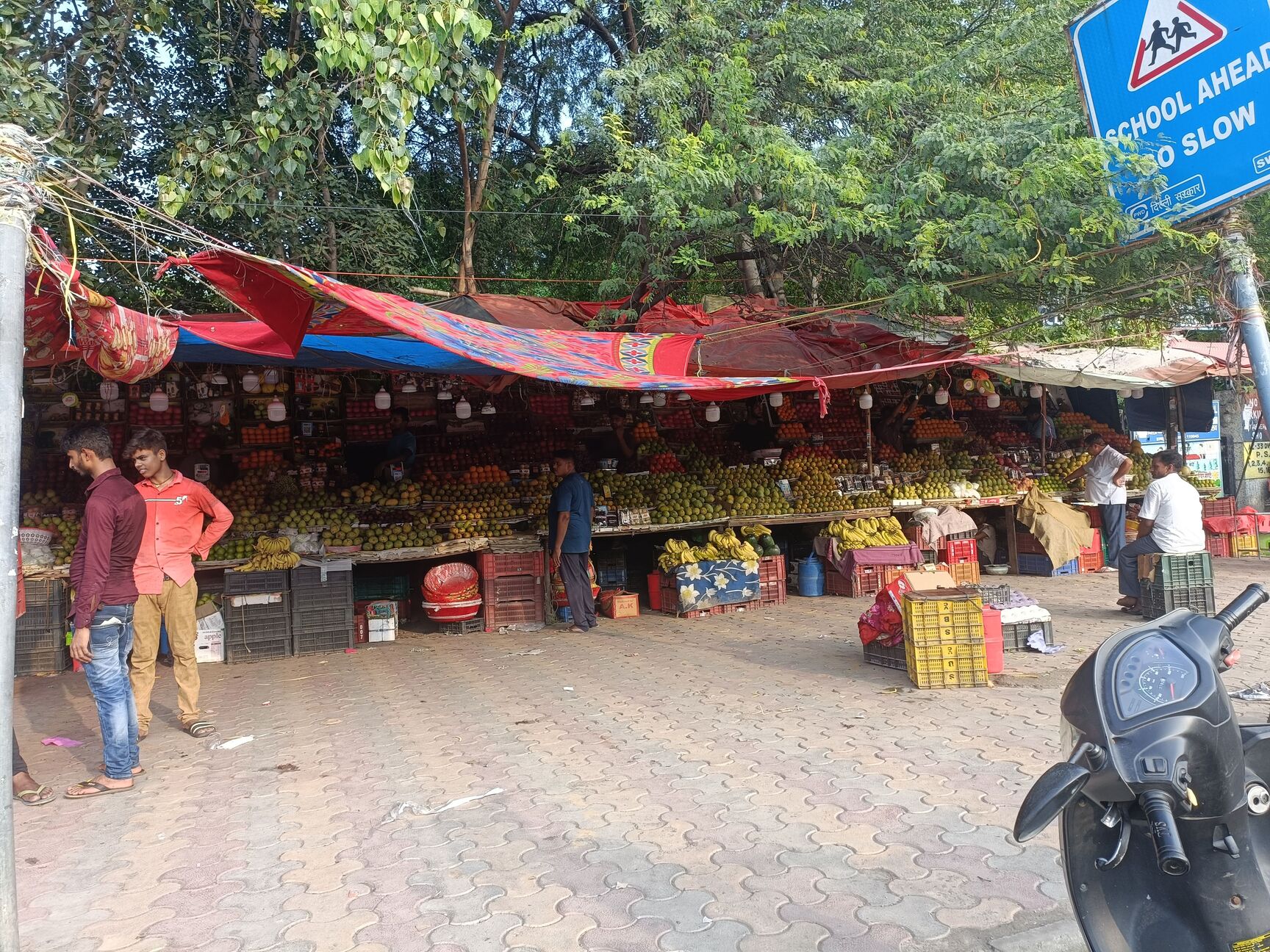
The market near Dabri Mod Metro Station, approximately 200 to 250 metres from the Magenta Line, houses not just fruit and vegetable stalls but an illegal meat market that has been running for several years, with locals making repeated complaints to MCD, DDA, Delhi Police and politicians for its removal. The fact that this market has survived despite years of complaints (verbal, written, and through formal legal channels) is the story. Not the market itself.
A court case was filed by the RWA of Dabri Mod in the District Court, Dwarka, where a judge, while passing an order, clearly stated that the facility is only a temporary market allowed to fruits and vegetable sellers, and that there is no provision for it to be occupied by meat sellers. A court explicitly said this meat market has no legal basis to exist in this location. And yet it exists. It has kept existing. Years have passed. The court order sits on paper while the market sits on the ground.
There is no proper arrangement for decomposing waste from the meat, and water used to wash meat after slaughtering flows freely out of the mandi, reaching residents’ homes by sticking to footwear and car tyres. Meat pieces are thrown around and eaten by rats at night, which then burrow into and enter residents’ homes during the day.

This is a public health emergency. Not a civic inconvenience. Not a minor administrative lapse. A genuine, documented, ongoing public health emergency — in a neighbourhood that is a stone’s throw from a government school, a maternity hospital, and multiple places of worship.
Point 1: Where Authorities Ignored- The DGCA Rule Nobody Enforced
Here is where the governance failure gets truly astonishing. The Dabri Mor meat market falls within 7.2 kilometres of the international airport at Palam, and as per DGCA rules, no meat market or animal slaughtering can be done within a 10-kilometre radius of any airport.
This is not an obscure rule tucked into a forgotten circular. Rule 91 of the Aircraft Rules, 1937, prohibits open slaughtering or disposal of waste that can attract birds within a 10-kilometre radius of an aerodrome, unless specific written permission is granted by appropriate aviation authorities upon verification of adequate preventive measures.
A rule from 1937. Predating Independence. Predating the airport’s current form. Yet somehow, in 2023, a meat market was operating 7.2 kilometres from Palam Airport, in direct violation of this provision, and neither MCD nor DDA nor DGCA had moved decisively to shut it down. This is not diligence. This is the language of delay dressed in the costume of procedure.
Let’s talk About The Trauma: When Residents Complained to Politicians — And Got Nothing
The residents of Dabri Mor did not sit silently. They did what citizens in a democracy are supposed to do. They complained. Repeatedly. Through multiple channels. This matter has been reported several times verbally as well as in writing to Member of Parliament. One incidence dates back to 2023, when residents had words with MP Pravesh Verma, and almost every time he has assured of some action, yet even after 3 years, no action has been taken, or more precisely, no such action, that could reward relief to the residents, have been taken.
Number of years and just years. Think about what these number of years of a public health crisis feels like when you live in the middle of it. Years of waking up to smells, to water mixed with blood flowing past your doorstep, to rats that found their way into your home following a trail from the market. Years of being told that someone will look into it. The elected representative assured action. Repeatedly. The bureaucracy did nothing that could give relief. The market stayed. And between the politician’s assurance and the official’s inaction, thousands of residents continued to live in conditions that no one in authority would tolerate for their own family.
Two Agencies, Minimal Coordination, Infinite Delay
Now here is the structural heart of the Dabri Mor crisis — a problem that is simultaneously legal, administrative and deeply human. The Dabri Mor Fruit, Vegetable and Fish Market was established by the DDA. The DDA allotted the platforms and stalls. But the veterinary trade licenses required to actually operate a meat or fish shop are issued by the MCD. Two agencies. One market. And between them, exists a gap that has swallowed years of time, dozens of court petitions and thousands of ordinary lives.
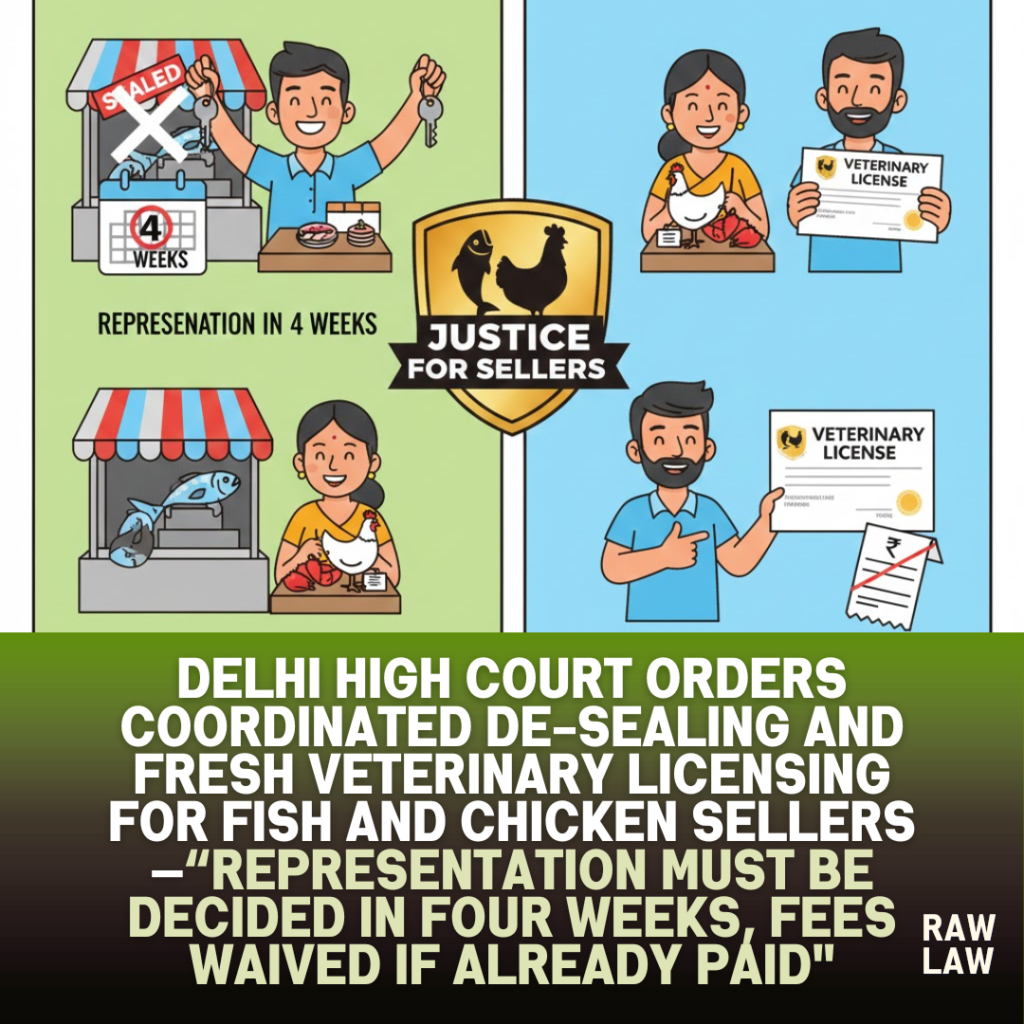
The Delhi High Court directed MCD and DDA to coordinate with each other so that the petitioner’s representation is dealt with in a comprehensive manner, stating clearly that the concerned officials of DDA and MCD shall act in coordination to ensure that the representation is considered comprehensively.
The fact that a High Court order had to explicitly direct two civic agencies to coordinate with each other, on a matter involving a market that one of them created is damning. It implies to the failure of coordination was so complete, so entrenched, that it required judicial intervention to demand something as basic as two departments talking to each other. The High Court disposed of a writ petition by issuing a structured set of directions requiring petitioners to file representations before MCD and DDA, mandating coordinated consideration, inspection, and personal hearing, and directing that requisite orders including de-sealing and licence grant be passed within four weeks.
The court gave these agencies to do what they should have done on their own, proactively, as part of their basic civic duty. Instead, shop owners had to go all the way to a High Court writ petition, spend money on lawyers, navigate a judicial process, just to get a four-week deadline imposed on a bureaucracy that refused to move without being pushed.
The Health Crisis No One Is Counting
What gets lost in the legal back-and-forth is the lived reality of Dabri Mor’s residents. This is not an abstract governance failure. It has a body count, not in the dramatic sense, but in the quiet, chronic, accumulating sense. The water deposited outside the market gives birth to mosquitoes spreading diseases like malaria, dengue, cholera, diarrhoea, dysentery, hepatitis A and typhoid. The water mixed with blood when it reaches residents’ homes is also a cause of several diseases including anthrax, bovine tuberculosis, brucellosis, salmonellosis, listeriosis, trichinosis and taeniasis.
These are not hypothetical risks. These are documented disease vectors that thrive in exactly the conditions that exist at Dabri Mor — open meat waste, stagnant water, rats carrying infections between the market and residential homes. The area is also home to a government school just adjacent to the meat market, with several hospitals including Orchid Hospital and Dada Dev Maternity Hospital, along with a temple and mosque all within 200 metres.
Children going to school. Mothers in a maternity hospital. Patients seeking medical care. All within two hundred metres of an unchecked health hazard. The proximity is not coincidental — it is the most damning indictment of an administration that approved a market without considering its context. When the court finally directed MCD and DDA to process licensing applications for the Dabri Mor vendors, it attached specific conditions, that revealed how the system had been failing on multiple levels simultaneously.
Why This Pattern Is the Real Emergency
The Dabri Mor crisis is not, at its core, about one market in one colony. It is about what happens when civic governance hollows itself out — when agencies exist on paper but do not function in practice, when coordination is so absent that courts have to mandate it, when enforcement is so selective that it targets the legal and ignores the illegal.
From one angle, after checking all facts and figures including the court case and the statement of the judge, it seems that many high-profile people including top position holders in MCD, DDA, DGCA and even politicians who are supposed to protect the rights of people have become silent and mute. Silent and mute. For several years. While residents made complaints, filed cases, approached media, petitioned politicians and ultimately dragged the matter through the courts — the agencies with the power to act chose, in effect, not to.
The Delhi High Court’s serial interventions are significant, but they also reveal a deeper problem. Courts are not built to manage civic administration. They are built to resolve disputes. When the High Court has to repeatedly tell MCD and DDA to coordinate, to conduct inspections, to hold hearings, to issue orders within four weeks — it means civic administration has collapsed to the point where courts are filling the vacuum. That is not a judicial triumph. That is an institutional failure so severe that the judiciary is being asked to serve as a substitute city government.
What Dabri Mor Demands — And Who Must Deliver It
The residents of Dabri Mor are not asking for anything extraordinary. They are asking for what every Indian city theoretically promises its citizens: a market that operates within the law, a residential area free of public health hazards, and civic agencies that respond to complaints without requiring a High Court petition. These are not aspirations. These are the minimum conditions of urban governance.
The MCD needs to explain, publicly and specifically, why licenses were revoked from legal stall holders while unauthorised operators continued for years unchecked. The DDA needs to account for why a market it created and administered was allowed to function in violation of DGCA rules and district court orders. And both agencies need to reckon with the reality that their failure of coordination has cost thousands of residents years of preventable suffering.
The court orders will continue to come. The writ petitions will keep being filed. The four-week deadlines will be issued and, based on the track record, likely strained. None of this will give back the several years that Dabri Mor’s residents lost to smells, disease risk, rats and bureaucratic indifference. What might actually change things is something simpler and harder than any court order: civic agencies that remember their purpose is to serve residents, not to outlast them.
Dabri Mor is waiting. Still.