Settled, Not Explained: The Governance Questions Bank Of Baroda’s NMC Payout Leaves Open

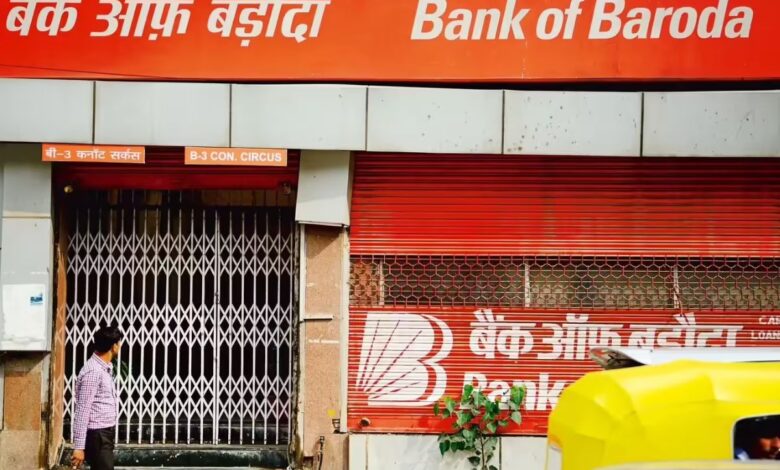
₹5,700 Crore to Close the Case — But Who Will Close the Accountability Gap at Bank of Baroda?
On July 2, 2026, Bank of Baroda told stock exchanges it had agreed to pay $600 million, roughly ₹5,700 crore, to end years of litigation tied to the spectacular 2020 collapse of NMC Health, once the UAE’s largest private hospital operator. The bank’s shares fell more than 7 percent over the following two trading sessions. The settlement, reached without any admission of liability or wrongdoing, formally closes the legal chapter. But it opens a different one: a public-sector bank, ultimately owned by Indian taxpayers, has just written one of the largest single settlement cheques.
This is not an argument that Bank of Baroda is guilty of what it was accused of; it explicitly settled without admitting any wrongdoing, and that legal position deserves to be stated plainly and respected. But a ₹5,700 crore payout by a public institution, arising from allegations of years-long compliance failure at an overseas branch, is a legitimate matter of public interest — one that invites scrutiny of the governance and oversight mechanisms that were supposed to prevent exactly this kind of exposure, regardless of how the underlying liability question was ultimately resolved.
Chapter 1: Timeline of the NMC Health Collapse
NMC Health’s story is, on its surface, a classic tale of spectacular rise and equally spectacular fall. Founded by Indian-origin entrepreneur B.R. Shetty in Abu Dhabi in 1975 as a single hospital, the company grew into the UAE’s largest private healthcare operator, treating more than 8.5 million patients annually at its peak. It listed on the London Stock Exchange in 2012, the first UAE healthcare company to do so, and by 2017 had been added to the prestigious FTSE 100 index, reaching a peak valuation north of $10-11 billion.
The unravelling began in December 2019, when US-based short-seller Muddy Waters Research published a report alleging that NMC had inflated its cash balances and understated its debt levels. The market reaction was immediate and brutal — NMC’s share price went into freefall. By March 2020, the company’s own board revealed that it had over $4 billion in previously undisclosed debt.
Days later, the true scale became clearer still: NMC’s actual debt stood at approximately $6.6 billion, against the roughly $2.1 billion it had previously reported — a gap of more than $4.5 billion. In April 2020, NMC Health entered administration in the UK, and administrators Alvarez & Marsal were appointed to untangle what would become one of the most complex corporate insolvencies in Gulf corporate history.
What administrators subsequently uncovered went well beyond simple mismanagement. Investigators found what forensic accountants described as internal “cheat sheets” — spreadsheets showing the company’s true financial condition that diverged sharply from its published, audited accounts.
The mechanism at the heart of the fraud involved an unusual “reverse factoring” or supply-chain financing arrangement, through which NMC and related entities allegedly borrowed extensively while keeping the resulting debt off the company’s balance sheet — facilitated, administrators later alleged, through a network of supplier entities and inflated or fabricated invoices. B.R. Shetty resigned in February 2020, maintaining he had been misled and betrayed by executives within his own group; he has since pursued his own legal actions in India, the UAE and the US alleging he too was a victim of fraud perpetrated by others. Former NMC chief executive Prasanth Manghat has similarly been named as a defendant in the administrators’ claims.
By 2021, creditors approved a restructuring plan, and dozens of NMC operating entities exited administration under new ownership, continuing to run hospitals and clinics across the UAE. But the hunt for recoveries, from banks, auditors, and individuals administrators believed may have enabled or facilitated the fraud, continued for years afterward. Among the parties administrators pursued: EY, NMC’s auditor for its entire eight years on the LSE, which faces a separate $2.5-2.6 billion negligence lawsuit for allegedly missing billions in unreported borrowing across seven consecutive audit years. And among the banks: Bank of Baroda.
Chapter 2: Why Bank of Baroda Became Involved
Bank of Baroda, India’s second-largest public sector lender had a meaningful lending exposure to NMC-linked entities through its operations in the UAE, principally routed through its Abu Dhabi branch. When NMC’s administrators, led by Alvarez & Marsal, went looking for parties that may have facilitated the concealment of the group’s true financial position, they filed claims against Shetty, Manghat, and Bank of Baroda jointly before two courts: the Abu Dhabi Global Market (ADGM) Court of First Instance and the High Court of Justice of England and Wales.
According to court filings reported by legal outlet Bar and Bench and corroborated by other financial press, administrators alleged that Bank of Baroda facilitated financing arrangements, described in some reporting as “fictitious”, that helped conceal NMC’s true debt position, and that the bank failed to maintain adequate anti-money-laundering (AML) and know-your-customer (KYC) controls, allegedly allowing suspicious transactions to pass through accounts connected to what administrators characterised as sham supplier entities, with funds allegedly moved using inflated or fabricated invoices. Separately, an ADGM court order from November 2025 reportedly compelled the bank to disclose certain internal reports and suspicious-transaction-related information connected to the broader case — a procedural discovery order, not a finding of guilt.
Bank of Baroda’s own position throughout has been consistent and explicit: in its annual report published in May 2026, the bank stated that the alleged insolvency-related fraud occurred due to “shareholders, senior management and employees of the group between the years 2012-2020,” and that it “denies all allegations made against it and has filed a robust defence (on facts and law) in both proceedings.” The ADGM trial itself commenced on March 23, 2026, before concluding in an out-of-court settlement roughly three months later. The final settlement filing was unambiguous: the parties “resolved the claims between them… without admission of liability or wrongdoing,” with the bank’s exposure capped at the agreed $600 million.
It’s worth being precise about what this sequence does and does not establish. It establishes that serious allegations were made, that a court found the case substantial enough to proceed to trial, and that the bank chose to pay a very large sum to end the matter rather than continue litigating. It does not establish that the underlying allegations were true — settlements, especially ones explicitly without admission of liability, are frequently a rational commercial choice to avoid the cost, duration and reputational drag of continued litigation, regardless of the merits.
Chapter 3: How Could Such Exposure Happen?
Setting aside the question of legal liability, the exposure itself — a public-sector bank facing a $600 million claim over alleged compliance lapses at an overseas branch — raises structural questions worth examining independent of fault.
Credit appraisal. Any lending relationship of the scale alleged in this case would ordinarily pass through layered credit appraisal — assessment of the borrower’s financial statements, collateral, group structure, and related-party exposure. NMC’s fraud was specifically designed to survive exactly this kind of scrutiny: the “cheat sheets” uncovered by administrators existed precisely because the company’s real financial position had to be hidden not just from public markets but from its own lenders and its own auditor of eight years. This raises a fair question about whether standard credit appraisal processes, however diligently applied, were equipped to detect a sophisticated, insider-driven concealment scheme — and whether red flags specific to reverse-factoring arrangements and related-party lending were adequately weighted.
Compliance and AML/KYC controls. The specific allegations in this case centred on AML and KYC failures — the mechanisms banks use to verify who they are transacting with and to flag transactions inconsistent with a customer’s known business profile. If, as alleged, transactions were routed through supplier entities with fabricated or inflated invoices, the relevant question is whether the bank’s transaction-monitoring systems were calibrated to flag unusual invoice patterns, rapid fund movement, or shell-like counterparty characteristics — the kinds of red flags AML frameworks are specifically designed to catch.
Overseas branch oversight. The transactions in question ran through Bank of Baroda’s Abu Dhabi branch — outside India’s direct regulatory perimeter, under UAE’s own banking and AML regulatory framework, but still, ultimately, the responsibility of the parent bank’s board and management in India. Overseas branches of Indian public-sector banks have historically posed a distinct supervisory challenge: they operate under a host country’s regulatory regime while remaining part of a single corporate and risk-management structure headquartered thousands of kilometres away, often with less frequent, less granular oversight from head office than domestic branches receive.
Internal audit. Internal audit functions exist precisely to test whether the first two lines of defence — business operations and compliance — are functioning as designed. A multi-year lapse of the kind alleged raises the question of whether internal audit reviews of the Abu Dhabi branch’s lending book and AML controls occurred with sufficient frequency and rigour, and if concerns were raised, what happened to them.
Board supervision. Ultimately, all of the above rolls up to board-level oversight. Public-sector bank boards in India include RBI/government nominees, independent directors, and executive directors, with specific board committees — discussed below — mandated to oversee exactly this category of risk.
Chapter 4: Were Governance Mechanisms Sufficient?
Indian public-sector banks operate within a fairly elaborate governance architecture on paper. The Board Risk Committee is specifically tasked with reviewing the bank’s overall risk appetite, including credit and operational risk in overseas operations. The Audit Committee of the Board oversees the internal audit function, reviews significant audit findings, and is meant to ensure compliance gaps are escalated and closed. Beneath these sit the bank’s internal control framework and compliance function, headed by a Chief Compliance Officer whose mandate specifically includes AML/KYC adherence across all branches, domestic and overseas.
The analytical question this case poses is not whether these structures existed — they unquestionably did, as with every scheduled Indian bank — but whether they functioned with the intended rigour specifically in relation to a complex, cross-border, related-party lending relationship of this scale.
Publicly available information does not establish what, if anything, the Risk Committee or Audit Committee discussed regarding NMC-linked exposure prior to the 2020 collapse, because board and committee minutes of Indian banks are not proactively disclosed to the public. This is itself a governance transparency gap worth naming: shareholders and the public are, in practice, unable to independently verify whether risk oversight mechanisms were engaged proportionately to the risk, absent a regulatory or parliamentary inquiry that compels disclosure.
Chapter 5: What Role Did Regulators Play?
Several regulatory and oversight bodies have questions worth asking of them, distinct from any question of Bank of Baroda’s own conduct.
The Reserve Bank of India (RBI), as the banking regulator, supervises Indian banks’ overseas operations, including AML/KYC compliance, through its own inspection framework and by requiring banks to report suspicious transactions. Given that the allegations here span 2012-2020 lending activity through an overseas branch, a fair question is whether RBI’s supervisory inspections of Bank of Baroda’s international operations during this period specifically examined the NMC-linked lending relationship, and if so, what they found.
The Ministry of Finance, as the administrative ministry for public sector banks and the entity ultimately answerable to Parliament for their performance, has a legitimate interest in understanding how a ₹5,700 crore contingent liability of this nature built up at a bank in which the government holds a majority stake, and what safeguards are being strengthened as a result.
Statutory and external auditors of Bank of Baroda, across the 2012-2020 period, would ordinarily be expected to review the adequacy of provisioning for contingent liabilities and disclosed litigation risk in the bank’s annual accounts. Whether NMC-related exposure was flagged, provisioned for, or disclosed as a contingent liability in earlier years — and if not, why not — is a fair question for both the bank’s auditors and audit committee, distinct from the auditors of NMC itself, whose own conduct is the subject of a separate $2.5 billion negligence claim by administrators.
None of this implies wrongdoing by RBI, the Ministry, or the auditors — regulatory oversight of a sophisticated, insider-perpetrated fraud spread across multiple jurisdictions is genuinely difficult, and international experience (discussed in Chapter 8) shows that even the most well-resourced regulators have been slow to catch comparable schemes elsewhere. But “difficult to catch” is not the same as “no lessons to learn,” and the public interest in knowing whether supervisory processes have since been strengthened is legitimate.
Chapter 6: Who Bears Responsibility?
Corporate governance theory generally allocates accountability across several layers, and it is worth walking through them in the abstract, without attaching specific culpability to any named individual absent a public finding of fact.
Executives responsible for originating and approving the lending relationship in question bear operational accountability for the decisions made at the time, informed by the information available to them — which, given NMC’s own multi-year concealment scheme, may have been incomplete or actively falsified. Directors, particularly those serving on the Risk and Audit Committees during the relevant period, bear oversight accountability for whether governance processes were followed and escalated appropriately.
Compliance officers bear functional accountability for whether AML/KYC systems were calibrated and applied consistently to the branch and relationship in question. Auditors, both internal and statutory, bear a distinct form of accountability for whether their review processes were designed to catch, or reasonably could have caught, red flags of the kind later alleged.
It is important to state plainly: no named individual has been publicly found liable by any court in connection with Bank of Baroda’s conduct in this matter, and the settlement itself was reached explicitly without any admission of wrongdoing by the bank or its personnel.
We do not allege wrongdoing by any specific person. What can fairly be said is that a governance failure of some description, whether at the appraisal stage, the compliance stage, the audit stage, or the oversight stage, is difficult to rule out entirely when a $600 million claim reaches the point of a full trial before being settled, and that a genuinely accountable institution owes its stakeholders a credible account of which of these layers, if any, has since been strengthened.
Chapter 7: Impact on Investors and Public Confidence
The market’s reaction was immediate and measurable. Bank of Baroda shares fell over 4 percent on July 2, 2026, the day of the disclosure, sliding to an intraday low of ₹257.70, and continued falling a further 3 percent the following session — a cumulative decline of more than 7 percent over two trading days, even as the broader Nifty Bank index and Nifty 50 index were both trading higher over the same period. Brokerage Nomura maintained a neutral rating on the stock but noted the payout equalled nearly 4 percent of the bank’s net worth, and flagged that the one-time charge would likely require a provision impacting Q1 FY27 earnings.
Notably, the share price decline came despite the bank simultaneously reporting strong underlying business growth — global business up 15.46 percent year-on-year to ₹30.51 lakh crore, advances up over 17 percent, and deposits up nearly 14 percent as of June 30, 2026. This divergence is itself instructive: investors were not punishing the bank’s core operating performance, which remained robust, but specifically its legacy governance and contingent-liability risk — suggesting the market treats this kind of episode as a distinct category of concern from ordinary business performance, one that speaks to institutional risk culture rather than commercial competence.
For public confidence more broadly, the episode adds to a recurring pattern in which allegations of compliance failure at Indian banks’ overseas operations surface years after the underlying conduct, are litigated for years more, and are ultimately resolved through confidential, no-admission settlements — a resolution path that closes the bank’s legal exposure but leaves the public with limited independent verification of what actually went wrong internally, or what has changed since.
Chapter 8: International Lessons
Bank of Baroda is far from the only major bank to face large settlements over AML or compliance failures, and the international experience offers a useful benchmark for what credible remediation looks like.
HSBC’s 2012 AML settlement with US authorities, in which the bank paid $1.9 billion after admitting to allowing Mexican drug cartels to launder money through its US operations, is probably the closest global parallel in scale. In its aftermath, HSBC undertook a sweeping, multi-year overhaul of its global compliance function — significantly increasing compliance headcount, appointing a dedicated Group Head of Financial Crime Risk reporting directly to senior leadership, and submitting to five years of independent regulatory monitorship. The lesson: a large settlement, handled transparently, became the catalyst for a genuinely re-engineered compliance architecture rather than merely a closed legal chapter.
Standard Chartered’s sanctions violations, which drew a combined $1.1 billion in penalties from US and UK regulators in 2019 (following earlier settlements in 2012), similarly triggered enhanced transaction-monitoring systems, expanded independent testing of its compliance controls — with the bank publicly reporting on remediation progress in subsequent years.
Wells Fargo’s fake-accounts scandal, while a governance rather than an AML case, offers a different but related lesson: after regulators found employees had opened millions of unauthorised customer accounts to meet sales targets, the bank overhauled its board composition, separated the chairman and CEO roles, tied executive compensation more directly to risk and compliance metrics, and operated for years under a Federal Reserve-imposed asset cap — a structural regulatory constraint specifically designed to prevent growth from outpacing risk management until governance was demonstrably fixed.
The common thread across all three cases is that meaningful reform followed not from the settlement payment itself, but from external regulatory pressure that mandated specific, verifiable, and publicly reported changes — board restructuring, independent monitors, or growth restrictions — rather than leaving remediation entirely to the institution’s discretion.
Conclusion
Bank of Baroda has closed its legal exposure to the NMC Health collapse for $600 million, without admitting fault, and its underlying business — deposit growth, advances, and overall balance sheet strength — remains, by its own disclosures, healthy. Nothing in the public record establishes that any individual at the bank knowingly facilitated fraud, and the settlement itself is consistent with a rational commercial decision to cap an uncertain, expensive, multi-jurisdictional legal exposure rather than an admission that the worst allegations were true.
But the underlying questions this episode raises are bigger than one settlement cheque. How did a public-sector bank’s overseas lending and compliance processes come to be entangled, however the courts might ultimately have ruled, in one of the largest corporate frauds in recent Gulf history? What has actually changed inside the bank’s risk, compliance and overseas-branch oversight functions since 2020? And should a settlement of this magnitude, by an institution substantially owned by the Indian public, trigger something more than a stock-exchange filing and a one-day market reaction — perhaps a parliamentary standing committee review, or a mandatory RBI supervisory report, made public in appropriately redacted form?

The case is closed. The accountability gap, the space between “the litigation has ended” and “the public understands what went wrong and what has been fixed”, is not. Closing that gap does not require assuming anyone’s guilt. It requires only the ordinary standard any well-governed institution should be willing to meet: a transparent account of what happened, and verifiable proof that it cannot easily happen again.