Tag: technology

  • General Motors Reclaims Top US Automaker Spot After Beating Toyota And 2.5% Rise In Sales

    General Motors Reclaims Top US Automaker Spot After Beating Toyota And 2.5% Rise In Sales

    From rival Toyota Motor Co., General Motors Co. grasped the top spot in United States (U.S.) auto sales in 2022 as it was better able to meet strong demand for cars and trucks despite supply shortages across the industry. General Motors Co shares rose 2.7% to $34.75 in afternoon trade on Wednesday after the company reported sale of 2,274,088 vehicles i.e., a 2.5% rise in sales of 2022 in a closely watched race, up from 2,108,458 pieces of Toyota.

    Inventory shortages stemming from rising material costs and persistent chip squeaks have slowed production at many automakers and kept prices high for cars and trucks. Asian brands were hit hardest. “Toyota is still among the tightest in terms of inventory,” said Cox Automotive Chief, Economist Charlie Chesbrough. The Japanese automaker lowered its target of full-year production in November, it fell 8.6% in 2022. However, Toyota management said some positive signs are emerging and the pace of stockpiling is slow but steady.

    Supremacy Of General Motors

    For decades, General Motors vehicles were sold in the US through an exclusive network of General Motors dealers. Dealers represented only General Motors brands. Then, in the 1970s, General Motors—and other American manufacturers—began allowing their dealers to represent other car companies. This marked a fundamental shift in the American automobile industry. Suddenly, General Motors’s customers (their dealers) were no longer as loyal and devoted as they had been in the past. Increasingly, if a buyer wanted a new vehicle, they could go to a dealership with 5, 10, or 30 different brands to choose from.

    GM reclaims US auto sales crown from Toyota | Free Malaysia Today (FMT)

    Today, the largest car retailer in America is AutoNation. Have you ever been to an AutoNation dealer? If you are a potential buyer, that’s great! You have a lot of choices and options. Over time, General Motors’s American vehicles, costly to develop, came to be seen not as high-end automotive innovations managed through a network of exclusive dealers; but increasingly like the dish soap sold at Walmart. GM products in America have become little more than commodities: they are sold in the same way as their competitors through distributors with little or no real stake in the same products. Conversely, in China, General Motors cars are sold as they once were in the US: through an exclusive GM-only dealer network.

    The lesson from General Motors could very well be that how innovation is marketed is far more important than almost anything else. General Motors Co. (GM) is one of the leading manufacturers of cars and trucks in the world. General Motors derives most of its revenue and profit from vehicle sales, but also from its financial arm, called GM Financial.

    About General Motors (GM)

    Founded by William C Durrant in 1908, it employs 155,000 people worldwide. General Motors is headquartered in the United States in Detroit, Michigan.

    General Motors Brands: General Motors manufactures cars and trucks under various brand names, including Chevrolet, Buick, GMC, and Cadillac. OnStar offers an accident response system with built-in vehicle sensors that detect a car accident and report it to the authorities. The system also provides stolen vehicle assistance to locate and assist with recovery.

    General Motors sales and profit: For many companies, 2020 has been a challenging year due to the Covid-19 pandemic, which has caused temporary plant shutdowns and halts in production, sales, and deliveries. As the economy began to open up in 2021, General motors was able to adjust, raising its nine-month revenue in 2021 to $8.3 billion.

    GM reclaims US auto sales crown from Toyota - BusinessToday

    About Toyota’s Downfall

    As one of the leaders, Toyota announced more than ten million cars sold. The company has been listed as the number one retail brand. But popularity doesn’t make them infallible, and Toyota’s problems are well documented, in the past nine years. Car maintenance is always key, but there are a few issues you should be aware of with a Toyota. Read the seven most common Toyota problems.

    1. Brake problems : One of the most common problems with Toyotas is the brakes. This is especially the case with the Toyota Corolla, but many vehicles made by Toyota will suffer from this problem. The Corolla itself has had two separate recalls since 2000 for brake problems. Most of these issues have been fixed in newer models, so you don’t have to worry too much. Still, bring it to one of the best auto repair shops you can find to ensure the brakes are working. You don’t want to find out your brakes are bad while you’re on the highway.
    1. Suspension problems: Suspension problems are also one of the most common Toyota problems. Front suspension struts and stabilizer bars tend to fail faster than other parts. Sometimes these parts can fail in as little as a year, depending on how you treat your vehicle. Faulty suspension often leads to a very noticeable rattle when driving, especially over bumps. If you don’t notice it and you already own the car, it’s not too bad to fix in terms of cost.
    1. Faulty water pumps: One of the more recent Toyota issues that have been popping up is a faulty water pump. Again, this is more common with the Toyota Corolla than other ranges, but still, something to keep in mind with all Toyota vehicles. You can tell if this is a problem with the engine temperature light, but it may not come on.Toyota passes General Motors as top U.S. automaker | wfaa.com This problem can cause damage to the entire engine due to water leakage and high temperatures. If you see steam coming through your hood, ensure you get your vehicle to a mechanic as soon as possible. Otherwise, you run the risk of complete engine failure, which can practically total your vehicle.
    1. Common fuel pump malfunctions: Many Toyotas have problems with the fuel pump, especially the injection. You will notice jerky acceleration or failure to accelerate because the pump is injecting too much or too little fuel into your engine. However, do not take this behavior as a guarantee that your vehicle has a faulty fuel pump. Faulty clutches can also cause this problem. You’ll especially notice this if your vehicle spins a lot more than usual before being caught. This can cause several problems that are likely to lead to an accident, so if you discover this problem, be sure to bring your vehicle in for service. Your vehicle not starting can also be caused by a faulty fuel pump. A clogged or faulty pump may fail to inject enough fuel to start the engine’s combustion. Either way, searching for “mechanics near me” will likely find someone who can fix this simple problem.
    1. Oil sludge in engines: One of the longer-term problems you’ll notice may be oil sludge in your engines. Toyota engines are known to accumulate sludge. Monitor oil life and perform proper car maintenance so you know when it’s time for an oil change. This is particularly noticeable in Toyota vehicles between 1997 and 2005. The problem was so widespread that it led to Toyota settling a class action lawsuit in 2007 involving roughly five million vehicles. A tune-up can often be enough to fix this problem, so keep up with proper car maintenance.
    Toyota Just Toppled GM as America's Best-Selling Carmaker

    1. Poor air conditioning conditions: The last problem is that Toyota vehicles sometimes have air conditioning problems. Specifically, many users complained of a musty, musty smell. It can be solved by tuning and maintaining the car properly. When it comes to Toyota issues, they are nowhere near as drastic as clutch failure or forced acceleration. However, a Toyota mechanic or general service location will likely be able to resolve this issue. At ATL Columbus Total Car Care, we offer dealers quality work at an affordable price.

    Common Toyota Problems

    Although there is a common list of Toyota problems, the manufacturer is still recognized and popular. Chances are you’ll find yourself behind the wheel of a Toyota at some point, so keep these issues in mind. Most can be fixed by car maintenance, so don’t be alarmed if you see any of them. “We are optimistic that our inventory will continue to improve in the first quarter and throughout the rest of the year,” said Andrew Gilles, officer at Toyota. Other brands such as Kia Motors America, Hyundai Motor America, American Honda, and Mazda North American Operations, saw sales decline on Wednesday.

    New car sales in the U.S. ended at 1.26 million units in December, with an annual sales rate of 13.31 million. Affordability is a “very real issue,” said David Christ, Toyota’s chief executive. Nevertheless, the company expects demand to be strong this year. Automakers will have to start incentivizing buyers, a trend that has been put on hold during the pandemic, auto marketplace TrueCar said.

    edited and proofread by nikita sharma

  • China Now Sends 7 Ships And 71 Warplanes Towards Taiwan

    China Now Sends 7 Ships And 71 Warplanes Towards Taiwan

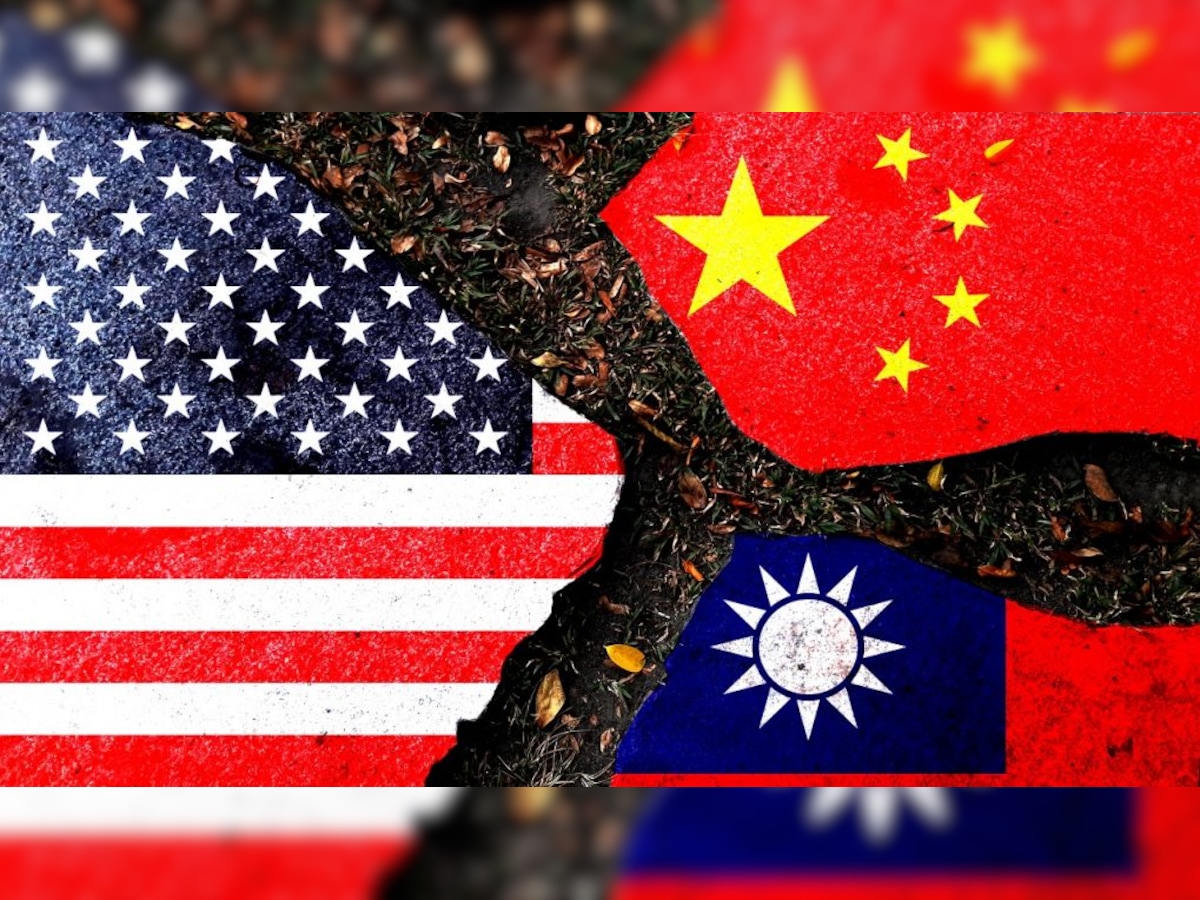
    On Monday, Taiwan‘s defense ministry said that the Military of China had sent seven ships and 71 aircrafts to Taiwan as part of a 24-hour show of force targeting the island after China expressed anger over provisions related to Taiwan in the annual US defense spending bill passed on Saturday. China’s military persecution of self-ruled Taiwan, which it claims as its territory, has intensified in recent years, with the Communist Party’s People’s Liberation Army sending planes or ships to the island almost daily.

    On Monday, 47 Chinese aircraft crossed the middle of the Taiwan Strait, an unofficial boundary tacitly accepted by both sides, according to Taiwan’s Ministry of National Defense. Among the aircraft, there were 11 J-1 fighters, 18 J-16 fighters, drones, and 6 Su-30 fighters.

    History Of China And Taiwan

    Since 1949, Taiwan has been governed independently of mainland China, officially the People’s Republic of China (PRC). The PRC considers the island a renegade province and promises to “unite” Taiwan with the mainland. Tsai has refused to accept a formula her predecessor Ma Ying-jeou endorsed to allow greater cross-strait ties. Meanwhile, Beijing is taking increasingly aggressive actions, including flying fighter jets near the island. Some analysts fear that a Chinese attack on Taiwan could drag the United States into a war with China.

    China sends 71 warplanes, 7 ships toward Taiwan in 24 hours | World News - Hindustan Times

    Is Taiwan part of China?

    Beijing considers the PRC to be the only legitimate government of China, an approach it calls the One China principle, and seeks the eventual “unification” of Taiwan with the mainland. Beijing says Taiwan is bound by an agreement known as the 1992 Consensus, reached between representatives of the Chinese Communist Party (CCP) and the Kuomintang Party (KMT), which ruled Taiwan at the time. However, the two sides disagree on the content of this so-called consensus, and it was never intended to address the issue of Taiwan’s legal status.

    As Xi Jinping specified, the 1992 consensus reflects an agreement that “the two sides of the Straits belong to one China and will work together to seek national reunification.” For the KMT, this means “one China, different interpretations”, with the ROC standing as “one China”. The KMT does not care for Taiwan’s independence and constantly calls for closer relations with Beijing. But in the face of recent electoral losses, KMT leaders debated whether to change the party’s position on the 1992 Consensus.

    The KMT’s main rival party, the Democratic Progressive Party (DPP), has never supported the understanding set out in the 1992 Consensus. In her 2016 inaugural address, Tsai noted that she was “elected president by the Constitution of the Republic of China”, a one-China document. The “one country, two systems” formula, is used for Hong Kong, which has been guaranteed the ability to maintain its political and economic systems and has been granted a “high degree of autonomy”. Such a framework is deeply unpopular with the Taiwanese public.

    China sends 71 warplanes, 7 ships toward Taiwan in 24 hours, calls it firm response to US-Taiwan escalation

    Is Taiwan a fellow of the UN?

    Taipei regularly protests his expulsion; The United States also promotes Taiwan’s meaningful participation in such organizations. Amid the COVID-19 pandemic, Taipei has criticized the World Health Organization (WHO) for giving in to Beijing’s demands and continuing to block Taiwan – which had built one of the world’s most effective COVID-19 responses in the first two years of the pandemic – from participating in the World Health Organization assembly of the organization as an observer. Ministers of the G7 countries have called for Taiwan’s inclusion in WHO forums.

    However, Taiwan has membership status in more than forty organizations, mostly regional, such as the Asian Development Bank and the Asia-Pacific Economic Cooperation Forum, as well as the World Trade Organization. It has observer or another status in several other bodies. Only fourteen countries maintain official diplomatic relations with Taiwan. No government has ever maintained formal diplomatic relations with China and Taiwan at the same time.

    China uses a variety of coercive tactics in addition to armed conflict and has stepped up these measures since Tsai’s election in 2016. Its goal is to destroy Taiwan and make the island’s people conclude that their best option is reunification with the mainland. To this end, China has increased the frequency and range of bomber, fighter, and surveillance aircraft patrols over and around Taiwan. He also increasingly sailed his warships and aircraft carriers through the Taiwan Strait in shows of force. Taiwan has reported that thousands of cyber attacks from China are targeting its government agencies every day. These attacks have increased sharply in recent years.

    China sends 71 Warplanes, 7 Ships Toward Taiwan In 24 hours

    Beijing has also used non-military measures to pressure Taiwan. In 2016, China suspended the cross-strait communication mechanism with Taiwan’s main liaison office. It has curbed tourism to Taiwan, and the number of mainland tourists visiting Taiwan in 2019. In addition, China has intimidated countries with ties to Taiwan: in 2021, China cut off trade with Lithuania because it opened a Taiwanese representative office in its capital. Even fewer express support for Taiwan’s reunification with China. The vast majority reject the “one country, two systems” model, a sentiment that has grown stronger as Beijing has cracked down on Hong Kong’s freedoms.

    More than 62 percent of the island’s population considered themselves exclusively Taiwanese in 2021, a National Chengchi University survey found. Only about 3 percent identified themselves as Chinese only, a number that has declined since 1994 when 26 percent identified as such. Taiwan’s economy remains dependent on trade with China, the island’s largest trading partner. But their economic ties have seen a strain in recent years, partly because of Beijing’s pressure on the island and growing concerns among Taiwanese officials about its over-reliance on trade with China.China Sends 71 Warplanes, 7 Ships Toward Taiwan In 24 Hours

    Much of this can be attributed to Taiwan Semiconductor Manufacturing Company (TSMC), the world’s largest contract chip maker and a major supplier to Apple and other US businesses. Taiwan’s semiconductor company is one of only two firms in the world (the other being South Korea’s Samsung) that has the technological know-how to produce the smallest and most advanced chips and makes more than 90 percent of them.

    Some experts say that the United States’ dependence on Taiwanese chip firms increases its incentive to defend Taiwan against a Chinese attack. Biden recognizes the extent to which the United States relies on one company for critical chips and has sought to strengthen the US chip industry; in 2022, Congress passed a massive $280 billion bill to do so. Beijing has been working to strengthen its industry, especially as Washington pressured TSMC to stop selling to Chinese companies, including Huawei, a Chinese telecommunications giant that Washington says could be used by Beijing for espionage.

    Edited by Prakriti Arora

  • Twitter Competition, Amazon decline, AI Importance and many more: Big Tech Companies Predictions for 2023

    Twitter Competition, Amazon decline, AI Importance and many more: Big Tech Companies Predictions for 2023

    Big Tech Predictions 2023: A Twitter competitor, Amazon slowing down, Google’s AI waking up, Microsoft’s serious game, cloud bills, and DTC collapse

    The decade of great technology ended this year, and the unfortunate adjustments will be handled throughout the sector in 2023. Elon Musk’s purchase of Twitter sums up the larger picture. At $44 billion, the debt-fueled transaction was swiftly ended at prices derived from the booming tech bull market of 2021.

    Musk has been laying off employees and pitching pricey projects and features to keep his social network company afloat since the recession began to bite shortly after.

    Larger tech businesses are more resilient and are still tremendously successful, but they are experiencing change. Numerous employees were let go by Amazon and Meta.

    Elon Musk Twitter

    To encourage staff to be more productive, Google is imposing stricter performance reviews. Microsoft made a few job cuts. The only corporate titan that has so far escaped harm is Apple. We’ll see in 2023 how long that continues.

    The Big Tech reporters at Insider will work arduously to cover the sector fairly, and we won’t be afraid to expose malfeasance and errors when they inevitably arise. What they recommend watching in 2023 is listed below.

    Social media journalist Kali Hays

    It seems that Twitter is beginning to fall apart slowly under Musk. Lots of erotica-verified bots (pardon me, Twitter Blue users), broken or missing functionality, and Musk’s relentless attention-seeking are all present. Of course, there are still users on the platform, and there will be for some time.

    Some people have devoted ten years to developing a presence or personal brand on the site. The majority, however, seems to be prepared for a suitable substitute to occur. Options already exist. Mastodon has seen significant growth in users, reaching more than 5 million accounts since Musk acquired Twitter. Then there are the 1.5 million-user Hive and the ad-free, privacy-focused True.

    The newest option, Post, seems to have the most functionality in common with Twitter. It hastened the test launch of its product so that it can join any journey of Twitter users. With over 600,000 people on the waitlist, it has more than 300,000 users.

    None of these apps is a perfect replacement for Twitter, and none of them has attracted enough users to go viral and seriously compete with it.

    When Twitter first went public, there were 100 million active users every day. Today, there are about 245 million. These new services are unlikely to be absorbed by Big Tech due to increasing antitrust scrutiny in the technology sector. 2023 may be the ideal year for a unique platform to become highly successful, with a huge chance for growth and customers eager to try something new.

    Microsoft reporter Ashley Stewart

    Microsoft Tech Companies

    The $69 billion acquisition of the video game business Activision Blizzard by Microsoft, which would be the largest tech transaction in history, would be Microsoft’s first momentous battle of 2023. According to Wedbush analyst Dan Ives, the judgement will create a powerful precedent for mergers and investments throughout the industry.

    The Federal Trade Commission filed a lawsuit to stop the transaction because it would prevent Microsoft’s Xbox rivals from offering popular game titles like “Call of Duty” to their customers.

    According to Microsoft President Brad Smith, the corporation is open to making concessions and has offered to make “Call of Duty” available on competing systems for the ensuing ten years.

    The agreement would position Microsoft as the third-largest video game developer and strengthen its fledgling cloud gaming business. Ives stated that he thought Microsoft will win its legal dispute with the FTC.

    Reporter on clouds Ellen Thomas

    Startups like Cirrus Nexus, Yotascale, Ternary, and Cast AI that aim to lower cloud costs might do well in 2023. Big businesses that have made the switch have discovered that renting storage, computing power, and other services can get expensive. The cloud was envisioned as the ultimate cost-saving solution.

    To reduce costs overall, chief financial officers are closely examining expensive cloud bills after becoming alarmed by the unstable economic climate. This might be the first time for some people. This could benefit FinOps and the burgeoning cottage industry of businesses that promise to assist cloud customers in lowering and managing cloud spending in 2023.

    Amazon reporter Eugene Kim

    Amazon tech companies

    In 2023, Amazon should continue to slow down. The economy is struggling, which is slowing down Amazon’s three key businesses: retail, Amazon Web Services, and Prime.

    A portion of the early Amazon customers is now returning to other retailers, which is undermining Amazon’s retail growth. Customers of AWS are frantically trying to find ways to minimise prices on their cloud bills.

    Amazon’s largest market in the US, the Prime membership programme, is also getting close to saturation. Amazon’s economists appear to concur: a recent internal estimate revealed that the company’s growth often halted when it concentrated on cost savings and profitability, as it is doing right now.

    Reporter Hugh Langley for ChatGPT and DALL-

    The kind of excitement that has been created this year shows that so-called generative artificial intelligence has advanced to a critical point, even though it may not immediately threaten Google’s company or our creativity.

    Expect to see IT companies demonstrate in 2023 that they have the capabilities to provide applications and demos of the AI they are presently working on that are just as remarkable, if not more so. As the enthusiasm around other technologies, such as cryptocurrency, wanes, early-stage investors will pour even more money into firms that focus on generative AI.

    As millions of users gain access to these potent tools, there will be an increase in discussions about guardrails and responsible AI in sectors ranging from education to journalism.

    E-commerce reporter Madeline Stone

    The classic direct-to-consumer approach, which entails launching a company without using retail intermediaries, is expected to fail in 2023. A variety of difficulties are being faced by online merchants, including changes in data protection, inflation, and supply-chain instability.

    They will therefore need to approach e-commerce in novel ways using tools like AI and machine learning. Online marketplaces might once again flourish as they expose brands to potential clients.

    Edited by Prakriti Arora

  • Is 2023 going to be a year of revolution with 5G all over India?

    Is 2023 going to be a year of revolution with 5G all over India?

    Amid the chaos in the economy and continuous layoffs, it is estimated that 2023 will be a revolutionary year for the technology sector in India. The technology services, which include 5G services, are expected to introduce an array of new services.

    The much-awaited 5G services were finally launched in India in the final months of 2022, and the upcoming year is likely to see a rapid rollout of those services, creating several prospects for widespread adoption. Industry professionals predict that the upcoming year will lay the foundation for future advancements across industries and could prove to be a watershed year.

    Today’s smartphones have evolved into our lifelines as we use them for a variety of tasks, including making and receiving calls and texts, working with a variety of productivity apps, taking pictures and videos, and staying connected on social media. But as India prepares for 5G, the way we live and communicate will soon undergo a radical transformation.

    The technology aims to deliver a communications system with high data rates, minimal latency, and seamless coverage. By 2024–2025, India wants to have an economy of $5 trillion, and 5G services are anticipated to be crucial to that aim. Experts predict that 5G will have a cumulative economic impact of $1 trillion by 2035 and that it will increase the nation’s GDP by $150 billion between 2025 and 2040.

    There will be greater innovation and the introduction of cutting-edge technology with the debut of 5G services.

    According to Anku Jain, Managing Director of MediaTek India, his business will focus on upcoming trends like Metaverse, Wi-Fi 7, and power management while expanding its 5G portfolio to include 5G thin modem, redcap, and wearables, automotive telematics, and industrial M2M/IoT. Moving beyond 5G, the Nokia India spokesman stated that they hope to see India’s full and equal participation in the development of 6G standards over the next few years as our R&D engineers based here continue to contribute to the global collaborative effort. In 2023, wider adoption of private networks by businesses and enterprises is expected to improve efficiency and security.

    Industry leaders believe that the upcoming year might be a game-changer due to 5G’s potential as a tremendous enabler of innovation and new models of connection for businesses. We anticipate technologies like AI/ML, cloud computing, 5G, IoT, and automation to create sustainable solutions and new use cases across industries, sectors, governments, and citizen services, according to Rajiv Bhalla, Managing Director of India and Vice President of APAC at Barco.

    This necessitates a fresh perspective and the development of qualified staff during such a transformative year. According to Arvind Bali, CEO of the Telecom Sector Skill Council, approximately 100,000 youth will receive training in these technologies over the next three years. Ten CoEs will be added, and the 100,000 training sessions will be carried out under DoT supervision. To cover use cases for both old and new technology, we will be adding 100 new courses to our catalog. The introduction of 5G will hasten the development of telecom and skills.

    India has a new IT law in the works, says report citing goivernment sources

    The Indian government has placed a lot of emphasis on producing technology and goods within the nation because of the increase in technical dimensions, and the effort is beginning to bear fruit.

    We are aggressively increasing our skills in 5G telecom equipment and have worked with top firms to deliver 5G products, according to A. Gururaj, Managing Director of Optiemus Electronics. By increasing the production of laptops and launching new categories like tiny PCs, we also hope to strengthen the IT Hardware market. Additionally, as India adopts new technology, we have ambitions to penetrate developing areas like IoT and EV, he added.

    The development of technology over the past few years has caused a massive change in many industries, upending how we go about our daily lives and conducting business. The IT sector is seeing a boom like never before because of developments in artificial intelligence (AI), virtual reality (VR), augmented reality (AR), and mixed reality (MR). As a result, the Fourth Industrial Revolution is being fueled by technologies like AI, Metaverse, and others.

    Chinese Smartphone: Govt checks aside, business as usual for Chinese phone brands in India - The Economic Times

    Approximately 70-80% of newly launched mobile phones will be 5G operated, which is very big news for the Indian people as 5G provides a lot of advanced services.

    5G services have arrived in India, nearly five years after the country started down the path to introducing the following generation of mobile telephony. On October 1, 2022, Prime Minister Narendra Modi unveiled 5G services in a few locations, ushering in what is rumored to be an era of extremely fast mobile Internet.

    Big telecom service providers like Airtel, Jio, Vodafone, etc., have already launched this service in many cities and planning to provide it all around the country.

    Bharti Airtel: Bharti Airtel is the first telecom company in the nation to roll out 5G services. From October 8, 2022, the 5G service will be accessible in eight cities, including Delhi, Mumbai, Varanasi, Bangalore, and others. By March 2024, Airtel will roll out 5G services throughout India.

    Reliance Jio: Mukesh Ambani, the chairman of Reliance Industries, declared that Jio will offer 5G services to all Indians by the end of 2023. The largest and most technologically advanced 5G network will be Jio 5G. In the beginning, Jio will roll out 5G services in Delhi, Mumbai, Kolkata, and Chennai.

    Vodafone Idea: Vodafone Idea wants to start the 5G service rollout process, competing with Reliance Jio and Bharti Airtel. The company has not provided a particular launch date for the ultra-high-speed internet services.

    Android users can check their phone settings to see if their device is 5G ready or not. If the phone is 5G capable, 5G will be shown under the segment for the preferred network after entering the settings tabs. In the meantime, all Apple devices starting with the iPhone 12 and up, including the iPhone SE, support 5G.

    There were between 80 and 100 million 5G-compatible phones on the market even before the first 5G services went live. By 2028, India will have 690 million mobile subscribers, or around 53% of all subscriptions, according to the “Ericsson Mobility Report.”

    These 13 Indian cities will get 5G services first, details here - BusinessToday

    Some of the major plus points of 5G services that can be revolutionary are mentioned below:

    1. 5G technology has a 1ms latency limit. For the uninitiated, latency is the amount of time it takes for a device to deliver data packets and receive a response. The answer is faster, the lower the latency.
    2. Across the nation, isolated locations will have smooth coverage thanks to 5G technology. Energy, spectrum, and network efficiency will all rise as a result.
    3. The introduction of technological advancements like Virtual Reality (VR), Augmented Reality (AR), and others will be ushered in by 5G. The healthcare, agricultural, educational, disaster management, and other sectors will all be directly impacted by these technologies.
    4. The spectator experience at live music festivals and sporting events like football games would be improved with 5G. Sports fans will have an immersive experience because of 5G’s minimal latency.
    5. The field of transportation and mobility will also change with the introduction of 5G. To increase the EV ecosystem’s cost-effectiveness, a network of EVs and charging stations can be built using 5G technology.
    6. More effective remote working will also be aided by the upcoming 5G network. Smart buildings powered by 5G can assist in creating a more comfortable working environment for the staff, increasing productivity and cutting expenses for companies.
    7. The safety and surveillance sector will be significantly impacted by 5G. Remote control over disaster-affected areas, a live 4K feed from HD cameras mounted in public places, and other features will all be possible thanks to 5G technology and its applications. It will also aid in reducing the involvement of humans in hazardous industrial processes like deep mining and offshore activities, among others.
    8. The way that commodities are produced and distributed will likewise be impacted by next-generation 5G technology. Reduced costs, less downtime, little waste, and increased production are all 5G applications that can be found in the industrial sector. The cost of logistics is predicted to drop from 13–14% to 5% with the advent of 5G.

    Edited by Prakriti Arora

  • World is searching for alternatives to the US dollar.

    World is searching for alternatives to the US dollar.

    The world is searching for alternatives to the US dollar. Everybody anticipates that the dollar will soon lose its hegemony as the primary medium of trade. It has repeatedly been proven that calls for a “peak dollar” were premature. The SWIFT network, which serves as the backbone of the global banking system, and the usage of US dollars as a form of payment were virtually unheard of until quite recently.Suddenly everyone is hunting for alternatives to the US dollar | The Edge Markets

    Because of the dollar’s intrinsic power, President Joe Biden’s use of it to enforce sanctions against Russia this year, and new technology developments, nations are now being encouraged to begin challenging its hegemony. Representatives of the Treasury declined to comment on these circumstances.

    “Weaponizing the US currency and the international payment system was a mistake committed by the Biden administration,” “Last week, John Mauldin, a president of Millennium Wave Advisors and a financial analyst with more than three decades of market expertise, published a newsletter published last week. “That will compel nations and non-US investors to diversify their assets outside of the US, which has traditionally served as a haven for them.”

    Plans that were already underway in Russia and China to promote their currencies for international transactions, including through the use of blockchain technology, swiftly picked up steam after the invasion of Ukraine. For instance, Russia began demanding payment in rubles for the delivery of electricity.

    Along with others, Bangladesh, Kazakhstan, and Laos immediately intensified negotiations with China to boost their use of the yuan. In recent months, India has become increasingly vocal in its support for the internationalization of the rupee, and only last month it started developing a bilateral payment system with the United Arab Emirates.

    For such purposes, it was essential that the US and Europe decide to cut off Russia from the SWIFT global financial messaging system. The move, which the French referred to as a “financial nuclear bomb” and cut them off from, compelled the bulk of large Russian banks to rely on their own, much smaller version of the network.

    This produced two results. First, concerns that the dollar would more permanently become an overt political weapon intensified as a result of US sanctions against Russia. China in particular shared this concern, but it went beyond just Moscow and Beijing. For instance, India is developing a homegrown payment system that, in some aspects, is similar to SWIFT.

    Second, because the US is determined to use the currency as part of a more assertive sort of economic statecraft, economies in Asia are under increased pressure to pick a side. They would be required to follow or apply fines with which they would disagree, which would lead to losing business with significant partners if they didn’t have a backup payment option.Suddenly everyone is hunting for alternatives to the US dollar | The Straits Times

    This cycle has become more convoluted, according to Taimur Baig, managing director and chief economist of DBS Group Research in Singapore. In light of the situation, regional attempts to reduce reliance on the USD are likely. US sanctions on Russia are pressuring governments around Asia to follow their lead, despite the fact that they would want to preserve relations with both nations and are hesitant to pick a side in the US-China conflict. Sometimes the action has a political or nationalist undertone, especially when it comes to anger of Western attempts to put sanctions on Russia.

    Moscow tried to persuade India to choose a different method to keep trade flowing. A spokesperson for the Myanmar government claimed that the dollar was being used “to coerce weaker nations.” And Southeast Asian nations used the incident as justification for increasing their use of local currencies in trade.

    “By design, sanctions make it harder for nations and businesses to maintain their neutrality in geopolitical conflicts, “Jonathan Wood, manager of Control Risks’ global risk analysis, stated. “Countries will keep considering economic and strategic alliances.” More than ever, businesses find themselves in the middle of conflicting demands and ever-compliance duties.”

    The de-dollarization process is accelerating for many reasons other than simply the sanctions. Asian governments’ attempts at diversification have been more aggressive as a result of the US dollar’s rapid growth.

    According to a dollar index published by Bloomberg, the dollar has risen by almost 7% this year, putting it on pace to record its largest annual gain since 2015. As the value of the dollar increased in September, every currency—from the British pound to the Indian rupee—reached new lows. For Asian countries, where food costs have risen, debt repayment obligations have gotten harsher, and poverty levels have gotten worse, the strength of the dollar is a major problem.

    As an example, Sri Lanka made its first-ever default on its dollar debt due to a rising dollar that made it impossible for the country to make payments. At one time, Vietnamese officials attributed gasoline supply issues to the dollar’s gain. Therefore, actions like India’s agreement with the UAE accelerate a long-running push to increase the use of the rupee and establish trade settlement agreements without using US dollars. In contrast, non-financial corporations‘ sales of dollar-denominated bonds have fallen to a record-low 37% of the worldwide total in 2022. In many instances during the previous ten years, they have accounted for more than 50% of the debt sold in a single year.

    Even if all of these actions might not have much of an immediate market impact, they might eventually cause the demand for the dollar to decline. For instance, the proportions of the Canadian dollar and the Chinese yuan in all currency dealings are already gradually rising. Another aspect aiding efforts to move away from the dollar is technological advancement.Why Is the U.S. Dollar the World's Currency? | HowStuffWorks

    As a byproduct of attempts to establish alternative payment networks—a drive that predates the soaring greenback—several economies are reducing their reliance on the dollar. Thailand, Malaysia, Indonesia, and Singapore have established procedures that allow for local currency exchanges rather than dollar exchanges. Taiwanese citizens have access to a QR code payment system through Japan.

    All things considered, the attempts are shifting the momentum farther away from a West-led system that has served as the cornerstone of international finance for more than 50 years. What’s developing is a three-tier system with the dollar remaining very much at the top and growing bilateral payment channels as well as alternate domains like the yuan that aim to capitalize on any possible US overreach.

    Despite all the commotion and activity, it seems doubtful that the dollar’s hegemonic status will be threatened very soon. The US economy’s size and strength are undisputed, Treasuries are still among the safest places to keep money, and the dollar makes up the majority of foreign exchange reserves. For instance, even if the renminbi’s percentage of total foreign exchange dealings has increased to 7%, 88% of these trades still contain a dollar component.

    “It’s really difficult to compete on the fiat front — we have the Russians mandating the use of rubles, and there is caution with the yuan as well, “added George Boubouras, head of research at Melbourne-based hedge fund K2 Asset Management and a veteran of three decades in the markets. Investors still want liquid assets at the end of the day; therefore the dollar remains the only option in this regard.”

    However, the coordinated steps away from the dollar pose a threat to what Valéry Giscard d’Estaing, the then-French Finance Minister, memorably referred to as the “exorbitant privilege” held by the US. He first used the phrase in the 1960s to explain how the US is protected from exchange-rate risk and projects its economic strength thanks to the dominance of the dollar. And they may finally put to the test the entire Bretton Woods paradigm, which was negotiated at a hotel in a small New Hampshire hamlet at the end of World War II and established the dollar as the dominant currency.

    According to Homin Lee, Asia macro strategist at Lombard Odier in Hong Kong, whose company manages the equivalent of $66 billion, the most recent initiatives “do imply that the global trade and settlement infrastructure that we’ve been using for decades may be beginning to crack.” “This entire network that was built out of the Bretton Woods system — the Eurodollar market in the 1970s and the financial deregulation and floating rates regime in the 1980s — may be beginning to alter in a more fundamental sense,” Lee added.

    The result: Although the King Dollar may continue to rule supreme for many years to come, the growing momentum for the use of other currencies shows no signs of slowing down, especially if geopolitical wild cards continue to persuade leaders to act independently. Ironically, the US government’s readiness to deploy its currency in geopolitical conflicts may make it harder for it to adopt these strategies in the future.The Dollar Underpins American Power. Rivals Are Building Workarounds. - WSJ

    At the Bloomberg CEO Forum held last month on the sidelines of the G-20 summit in Bali, Indonesian Finance Minister Sri Mulyani Indrawati remarked, “The war in Ukraine and the sanctions against Russia will serve a very useful lesson.” Many nations believe they may conduct bilateral transactions directly using their domestic currencies, which is beneficial for the world’s much more balanced usage of currencies and payment systems.

    Edited by Prakriti Arora

  • CBI Files A Case Against Corporate Power Ltd On Allegations Of Rs 4,038 Crores Bank Fraud

    CBI Files A Case Against Corporate Power Ltd On Allegations Of Rs 4,038 Crores Bank Fraud

    The CBI has lodged an FIR against Abhijeet Group-backed Corporate Power Ltd and its directors for an alleged Rs 4,000 crore bank fraud, officials said on Friday.
    The agency on Thursday searched 16 places in several cities, including Nagpur, Mumbai, Ranchi, Kolkata, Durgapur, Ghaziabad, and Vishakhapatnam, in connection with the case. Corporate Power Ltd, a Kolkata-based special purpose vehicle backed by the Abhijeet Group to set up a power plant in Jharkhand, has allegedly committed a bank fraud of Rs 4,037.87 crore involving a consortium of 20 banks, according to a complaint filed by the Union Bank of India. , now part of the CBI FIR, officials said.

    They said several Abhijeet Group companies, including Corporate Power Ltd and some of its directors, are already facing CBI investigation in connection with the coal scam cases and are also accused. Corporate Power Ltd, originally named Chitarpur Coal and Power Ltd, envisaged setting up a 540 MW power plant in Jharkhand’s Latehar district in a 4×135 MW configuration for Rs 2,900 crore, they said. “It was also alleged that trade receivables, major related party transactions, and funds were diverted to a network of various companies that were fictitious V. As a result, the borrower was able to siphon off the funds,” a CBI spokesperson said in a statement.

    About Corporate Power Ltd

    Corporate Power Ltd (“CPL”) is a Special Purpose Vehicle of Abhijeet Group which was exclusively incorporated in 2006 for a Power Venture in Jharkhand.
    The project of Corporate Power Ltd is divided into 2 phases, each comprising a 540 MW (2 units x 270 MW) power plant. The plant is strategically located in the area of coal mining. The plant of Corporate Power Ltd is in Jharkhand, 12 km from Chandwa, 30 km from Latehar (district headquarters,) and ~100 km from Ranchi.

    CBI files FIR against Corporate Power Ltd in Rs 4000 crore bank fraud - The Economic Times

    The nearest railway station to Corporate Power Ltd is Tori, 12 km from the plant. The nearest seaports are Haldia and Kolkata, and the nearest airport is Ranchi, ~90 km from the plant. Construction of the plant began in 2009. Construction activity was suspended in September 2012. The project of Corporate Power Ltd has progressed to approximately 95.95% for Phase I and approximately 66.94% for Phase II. stage until all construction activities stop.

    About Abhijit Group –  It is an Indian power project development company currently developing three coal-fired power plants: the 276megawattst (MW) MIHAN Power Project in Maharashtra, the 1,080-MW Chandwa Power Project in Jharkhand and the 1,320-MW Banka Power Project in Bihar. . The three projects have a combined installed capacity of 2,671.6 MW.

    On its website, Abhijeet Group states that “we intend to sell the electricity generated from these projects under various off-take arrangements, including long-term, medium-term and short-term PPAs to state. We are a part of Abhijeet Group, which has a presence in various industries. The Abhijeet group has developed a 25 MW self-energy project and a ferroalloy project in West Bengal, a road project in Karnataka, and a bridge project in Maharashtra.

    In August 2012, New Jersey-based FJS Energy signed a $7 million contract with India’s Abhijeet Group to buy coal from Kentucky and West Virginia.
    Abhijeet Power Limited intends to sell the electricity generated from these projects under various off-take arrangements, including long-term, medium-term, and short-term PPAS to state and private distribution companies, private power trading companies, and industrial consumers on a commercial basis.

    The company awarded a BTG contract worth Rs. 6300 crores to BHEL in March 2012. Corporate Power Ltd (CPL) is a special vehicle of Abhijeet Group which was established in 2006 for Power Venture group exclusively in Jharkhand. The car wash is located approx. 1 km from the proposed plant.

    CBI files FIR against Corporate Power Ltd in Rs 4000 crore bank fraud case - The Economic Times

    The project will be implemented in two stages. The land requirement is estimated at 362 ha. The requirement for washing intermediates and coal will be 1.3 million TPA each and will be sourced from Chitarpur Coal Block. The BTG contract was awarded to Bharat Heavy Electrical Ltd. (BHEL). The first phase of 540 MW was completed at the end of 2012, and then II was started. phase 2X270 MW. A power purchase agreement with the Power Trading Company (PTC) has already been concluded, whereby the company will sell electricity to power-deficient states in the country. CPL’s total investment in the projects is Rs. 59 billion.

    The power project is expected to be fully operational by April 2014. In addition, they are planning to construct another unit with an installed capacity of 660 MW at Chandra. Jharkhand Electric Co. Pvt. Ltd (JECL) is a company controlled by RPG Group’s CESC and Abhijeet Group’s Jas Infrastructure Co Ltd, which have formed a joint venture to manage the annual coal requirement for CESC’s 1,000-megawatt thermal plant in Jharkhand. The company is setting up a 1000 MW coal-based thermal power plant project at Katikund village in the Dumka district of Jharkhand. The cost of the project is estimated at Rs. 50,000 crores, and the coal linkage was awarded in November 2007

    The terms of the deal, which have been made public, indicate that Booth Energy will supply up to two million tons of coal annually, with the remaining roughly seven million tons coming from other producers.
    Keith Hall, a Kentucky representative, was involved in brokering the agreement. Hall’s district covers part of Pike County’s coal district, and Hall also owns several coal-related businesses in the area — including coal mines — and is on the board of FJS Energy. Hall was approached about the deal by FJS Energy chairman MP Narayanan, former chairman of Coal India, and Neyveli Lignite Co.

    Now A Bank Loan Fraud Of Rs 4038 Cr; CBI Books Kolkata-Based Firm, Directors | Nation

    Fraud Case Against Corporate Power Ltd

    In the FIR, the agency named Corporate Power Ltd and its promoters and directors, including Manoj Jaiswal, Abhishek Jaiswal, Abhijeet Jaiswal, Bishal Jaiswal, Rajiv Kumar, P.N. Krishnan, Munna Kumar Jaiswal, Arun Kumar Shrivastava, Rajeev Goyal, Prem Prakash Sharma, S N Gaikwad, and Arun Gupta as accused, it said.
    In its complaint, Union Bank alleges that the accused persons defrauded the bank with “criminal intent” to gain wrongfully, according to the statement.
    Corporate Power Ltd allegedly entered into a criminal conspiracy and paid out a quantity of working capital from the bank to a network of various companies that are related companies.

    “The debtors have committed an offense with the most dishonest and criminal intent and have caused huge loss to the bank and the exchequer for undue gain to themselves by creating bogus companies to circulate money in shell companies…” he further said. , according to the statement.
    Corporate fraud has emerged as the biggest risk facing companies and is becoming an increasing threat. Fraud incidents are still alarming and in the process:
    • Destroy investor confidence in stock markets
    • The result is massive destruction of investor wealth
    • Damage to the reputation of the concerned company, its management, and the board of directors
    • Impeding the affected company’s ability to borrow and thereby creating financial stress.

    How good is CBI really?

    In the case of large frauds that cause going concern problems (raising doubts about the company’s ability to continue as a going concern shortly) – e.g. Enron, Lehman Brothers. Regulations are regularly tightened to ensure monitoring, vigilance, and disclosure mechanisms, including whistle-blower complaints. It is a universal truth that fraudsters are always one step ahead of regulators.

    We must accept that fraud is inevitable, and companies should establish strong systems, processes, corporate governance practices, and a robust recruitment process to ensure that the right people with integrity and value system are hired.
    It is also important to create awareness among employees through rigorous training mechanisms regarding fraud-prone areas and ensure that fraud is impartially investigated and culprits punished promptly.

    Edited by Prakriti Arora

  • US Economy Unexpectedly Grew 3.2% In July-Sept Quarter

    US Economy Unexpectedly Grew 3.2% In July-Sept Quarter

    The Dow fell as the U.S. economy grew much faster than initially expected in the third quarter, a sign that the Federal Reserve’s fight to cool the economy in its fight against inflation has limited impact. GDP, the biggest measure of the economy of the US, grew between July and September at an annual rate of 3.2%. This was above last month’s estimate of 2.9%. The report said the better-than-expected results were due to increases in exports and consumer spending, which were partially offset by a decline in spending on new housing.

    U.S. stocks fell on Thursday on concerns that stronger-than-expected GDP could prompt the Fed to continue raising rates more than expected in 2023. Stocks ended the day at lows. “The reality of the Federal Reserve‘s commitment is sinking in,” said David Kotok, chairman and chief investment officer of Cumberland Advisors, referring to efforts to get the economy and budget back on track to 2% inflation. Year-end trading could help the market’s big drop on Thursday.

    A Surprisingly Strong Economy

    The impact of the COVID-19 pandemic on the economy of the US has been highly disruptive, adversely affecting travel, financial markets, employment, shipping, and other industries. The impacts can be attributed not only to government interventions to contain the virus (including at the federal and state levels) but also to consumer and business behaviors. Real GDP contracted by 3.5% in 2020, the first decline since the financial crisis of 2008.

    US economy grew 3.2% in Q3, an upgrade from earlier estimate - Times of India

    Millions of workers were thrown out of their jobs, economy fell, leading to several weeks of record jobless claims. Consumer and retail activity decreased and many businesses and economy (especially restaurants) closed. Many businesses and offices have switched to remote work to prevent the spread of COVID-19 in the office.

    Congress has passed several pieces of legislation, such as the American Rescue Plan Act of 2021, to provide stimulus to mitigate the impact of job closings and lost incomes. The Federal Reserve lowered the target federal funds rate to near zero and introduced several liquidity vehicles to keep financial markets functioning and provide stimulus. In late 2021, inflation began to rise to levels not seen since the 1980s. According to the NBER, the recovery of economy from the recession started relatively quickly, with the recession lasting only one quarter. As of 2022, the unemployment rate has reached pre-pandemic levels – however, in many key aspects and sectors, the US economy has not fully recovered from the COVID-19 pandemic.

    Post-pandemic, the United States has seen a growing digital divide, even though non-digital businesses are more dynamic than in the European Union. In the United States, 48% of businesses that were not digital before the pandemic has started investing in digital technologies. 64% of firms that previously implemented advanced digital technologies also increased their investments in digitalization. 20% of jobs in the US were found in companies that had not digitally transformed.

    According to a recent survey, these firms are called “sleepwalking firms” and are also more likely to pay lower wages and generate lower employment. In the United States, food insecurity grew significantly in 2020. Before COVID-19, food insecurity was still prevalent, affecting 37 million people in the U.S.

    Because food insecurity and poor nutrition are “linked to long lasting health issues that put the individuals at higher risk of more serious complications from COVID-19, the food access crisis has worsened already glaring closing disparities in health outcomes among vulnerable people, including low-income people, children, older adults, and [undocumented immigrants living in the United States].”

    US economy grew 3.2% in July-Sept quarter: US Commerce Dept

    The ability to eat healthy and nutritious food depends on individual circumstances and environments. Many people live in communities designated as food deserts, where access to grocery stores within walking distance is limited and unhealthy, and cheaper food options are more readily available. The USDA, in 2017 found that food insecurity is linked to the 10 costliest and most deadly preventable diseases in the country, including hypertension, diabetes, cancer, and stroke.

    Effects Of the Pandemic On the US Economy

    COVID-19 has left many individuals in the US at risk in terms of nutrition and overall health. Feeding America reports that the estimated number of food-insecure children could jump from 11 million to an estimated 18 million. Additionally, many children in the US rely on free meals for nutrition. Although food banks and pantries have strengthened services, a temporary interruption may have consequences.

    The elderly is also particularly vulnerable to the devastating effects of COVID-19, leading many to avoid unnecessary visits to food and health facilities. Even before COVID-19, 1 in 4 suffered from food insecurity.  Individuals living in the US illegally are not eligible for SNAP, Medicaid, or checks. Food pantries have seen record numbers of clients, with many across the country now serving 55 percent more people than before COVID-19.

    It has further demonstrated the need for additional funding to address the most contributing factors to health – the social determinants of health. Stock index futures fell sharply during Trump’s speech on March 11, and the Dow Jones plunged 10% the following day — its biggest daily drop since Black Monday in 1987 — despite the Federal Reserve also announcing that money markets would inject 1 .5 trillion dollars.

    Russia-Ukraine War: Biden Bans Russian Oil Imports

    Until March 18, investors also shunned assets considered safe havens during economic crises, such as government bonds and gold, moving into cash positions. The Dow Jones was below the level by March 20 it reached when President Trump was inaugurated on January 20, 2017, and had fallen 35% from its February high. Markets recovered between March 23 and 26, with the Dow posting its best three-day gain. In February 2020, US companies Apple Inc. and Microsoft cut revenue expectations due to supply chain disruptions in China caused by the virus.

    In a Feb. 27 note to clients, Goldman Sachs said it expects no growth in U.S. corporate earnings in 2020 due to the virus, at a time when the Wall Street consensus forecast expected “earnings to rise 7%. In a March 2020 SEC filing, AT&T canceled all share repurchase plans, including a $4 billion share repurchase plan during the second quarter. The reason for the cancellation was for AT&T to invest money in its networks and in taking care of its employees during the pandemic. Responding to the economic damage, economist have insisted for financial support from the government for individual Americans and banks and businesses.

    What the US GDP data tell us about 2020 | PIIE

    Others objected to government intervention because it would change the role of the Federal Reserve and enshrine moral hazard as a defining market principle. In the latest data, inflation has cooled down. Initial claims of the week’s totals float about pre-pandemic heights. Weekly claims averaged 218,000, in 2019. From the previous week, the continued claims were reviewed to 1.678 million.

    Meanwhile, mortgage rates fell again last week — the sixth week in a row — with the average 30-year fixed-rate mortgage falling to 6.27% from 6.31% last week. At this time, A year ago, a 30-year fixed rate mortgage was 3.05%. The final report of gross domestic product is a record level of the retroactive figure released by the government, looking at the state of the economy nearly three months ago. Economists’ current forecast is for growth in the current period to be just 2.4%, which is significantly slower than on Thursday.

    Edited by Prakriti Arora

  • Digital Upskilling is essential for many sectors. What is the Importance of Digital Marketing and How it will help the sectors to grow?

    Digital Upskilling is essential for many sectors. What is the Importance of Digital Marketing and How it will help the sectors to grow?

    For many industries, digital upskilling has become essential.

    The pharmaceuticals business is notorious for being largely fixed in its ways, with procedures lasting longer and talents needed being difficult to replicate. The pharmaceutical industry, like other industries, was negatively impacted by the epidemic.

    Pharma companies, like everyone else, had to work from home to hunt down the virus’s cure. Consequently, additional digital procedures and abilities entered the market.

    Dr Sanjay Arora, Global Medical Director, Dr Lal Path Labs and Founder of Suburban Diagnostics, said this during the Transforming Pharma: Formulating Effective Upskilling Strategies webinar by Business Insider. “Necessity is the mother of invention, and that has forced us to adapt and adopt the technology.”

    While Arora noted that the pharmaceutical industry has always required workers to upgrade their skills and be abreast of the most recent medical advancements and ailments, he mentioned automation and the efficient use of data analytics as two major shifts in the sector.

    Over the past year or year and a half, skill has become pretty interchangeable. It applies to all sectors of society and not only the pharmaceutical industry. Pharma, however, was more negatively impacted because it is a knowledge-based business and many of the people who hold this information cannot be replaced by someone who simply enters with the same experience or educational background.

    Digital Marketing

    To ensure that delivery was not disrupted, it was necessary to promptly train the new hires. Amitava Saha, the CEO and President of Biocon Group remarked.

    Saha observed that not only are things changing quickly in laboratories, but also production facilities. The employment of technology is unavoidable in such a situation, he continued, adding that “the rules are changing, as are the efficiency indexes.”

    Imagine the speed at which the (Covid-19) vaccine was created while maintaining strict regulatory standards. The backbone, according to Dr Anil Kukreja, Vice President of Medical Affairs and Regulatory, AstraZeneca India, was digital transformation. Real-time data analytics, he continued, were crucial for bringing new information to research and disseminating it to international regulators.

    A further argument made by Yugal Sikri, Managing Director of RPG Life Sciences, was that the pharmaceutical industry is distinct since “your product is a technical product.” The industry is quite competitive, therefore you need to have both the technological and commercial dimensions clearly defined.

    The generic (drug) market in particular is fiercely competitive, with over 10,000 businesses in India (alone). As a result, you must possess both technical and business skills, he stated.

    However, employees are not only to blame for the demand for upskilling. People shifting employment is one of the things we hear about during this Great Resignation, and one of the reasons they provide is that they aren’t learning enough, according to them.

    Because of this, they are attempting to study elsewhere, according to Dulles Krishnan, managing director of Coursera Enterprise in India and ANZ. To encourage people to learn, he acknowledged that many people are also not spending as much time learning, a problem that platforms and companies need to address.

    The creator of Thyrocare, Dr A Vehlumani, PhD, continued, “When the human is pushed, he learns incredibly rapidly. “Whenever we face greater challenges, we learn more and develop more skills. You develop your skills by solving additional tasks. The more significant the issues you resolve, the more powerful you are, he claimed.

    The reasons why every firm requires a digital marketing strategy

    Digital upskilling why it is important

    The days of branding consumers through one-way communication in TV or Out of Home media, followed by the use of demand generation strategies at points of sale to increase sales, are long gone.

    Buyers in today’s market, whether they are business-to-business (B2B) or business-to-consumer (B2C), want to actively research product categories and weigh options; they anticipate brand interaction and support in this process.

    The most data-driven, responsive, and effective method we know of is enhancing offline channels with comprehensive digital marketing. This implies that every business is digital and that every firm may benefit from digital marketing. Here are some strong arguments to reconsider if digital is still not one of your marketing mix’s major channels:

    The public has fully embraced digital. Within a week of its debut, OpenAI’s ChatGPT chatbot had reached 1 million users. TikTok is used by more than half of Gen-Z customers, but in 2021, 36 per cent of users were between the ages of 35 and 54, an increase of 10 per cent over the previous year.

    It is understandable, then, why revered companies like The Economist have embraced TikTok. Many believed that once the pandemic subsided, people’s digital behaviours would alter, yet the number of consumers accessing businesses online is more than ever. In fact, since the epidemic, the number of industries accessed online has doubled and has continued to increase even after levelling down.

    Hygiene is extreme customization: Consumers now demand a high level of personalization from the content before they engage with it, thanks to the experience standards set by algorithmically curated, hyper-personalized content on digital platforms like Instagram and TikTok and preference-based entertainment curation on OTT platforms like Netflix.

    The standard is raised for marketers by this. They must import information about previous purchases, preferences, and interactions with salespeople before setting off campaigns with individualised content components over time. Digital capabilities to assess data and apply them to express client preference are becoming important.

    For instance, Sephora, an American retailer of beauty products, sends out mobile notifications with tailored offers to visitors passing by the store based on their app browsing habits.

    If something can’t be measured, it’s hard to manage. To make the worth of marketing efforts clear to the larger executive audience, it is always a good idea to use the appropriate measurements and terminology. It is easier to offer outcomes that can be quantified and, therefore, better managed on digital platforms. Consider NFTs, chatbots, and everything that is available in the metaverse.

    Digital also offers a huge amount of opportunity to be creative, not just with content but with form factor and engagement. Even better: via digital channels, the effectiveness of something as subjective as creativity is also made quantifiable. It’s crucial to explain how everything fits into the organisational scorecard, though.

    For instance, while an attempt to persuade the C-suite of the value of digital impressions may fall flat, digital also allows for metrics attribution to be expressed in terms of impact on the top and bottom line.

    Marketers must use the digital platform to keep their position in the industry. For that, we have listed a few of the key considerations that must be made when managing a business.

    Utilize These Top Agency Priorities to Achieve Your 2023 Marketing Objectives

    Digital Transformation

    Establishing your priorities in a way that is consistent with your objectives is crucial if you want to position your digital marketing business for success in 2023. The good news is that there is a wealth of agency data at your disposal to guide your marketing plans for the coming year.

    With the most recent research, you can quickly plan your 2023 approach by learning how other marketing companies are organising their techniques. According to the data, most agencies are focusing their attention on a mix of initiatives and investments for the upcoming year rather than one overarching objective.

    • Investing in new tools/technologies is one of the top priorities listed in the study for helping agencies achieve their goals for 2023.
    • Commercial Development.
    • Partnerships.
    • Retention of clients.
    • Outsourcing.
    • Hiring. 

    With so many recent changes to the digital scene, it’s critical to stay current with fashion and technology trends to operate as efficiently as possible. By emphasising the technology your team employs, you can give your agency a competitive edge next year.

    By updating your digital marketing service offerings, you can ensure sustained agency growth in 2023.

    According to the survey, 98% of agencies concur that growth will depend on new offers in the upcoming year. The report describes the agency’s present service offerings and any new services they intend to launch in 2023.

    The most often offered services by modern agencies are Full-Service Digital, Branding Services, Sales Training, and Creative Services. Website design and development, email marketing, and other.

    From 2021, when agencies prioritised social media marketing the most, this represents a significant shift.

    Comparing 2018 to 2022, marketing automation received a lot of attention.

    “Even though 90% of agencies stated they were happy with their position in the market, they have continued to launch new goods. To help encourage more growth, 91% of agencies have increased services during the past 12 months, with most of them being digital.

    The most popular brand-new agency services include: website design and development, paid social, full-service digital, SEM/paid search advertising, and creative services.

    The time has come to start planning how you can increase your agency’s capabilities and meet the needs of new clients if you want to advance your business in 2023.

    For Successful Client Acquisition & Customer Retention, Try these things

    95% of agencies claim that they achieved their growth targets for the year, according to research. In contrast, the majority of agencies are not moving ahead but rather staying the same when it comes to client acquisition and retention.

    The average client retention percentage recorded by agencies fell from 53% in 2021 to 44% in 2022. Additionally, 81% of agency marketers said that customer retention would be more difficult in 2023 than it was this year, while 79% indicated that client acquisition would be more difficult.

    So how can marketers get through these obstacles to have a successful 2023?

    The analysis demonstrates that strong agency-client bonds will be essential for effective retention in the upcoming year.

    Agencies have employed a variety of techniques in the previous year to keep clients. The most popular techniques during the recession were:

    • Better communication and transparency with current clients.
    • Added fresh service options.
    • More interactions with clients.
    • Increased efforts in reporting.
    • Extra flexible payment choices.

    IYour agency must putthe client experience first if your objective is to raise your client retention rate going forward. Your clients are more likely to stick with you if they enjoy working with you.

    In terms of client acquisition, conferences/industry events, referrals, and directories are the next most popular places for marketing agencies to find clients after social media and tech collaborations.

    To prove your value, report and measure your marketing ROI.

    Despite the numerous issues that have affected marketing agencies over the past few years, including pandemic circumstances, economic strains, and evolving technological trends, the majority of agencies reported great performance in 2022 and have high hopes for 2023.

    To keep up with new marketing trends and expanding platforms, however, while addressing issues like client acquisition and retention, ongoing economic uncertainty, and proving ROI to their clients, agencies will need to accomplish the goals they have set for themselves.

    Demonstrating your agency’s value and efficacy is a key component of guaranteeing client satisfaction for improved retention, and one of the greatest ways to do this is by tracking the return on investment (ROI) for your marketing activities. For you to be transparent with your clients, tracking success metrics and evaluating campaign outcomes are crucial.

    How else could you demonstrate to your clients the scope of your agency’s influence?

    If you don’t provide the evidence to support your claims, even after you’ve achieved the expected results, your clients could question the value your firm creates.

    According to Survey, 85% of marketing agencies think that demonstrating ROI to clients will be the key to growth in 2023, and 80% of marketing agencies feel that reporting is crucial to their client services.

    The survey also reveals that 51% of agencies intend to use new tools and technologies to support demonstrating campaign ROI in the upcoming year.

    DeEven though8% of marketers say they are happy with their firm’s tech stack, many agency employees still see opportunities for development and justification for investment.

    Today’s agency marketing is undoubtedly heavily influenced by technology.

    Marketers embrace technology for its ability to support decision-making in addition to being crucial to the survival of agencies. Furthermore, clients are more attracted to firms that provide a competitive martech stack and marketing analytics solutions.

    To track campaign ROI and other KPIs in 2022, 82% of firms reported using new marketing technology.

    There are other crucial metrics besides ROI. 79% of agency marketers believe that the use of marketing analytics is essential to establishing the viability of a trend or technique.

    What to Focus On in 2023 According to the Agency

    Agencies spend a lot of time studying marketing trends since maintaining a strong reputation is important to them.

    To assist you to design your marketing strategy for 2023, it’s crucial to keep track of the most recent trends and learn from them. According to the survey, joining marketing associations, keeping up with rival products, and going to industry events are some of the most popular methods by that agencies remain on top of trends.

    A lot of businesses said they also follow industry blogs, bulletins, and publications, listen to marketing podcasts and take online courses to stay up to date.

    While AI, zero-click searches, localised SEO, and automation are among the trends that agency marketers believe are pads, others, like metaverse marketing, personalization, and customer communities, are seen as long-term trends.

    • Visual and voice searches.
    • Gamification.
    • Content for short-form video.
    • Over-the-top/streaming (OTT) advertising
    • The research states that agencies also have new marketing plans for 2023, including Visual Search; Customer Communities.
    • Metaverse Marketing
    • Personalization.
    • Content for short-form video.

    Utilize these marketing insights to begin adjusting your 2023 strategy.

  • Spread of COVID-19 can be slowed down by Artificial Intelligence

    Spread of COVID-19 can be slowed down by Artificial Intelligence

    Artificial Intelligence and relation to Covid-19

    In Greece, excellent findings from a novel approach using machine learning to the COVID-19 exam have been obtained. In order to identify and restrict the importation of symptomless COVID-19 instances among arriving foreign passengers between between August & November 2020, the technology, known as Eva, dynamically used latest testing results gathered at the Greek border. This helped contain this same number of cases and fatalities in the nation.

    More asymptomatic, infected tourists can be found using a machine-learning technique than with traditional random testing.

    According to the data, Eva discovered 1.85 times as many asymptomatic sick travellers than would have been found through regular, random monitoring testing. The identification of rates of infection was up between three to four times greater during the busiest travel months of September and October than it was during random testing.

    Food Safety and the Coronavirus Disease 2019 (COVID-19) | FDA

    The project’s findings are detailed in the paper “Deploying an Artificial Intelligence Scheme for COVID-19 Test results at the Greek Border,” written by Kimon Drakopoulos & Vishal Patel out from University of Southern California, Jon Vlachogiannis from investment firm Agent Risk, Christos Hadjicristodoulou from of the University of Thrace, and Hamsa Bastani, a School of business professor of operations, information, and decisions and affiliated teaching staff at Analytics.

    Is AI Hard To Learn? A Guide To Getting Started in 2023

    According to the publication, “Our approach opens the door for utilising [artificial intelligence] & actual information for public health purposes, such as border checks during a pandemic.” Eva also holds the possibility of optimising the already overworked test rig in most nations due to the fast emergence of a brand-new coronavirus strain.

    “The important question was whether we could run the tests in a better way using dynamic surveillance to detect more diseased travellers, given the set budget for testing,” said Bastani. The lack of the test infrastructure at its national boundaries to realistically screen every entering passenger is one of the main problems nations encounter when dealing with COVID-19. Because such extensive testing would be expensive and time-consuming, the majority of nations either screen inbound travellers from particular nations or provide random COVID-19 testing.

    Additionally, Eva made it feasible for Greece to detect COVID-19 infection spikes nine days sooner on average than would have been the case with machine learning-based techniques utilising solely publically accessible data.

    According to Bastani, the technology behind Eva is a “contextual bandit algorithm,” a machine-learning framework created for “sequential decision-making” that takes into consideration a variety of real-world issues including time-varying information & port-specific testing budgets. The method strikes a compromise between the necessity to keep accurate surveillance estimations of COVID-19 incidence across nations and the distribution of few test results to identify potentially infected passengers. While similar algorithms have been used in online advertising & A/B testing, Eva is the 1st instance of that tech being used to solve a public health issue, she noted.

    Overcoming Data Challenges during Covid-19

    Eva is an improvement over traditional border control methods since it does not rely on data that has been made publicly available, which has number of disadvantages.

    The main reason why publicly available data is of “poor quality” is because various nations have varying reporting standards and testing procedures. Although it is usual practise to concentrate testing efforts on symptomatic individuals, the prevalence rate that results may not accurately represent the symptomatic group that is most prone to travel. According to Bastani, there is frequently a reporting delay because of inadequate infrastructure. “We can identify a country’s COVID instances are increasing based on the information we are actively gathering at borders 10 days before you would see that reflect in the public data.”

    When the Greek deployment was beginning in July, Bastani noted in an interview with the Wharton Finance Daily radio show on SiriusXM, “Testing is normally aimed towards sick folks rather than asymptomatic individuals.” “You may reasonably assume that those who are arriving are asymptomatic.” This emphasises how important it is to use data that truly reflects the frequency of asymptomatic COVID-19 travellers across nations rather than depending on publicly available statistics.

    By constantly gathering test results at the Greek border, Eva’s algorithm overcomes the low quality of publicly available data and maintains high-quality surveillance estimations of the prevalence in each nation. The article observed that the Greece deployment “prevented more sick people from entering by adaptively changing border rules nine days sooner.” According to Bastani, “it is a significant time period in which many high-risk folks would have undoubtedly came in & infected other citizens.”

    Publicly available information is frequently used in border control procedures, although Bastani noted that this information is frequently incorrect and inconsistent between nations. The discrepancies result from testing data censoring by certain nations and even different definitions of the a COVID-19 fatality, she continued. Like an instance of incorrect data, she cited the recent finding that COVID-19 fatalities in care facilities in New York were not properly counted. When comparing mortality tolls across nations, the problem is made worse since some countries keep highly reliable records while others don’t.

    Greece was the first nation to implement border restrictions using Eva’s dynamic random observation testing methodology. The model outlines the infrastructure needed to gather COVID-19 test results, utilising those to generate estimates and guide decisions for further tests in a continuous feedback loop.

    Using the Eva model, Greece mandated that every person or family wishing to enter the country complete a digital “passenger locator form” 24 hours prior to arrival. On this form, individuals submitted basic basic information about themselves, such as other countries they had visited in the previous year. Everyone who turned in the forms was given a tracking QR code. Eva’s programme analyses the data on the forms to determine who needs to have a COVID-19 test. The border control authorities in Greece handled around 38,500 forms every day on average; about 18% of the individuals who submitted the papers did not ultimately appear.

    Keeping COVID-19 at Bay

    Greece kept its case count “extremely low pretty much throughout the summer,” according to Bastani, thanks to Eva’s focused testing that enabled adaptable border control procedures. Contrary to many nations that had to fully shut down, the nation was able to continue some level of economic activity, she said. After a rise in COVID-19 cases, Greece implemented a second lockdown & travel restrictions in November.

    Crisis Management Minister Hardialias Checks COVID Preparadness

    At a news conference in July of last year, the Greek government commended Eva for her efforts. Nikos Hardalias, Greece’s civil protection & deputy minister for crisis response, who is in charge of the nation’s COVID-19 Response Taskforce, said that the AI system created by Bastani, Drakopoulos, Gupta, & Vlachogiannis has been helpful in both preparing for the country’s opening to tourists from all over the world and in allowing flexibility in judgement regarding our COVID-19 strategy.

    Covid-19 and free-to-use Technology

    Since Eva is an accessible technology, Bastani & her team will give it for free to any nation that requests it. They have presented before COVID task teams in a number of European Union nations. Designing passenger locating forms that are acceptable for various immigration procedures and integrating back-end resources like testing laboratories would be required to adapt it to other nations.

    Bastani presented a compelling case for governments to collect private information, such that produced by the traveler locator form used in the deployment in Greece, and tailor them to their unique circumstances.

    No nation should only rely on publicly available information, she argued. Instead, countries should actively watch who enters their borders, test at least a portion of them, and use the results to determine the most effective methods of border security.

    “That said, if a nation doesn’t have the means to do that, it’s probably preferable to implement a policy that replicates another nation that has done so instead of depending simply on public statistics,” the author stated in the statement.

    Hamsa Bastani: Personalized medical decision-making - YouTube

    Bastani and her coworkers are improving Eva to include more passenger-specific data than they did in the deployment in Greece. Due to the Data Protection Act in Europe, they were only able to utilise anonymized, aggregated data with restricted demographic information for Eva. Other nations with less strict data privacy laws may be able to collect more information, including information on occupation, according to Bastani. We are aware that some vocations have a significantly greater COVID-19 risk than the others.

    She said that Eva may be taught to utilise pooling to lessen the restrictions encountered by testing laboratories. According to her, overburdened laboratories might exchange their data with other laboratories that might have extra space at any particular time. Eva said that, in a similar vein, dynamic data might be used to assist in figuring out the ideal personnel numbers at laboratories and other sites in the testing infrastructure.

    edited and proofread by nikita sharma

  • Now In Jamshedpur Coke Plant, Tata Steel Executes Implosion Of Two Obsolete Units in 2022

    Now In Jamshedpur Coke Plant, Tata Steel Executes Implosion Of Two Obsolete Units in 2022

    Tata Steel announced on December 18th that it has successfully imploded two older coke oven units at its Jamshedpur manufacturing facility. In a statement, the company said it would replace 4,444 outdated coke plants with new, eco-friendly versions with “state-of-the-art technology.”
    “Tata Steel has replaced Jamshedpur‘s existing coke batteries 5, 6, and 7 (total capacity 1 MnTPA) with new coke batteries 6A and 6B (total capacity 1 MnTPA) with the latest technology and higher energy efficiency,” he pointed out.

    According to Tata Steel, the implosion was “the first of its kind” engineering activity as it took place at a working steel plant that included “the tallest large structure in India”. The company announced today that it has demolished “a 110-meter-high concrete stack (battery shaft #6) and a 48-meter-high coal tower.” The implosion was carried out with the help of its contractor, Edifice Engineering India, with assistance from Jet Demolition South Africa, she added.

    About Tata Steel

    Founded in 1907, Tata Steel was Asia‘s first private steel company. The company was one of the first companies in the Tata Group and continues to be a significant contributor to earnings. Owning its mine has allowed the company to keep raw material costs down and afford to set margins. At Tata Steel, various HR innovations were first introduced in India and have become standard across the industry. When Mahatma Gandhi visited the steel city of Jamshedpur to solve the labor problem, he said: In fact, not many people know that Netaji Subhash Chandra Bose was one of his early presidents of the Tata Steel Workers Union.

    jamshedpur - Tata Steel senior manager dies in mishap at plant - Telegraph India

    Tata Steel has experienced turbulent times in its 115-year history but has remained as intact as the steel it produces. Different monuments of modern architecture from Burj Khalifa. Howrah Bridge and the new Narendra Modi Cricket Stadium have their roots in high-quality steel manufactured at Tata Steel’s factories. The growth of the steel industry is synonymous with the economic growth of the country. Tata Steel products affect your life in some way. As of September 2021, India was the second-largest crude steel producer in the world. India’s goal of becoming her $5 trillion economy won’t be far off if some of its major industries, including steel, are on a growth trajectory. 

    Sustainability is best measured using six capitals: human capital, social and relationship capital, natural capital, financial capital, intellectual capital, and productive capital. The company participates in ResponsibleSteel, the world’s first multi-stakeholder standards, and certification initiative. This initiative will help you comply with the ISEAL Global Codes of Good Practice. Committed to improving sustainability, the company has created autonomous organizations such as Tata Main Hospital and JUSCO to benefit entire communities. In addition, the company actively works with dealers by providing training and ensuring their needs are met.

    Success Story Of Tata Steel

    Tata Steel has benefited from the robust quality management models in place in the steel industry. The company’s flagship ‘SHIKHAR25’ operational efficiency model has helped reduce wastage at various levels of production. This was reflected in the achievement of the prestigious Deming Grand Prize in 2012. In recent years, iron ore prices have behaved as a better economic indicator than its competitors copper and gold. If iron ore prices increase, it indicates increasing demand and more economic activity. It has been observed (S&P Report) that China is the main driver of iron ore price change.

    Tata Steel: Tata Steel to implode obsolete unit at Jamshedpur, Infra News, ET Infra

    It has approximately a 90% correlation with China’s A50 stock index. This shows that the largest consumer is China, and at the same time, the largest producer is China. This dominance in the steel sector contributes to the overall economic prosperity of the country. India has Tata Steel as the only participant in the list of top 15 crude steel producers according to Statista report. Now let’s look at this little rule given by the industry: “To make 1 ton of steel we need about 3 tons of raw materials in the form of iron ore and coke”.

    This ratio further increases the challenge of robust inbound logistics. In India, unlike several other countries, most of the steel plants are located in remote inland areas to be closer to the source of the raw material. This affects outbound logistics to get the customer on time. So this capital-intensive sector is pinning its hopes on stable demand to continue financing its massive debt.

    Steel sector sales are cyclical, meaning they will rise when there is a boom and fall when there is a bust. The major drivers for the huge sales could be growth in infrastructure and related activities, the automobile sector, the telecom sector, and other household-related sectors. Each of these sectors has its determinants. The automotive sector can be a determining factor in the price of oil.

    Therefore, demand can fluctuate constantly, and this increases the risk of financial leverage. Tata Steel reduced its debt to Rs 51,049 crore thanks to a rise in global steel prices. The stock has been on a downtrend, losing as much as 61% from its one-year high. This decline is not attributed to Tata Steel alone. Other companies in the sector have also corrected significantly. Last month, the government imposed a 15% export duty on iron ore and some other steel intermediates in a bid to curb construction cost inflation. Companies associated with metal have been in decline ever since. This has negatively affected the capacity utilization of the industry.

    Last year, world steel prices hit record highs, even surpassing 2008 levels from the financial crisis. Pandemic-induced restrictions began to be eased and China was one of the first countries to open up its economy, resulting in a surge in demand. But after the introduction of the omicron variant, Chinese demand slowed due to blocking curbs. Rising prices for coking coal, an input for steelmaking, further weighed on the stock price as operating margins narrowed.

    Tata Steel to implode obsolete unit at Jamshedpur - Investing.com India

    The world of Tata Steel is a world without boundaries – growing, changing, and challenging, a world that embraces diverse skills, continuous innovation, sustainable growth, and a better quality of life. Tata Steel is currently the second most geographically diversified steel producer in the world. Tata steel’s digital journey, which began even before digitization became the need of the hour, has accelerated by leaps and bounds, not only in the variety of offerings but also in the sophistication of the technology deployed. Tata Steel continues to inspire with its progressive and robust people-friendly HR programs.

    From numerous affirmative action initiatives with a special focus on the tribal community to being sensitive to LGBT needs, Tata Steel has demonstrated what a truly inclusive organization looks like. The work environment is challenging and he takes care of his people in the same way. Opportunities to learn and grow abound. The many initiatives undertaken by the organization to support various stakeholders during Covid have once again brought the humane face of the organization into the limelight.

    The controlled implosion of the 110-meter-high chimneys was carried out using a mechanical hinge that allowed the structure to fall in one direction with zero degrees of deviation, the report said. “Water curtains” were used to control dust, and “dike trenches” were deployed to absorb vibrations, she added, adding that the use of “steel wire mesh” prevented debris from being dispersed.

    “We have completed the important step of a safe and controlled implosion of obsolete coke plant equipment. This is a testament to our commitment to operational efficiency, safety, resource optimization, and sustainable growth strategy,” said Tata Steel Vice President (Safety, Health, and Sustainability) Sanjiv Paul.

    Edited by Prakriti Arora