Author: Samiya Saeed

  • ‘Fake Sites, Brand Names To Lure People’ – How E-Commerce ‘Fraud’ Busted By Delhi Police Worked

    ‘Fake Sites, Brand Names To Lure People’ – How E-Commerce ‘Fraud’ Busted By Delhi Police Worked

    ‘Fake sites, brand names to lure people’ — how e-commerce ‘fraud’ busted by Delhi Police worked

    HIGHLIGHTS:

    • The Delhi Police conducted raids in Himachal Pradesh and Delhi before detaining the suspects, Ravi Arora and Dinesh Sharma.
    • Thirteen cell phones, three laptops, and ten debit cards were taken during the raid, along with the freezing of bank accounts used to store criminally obtained money.
    • Even when clients paid for the items after seeing cheaper costs on fake websites, they never received them.

    New Delhi: The cyber unit of the Delhi Police claims to have busted an “India-wide” e-commerce scam that entailed enticing customers to fake websites using well-known brand names and charging them for goods that were never received.

    According to reports, the Delhi Police has busted a pan-Indian scam that defrauded customers out of INR 60 lakh by using fake e-commerce websites. IANS reports that the Delhi Police’s Intelligence Fusion & Strategic Operations (IFSO) division carried out an operation to dismantle the racket.

    Following numerous raids in Himachal Pradesh and Delhi, two people, Ravi Arora and Dinesh Sharma, were detained in connection with the case.

    e-commerce

    Two people were detained in connection with the Rs 60 lakh scam after raids in Delhi and Himachal Pradesh, according to Deputy Commissioner of Police (DCP) K.P.S. Malhotra, who is in charge of the Intelligence Fusion and Strategic Operations (IFSO) unit, a specialized cell of the Delhi Police’s cybercrime unit that deals with complicated cybercrimes.

    The accused, Dinesh Sharma (39) and Ravi Arora (31), both residents of Delhi, were the prime suspects in the case, according to the DCP, who also said that they created websites to imitate popular businesses in order to attract customers.

    The DCP was quoted in a press statement as saying, “They made websites, i.e. aggarwalandsons.co.in, hindsolution.in, bansaltraders.com and sunsolar.com and other similar to scam unsuspecting clients.” In order for their fake websites to appear at the top of web searches, the accused allegedly used SEO algorithms.

    Customers would visit their websites and discover that the pricing of appliances and other household goods was less expensive there than on other well-known e-commerce sites. Customers would be drawn to them and pay the prices, but despite doing so, they would never receive the goods, according to Malhotra.

    In the bust, police seized 10 debit cards, three laptops, and 13 cell phones. The DCP claims that they also froze the bank accounts that were used to store the money obtained through the scheme.

    The alleged fraud was discovered after a consumer made a police report, and it occurred as the Delhi High Court heard petitions from several prestigious brands regarding similar crimes. Several companies, including Himalaya, Microsoft, Godrej Properties, Mother Dairy, Amazon, and Bajaj Finance, have requested court orders and legal action to stop this online scam.

    The investigation

    According to the press release, the suspected fraud was found when a tricked client complained that an air conditioner he had booked for more than Rs 28,000 on aggarwalandsons.co.in was never delivered. On the website, which he imagined belonged to the well-known Delhi-based business “Aggarwal & Sons,” he placed the order.

    When the product didn’t arrive, he tried calling a number indicated on the internet, but when he did, the line was busy.

    Taking up the case, the investigators discovered 28 complaints against the same website on the National Cyber Crime Reporting Portal, a government website where cyber crimes can be recorded, according to DCP Malhotra.

    e-commerce

    Police were directed to Arora and Sharma by the money trail. In relation to the scam, 10 cases have thus far been filed, according to a news release from the police.

    Officially, the police claim to have identified 28 such complaints, but a senior police officer who asked to remain anonymous told ThePrint that the actual number was more like 160, of which 70 were from Delhi alone.

    The officer stated that the arrests had been made “two to three days ago.” “We’re searching for one or two more people who are close acquaintances with the accused.”

    Dw News Hyderabad - Cyber cell busts fake online shopping racket, over  10,000 people duped of Rs 25 cr The cyber cell of the Delhi Police has  busted a fake online shopping

    Why are brands worried

    On August 3, the Delhi High Court ordered the IFSO of the Delhi Police to look into charges of e-commerce fraud after grouping 28 petitions brought by various firms.

    The Indian Computer Emergency Response Team, the Department of telecommunications, the Ministry of Electronics and Information Technology, and the National Payments Corporation of India were also required by the court to meet with IFSO in order to improve coordination in such situations. The case will be heard by the court again on August 30.

    Edited by Prakriti Arora

  • Quick Commerce’s 10 Minutes Delivery Hits Dead End

    Quick Commerce’s 10 Minutes Delivery Hits Dead End

    Quick Commerce’s 10-Minute Delivery Hits Dead End

    Swiggy, Zepto, Dunzo, Blinkit, and other companies are truly embracing the notion that winning the swift commerce war doesn’t necessarily require speedy delivery.

    In late 2021 and early 2022, when the demand for 10-minute delivery and swift commerce one-upmanship peaked, businesses in this field were still unable to provide a solution to the fundamental question: Was it actually required?

    And, as we said several months ago, the hype is dead. Swiggy, Zepto, Dunzo, Blinkit, and other companies are truly embracing the notion that winning the war isn’t just a matter of timing the delivery. Inventory, private label, and distribution effectiveness are now the focus.

    This Sunday, we assess this developing market and examine how India’s fast commerce is evolving in light of certain recent occurrences.

    The changing face of instant commerce

    Fast forward and break things can apply to many startups and industries, but this was most clearly demonstrated in the rapid commerce war when startups were stepping up their efforts overnight to expand and seize market share.

    Instant commerce platforms have returned to reality after a ten-minute distribution frenzy and their marketing blitz with ridiculous ad settings supporting the social media game.

    It was not surprising that the early conflict was fought on the marketing front given how swiftly the segment expanded – at least in metros – and the swarms of new rivals.

    Zepto was the first startup to advertise 10-minute delivery, which attracted the interest of Blinkit, Swiggy, and Dunzo. While Ola has abruptly left the bandwagon, new firms like Warply, established by Grofers (Blinkit) cofounder Saurabh Kumar, have found a break from the race.

    quick commerce

    The sudden commerce closure grabbed headlines in the United States, Europe, and Asia, and this harsh truth may soon hit Indian entrepreneurs as well.

    Delivery in ten minutes was never a reality. Only a small percentage of orders—even in the early going—will really be delivered in the period promised, while the majority of other orders take twice as long.

    Unsurprisingly, even though the delivery riders of these companies can be seen pretty much every block, most Swiggy, Instamart, Blinkit, or Zepto deliveries in Delhi always take longer than 20 to 25 minutes.

    However, the availability of the proper products at every single store accounts for the discrepancy between the estimated delivery time and the actual delivery time, not due to ineffective processes.

    Models Evolve with Scale

    It was a marketing ploy to delay delivery. Simply said, all of that hassle is being lessened now. Rapid commerce platforms can reach outside metro areas, according to Kabir Biswas of Dunzo, but this promise will change.

    Another way to phrase this is that the quick trade will go more quickly than the options available in those locations right now.

    Instant commerce models are developing more quickly than e-commerce, even in metro areas, as daily user behaviour changes. According to the founder of an Instant Commerce platform, as customers grew older and became more accustomed to these platforms, their ordering habits altered and progressively more things were added to the cart.

    Orders are sent to the closest Dark store that has the right products because the exact combination of products might not be available there. Because of this, only a very limited number of product combinations may be supplied in under 15 minutes.

    However, they seldom used these apps for the advertised delivery time; instead, they did it for convenience. If the correct products are available, a few-minute wait is manageable, and this is how delivery apps expect to remain despite fierce competition.

    According to the founder stated above, “Like Zomato and Swiggy, most users choose the app with the highest savings, but with Instant Commerce, users choose the app with the best products for them.”

    Users will make crucial transactions in a matter of minutes, therefore Zepto, Dunzo, Swiggy, and Blinkit will all be chatting on the phone simultaneously. Users will switch to the provider who has the right inventory, as they already do, so user behaviour will be crucial to study and crucial to retention.

    Focus Back on Tech

    The marketing and promotion spending frenzy for Quick Commerce applications has changed, though. More covert discounts are being offered for the right incentives. Additionally, for quicker fulfilment, firms like Swiggy Instamart charts charge a little shipping fee. It makes a big difference in how quickly unit semantics can be resolved.

    User experience and inventory management will be the two main battlegrounds, and once more, technology may come up in the discussion rather than lofty claims. Although the marketing war is entertaining, technology is the real thing.

    While inventory management may require businesses to figure out the logistics between dark storefronts in order to respond to changes in demand on the go, the user experience will depend on intelligent product suggestions and easy product discovery within the app.

    Who will prevail on these fronts among Blinkit, Zepto, Swiggy, Dunzo, and other instant commerce players?

    quick delivery

    Although Blinkit’s printed delivery may not be the exact solution, it is a variation of it. Being flexible enough to recognize peaks or shifts in demand and move there is key.

    Unit Economics Puzzle

    Zomato has no doubts about the potential of rapid trade. In the company’s Q1 FY23 investor presentation, CFO Akshat Goyal stated, “We expect the overall client base, average order value as well as monthly order frequency to exceed food delivery.”

    All players will focus their emphasis primarily on improving unit economics in order to maintain their position over the long run. According to sources, Dunzo purposely focuses on shorter trips so that it can deliver more packages each hour for its riders and distribute the cost of the driver across more orders.

    In order to balance out reduced profits in some other orders, it is also moving toward group delivery at the same time. In other words, one delivery journey will cost five or six consumers.

    Additionally, it can assist in making up for lower margins on other orders where consumers have received discounts or if delivery costs cannot be made up for. It remains to be seen whether this will function in various locations throughout a city.

    However, that’s how quick trading works; it turns out that quick isn’t about timing but rather about how quickly things are changing.

    Tech Stocks & Startups IPO Tracker

    Issue Records DRHP:

    Insurtech Unicorn is planning to go public later this year and has already submitted a draft red herring prospectus.

    Points Position:

    By digging further into Digit DRHP, It was able to identify the major obstacles that the company’s leaders faced as they prepared for their company’s initial public offering (IPO). Here it is.

    Will the SEBI-regulated social stock exchange alter the competitive landscape for entrepreneurs with a social impact?

    quick commerce

    Paytm Under Pressure:

    At the company’s annual general meeting, CEO Vijay Shekhar Sharma addressed the shareholders’ worries and concentrated on the business’s earnings. Will that be sufficient to keep the share price of Paytm stable?

    For the listed IT businesses, here is how last week went:

    Startup funding tracker:

    Weekly funding crash again After displaying some signs of improvement during the previous week, the investment for Indian startups has once more fallen on a weekly basis. Last week (August 14–20), a total of $185 million was invested in 23 deals, a significant decrease from the $440 million invested in startups the week before.

    New Unicorn:

    As the 106th unicorn in India, Shiprocket raised $33.5 million from Lightrock India. According to our calculations, Shiprocket raised money at a valuation of $1.2 billion, joining the unicorn club of logistics tech companies that also includes Delhivery, ExpressBiz, and BlackBuck.

    edited and proofread by nikita sharma 

  • Zomato Launches Intercity Food Delivery Pilot: Is It Just Another Doomed Experiment?

    Zomato Launches Intercity Food Delivery Pilot: Is It Just Another Doomed Experiment?

    Zomato Launches Intercity Food Delivery Pilot: Is It Just Another Doomed Experiment?

    Zomato is launching an intercity food delivery service called “Intercity Legends,” and earlier week, it launched a printed supply pilot on its quick commerce platform.

    The intercity service ensures that so-called iconic foods, packaged by restaurants and delivered by aircraft or highways, will be available the following day.

    Uncertainty surrounds how the intercity service will help Zomato solve its unit economics conundrum, as well as whether this is just another experiment in the same vein as Zomato Wings, nutraceuticals, and other earlier endeavours.

    Following some controversy caused by Blinkit’s printouts-as-a-service, Zomato has secretly introduced an intercity food delivery service using the Intercity Legends branding.

    The concept is as straightforward as it may sound: Zomato has provided a list of a few restaurants from various Indian cities. Place the order on Zomato just like you would any other regular order.

    Although Inc42 was able to access Zomato Intercity Legends through the main app, it appears that not all users will yet be able to use the service. According to Zomato, all food is packaged by the restaurant and then chilled before being sent by air or land to customers the following day. However, certain orders could take longer than expected to be successful in perspective.

    We ordered 1 kg of biryani from Hyderabad, and the app currently claims that it can be delivered the following day—likely through air cargo. As soon as the final product arrives, we’ll replace this text with pictures of the package and final product.

    Intercity supply is still being studied in its infancy, according to a Zomato spokeswoman who talked to Inc42. “It’s a test that we’re running in response to recent client requests. We’re pleased to introduce Indians all over the world to some of the most legendary foods, which are associated with the cities that have joined the Intercity Legends offers. We can’t yet provide any details since it’s too early,” the official said.

    However, given that Zomato has tried several of these experiments and abandoned them, most recently with Zomato Wings and earlier with grocery delivery and nutraceuticals, the question we must ask is whether or not this business is still feasible for Zomato.

    Additionally, according to the founders, providing lunches between cities is not exactly a cost-effective move due to a significant logistics issue. So what’s the main idea behind Deepinder Goyal and Zomato’s most recent strange experiment?

    Unit Economics Of Intercity Supply

    intercity

    Zomato’s intercity meal deliveries don’t exactly make it clear to whom the company is catering. By the way, the debut is close to India’s upcoming holiday season, which is set to begin next month. Bulk orders for celebrations at homes or places of business could gain traction at this time of year.

    However, it remains to be seen whether the nostalgia factor would be strong enough to persuade customers to place intercity orders when a metropolis like Delhi, Mumbai, or Bengaluru has an abundance of options.

    Our assessment is that Zomato would need customers to place several high-value purchases for it to recoup the cost, even taking into consideration the heightened sense of nostalgia that some metro dwellers may experience for their hometown meals during the holiday season.

    This is due to the fact that the primary intercity purchase has a comparatively low cost that immediately reduces Zomato’s profit margins.

    For instance, the total cost of our order, including taxes, the cost of the dish (INR 280), and the cost of supply and shipping, was INR 700. (INR 350). The final cost of the identical order placed across Hyderabad city was INR 350. In general, customers may pay nearly twice as much for specific items depending on the dishes.

    Zomato provides a discount of INR 200 for a customer’s first intercity order and an additional discount for large orders, despite it appearing that the company has a solid profit margin. Therefore, it pays INR 200 for the original order out of its own pocket, leaving INR 150 as the gross margin, which is then split between supply partners and distributors.

    We don’t consider that Zomato keeps a sizable percentage of this last fee, considering that sending food by air cargo is highly unlikely to be less expensive than domestic two-wheeler delivery of the same package several kilometres farther.

    Furthermore, many customers would find it more expensive to transfer food from an airport to their homes, necessitating the necessity for Zomato to establish distribution hubs or terminate stations for these shipments in busy areas.

    Zomato didn’t react to the questions on its logistics system or the intercity food supply price structure, which, as we’ll see, is essential at this stage.

    Leaping Logistics Hurdles

    Additionally, food packaging is said to be the key factor in intercity deliveries’ success. “Aside from the logistical problem, Zomato should make sure that meal packing won’t be impacted. The founder of a website for intercity food delivery based in Kolkata remarked that orders must use the same substandard packaging that restaurants often use locally.

    The founder, who wished to remain anonymous, claimed that because it offers 12-hour delivery, his firm keeps equipment parked at airports throughout the day in the cities where it operates.

    This kind of security won’t be necessary for Zomato’s next-day supply. The founder further stated that in order to ensure the integrity of parcels, his business maintains the last-mile achievement entirely in-house.

    However, concerns remain over Zomato’s packaging partners, the supply chain in place, and obviously, whether or not the company can be generating any profit on this supply. However, Zomato could use a few specific operational capabilities for this.

    intercity

    The first is Hyperpure, a B2B platform used by the company to facilitate restaurant purchasing. Transit zones are connected to the HoReCa phase via Hyperpure’s fresh produce supply network. Zomato might very well take advantage of this system to set up a reverse movement of prepared food items back to transit zones like airports or truck/bus stops.

    This might very well boost asset utilization for Hyperpure while giving Zomato a greater financial system of scale in that business.

    Additionally, by doing things this way, Zomato could be able to lower the direct costs associated with intercity delivery.

    Utilizing its investment in logistics software startup Shiprocket is the alternate option Zomato might use. Since Zomato invested in the business in December of last year, Shiprocket has acquired a number of businesses and this week secured more capital to become a unicorn company.

    Shiprocket has the more sophisticated logistics capabilities needed for the intercity transportation of goods and perishables, which may be favourable for operational efficacy.

    According to a Zomato customer service representative, the company uses a third-party logistics partner for the fulfilment, but the representative wouldn’t say who that partner is.

    Zomato Intercity Product Drawbacks

    Beyond the operational difficulties, Zomato Intercity Legends has some shortcomings as a product at this experimental stage. For starters, despite Zomato’s assertions that the service is intended for classic foods, it considers all renditions of a particular dish to be iconic.

    The stock is missing, and there is no explanation for choosing the specific restaurants that were mentioned under the intercity section. For instance, there are just six restaurants now listed in Bengaluru.

    In fact, if and when the service expands, additional restaurants are likely to be included. However, the selection is currently limited.

    Except for a little history of each restaurant scattered across the ordering menu, Zomato has not explained why it chose these particular restaurants. Additionally, the section makes no mention of the food’s packaging or safety throughout transportation.

    There are some second thoughts when placing the order due to the lack of clarity surrounding these concerns. The reimbursements linked to a misdelivered product or tampering were also not adequately explained to us by the customer service.

    Zomato’s Half-Baked Experiments

    There have also been questions over whether the printouts supply announcement made this week by Blinkit, which is owned by Zomato, is actually resolving any significant issues. Information security and Zomato’s ability to save the documents sent for printing have also been raised as concerns.

    “Blinkit aims to be a company that is constantly innovating for our customers, and being able to offer services that help people lead better lives remains at the core of our goal. With this in mind, we just began offering printing supply services in a number of Gurgaon neighbourhoods, including Sector 43 and Golf Course Highway.

    intercity

    According to a company spokeswoman, the launch price is $9 or $19 per web page (excluding supply expenses), with $9 for monochrome pages and $19 for colour pages.

    The company stated that “if we discover the service to be beneficial for our customers,” it looks forward to introducing printout deliveries in additional areas, including Delhi, in the near future.

    Zomato at least acknowledges that it is a wait-and-watch game for printing supplies and has not yet jumped in headfirst.

    It won’t be the first time that Zomato is forced to abandon a brand-new venture if printout supply or intercity supply don’t take traction.

    Prior to purchasing Blinkit, it had twice considered launching a grocery delivery service and had also made an unsuccessful effort into private-label nutraceuticals. All of these internal initiatives were discontinued last year.

    Another experimental project that seems to have lost pace is Zomato Instantaneous, which received a lot of negative press. The ten-minute food delivery service was tested in Gurugram but planned to roll it out in Bengaluru fizzled. Instantaneous is currently in the testing phase, according to Zomato, but it made no more mention of its development.

    In addition to worries about the quality and safety of the food, several people had noted that the 10-minute promise puts too much pressure on supply partners and makes the workplace uncomfortable for these part-time employees.

    First, it was claimed that Zomato was overtaxing its fleet with Zomato Instantaneous when, in some cases, employees were already working more than 12 hours a day to support themselves through regular Zomato delivery.

    In any case, Zomato failed to convince its detractors sufficiently about how this may resolve the unit economics issues for its primary business, which has consistently experienced a loss.

    Zomato Inventory Crashes On Friday

    In FY22, the supply chain’s losses increased to INR 1,222.5 Cr from INR 816.4 Cr in FY21. The combined quarterly deficit, however, decreased from INR 360 Cr in June 2021 to INR 186 Cr in its most recent quarterly study.

    Zomato investors had a lot of faith that the company could turn things around financially because of the increased performance.

    Zomato further indicated that between this fall of FY23 and Q2 of FY24, or September 2024, the company would achieve overall enterprise-adjusted EBITDA breakeven.

    The promising quarterly report helped improve the share value after months of upheaval and loss, and Zomato increased by more than 13% last Friday (August 12) to succeed in INR 61.75 from a value of INR 54.50 a week earlier.

    Zomato’s problems were made worse by the fact that many of its investors sold shares in July when the lock-in period for its pre-IPO investors ended after one year of itemizing.

    After the lock-in period expired, investors including Uber, Moore Strategic Ventures, Sequoia Capital, and Tiger World sold their shares in the food delivery firm.

    Zomato had consistently increased in value over the past week, but in the final trading session of the current week (August 19), it plunged by more than 8.4%, ending the week at INR 61.40, down from a 30-day high of INR 69.20.

    Given that Zomato’s shares had risen over the past few weeks, it is likely that a wave of revenue reservations is what caused the dip.

    Zomato: Startup Or Public Company?

    intercity

    Zomato has conducted a number of experiments over the past few months, and its teasers masquerading as new services show that Deepinder Goyal and Zomato aren’t short on ideas. However, there is no guarantee that some of these ideas will develop into successful businesses and thereby result in value for shareholders.

    Intercity food delivery, printout delivery, and 10-minute food delivery are all eye-catching verticals, but are these really what Zomato wants to solve the profitability conundrum? Some of them resemble photos taken in near total darkness.

    The Zomato Professional subscription revenue is one area that has received little attention. The market will be closely watching this specific characteristic’s reappearance because it has currently been put on hold. The pilot projects and experiments, however, haven’t yet been successful enough to inspire Zomato’s stockholders to maintain their positions.

    Edited by Prakriti Arora

  • Will UP’s Road To $1 Trillion Economy Become CM Adityanath’s Claim To Political Glory?

    Will UP’s Road To $1 Trillion Economy Become CM Adityanath’s Claim To Political Glory?

    Will UP’s Road To $1-Trillion Economy Become CM Adityanath’s Claim To Political Glory?

    A few years ago, the national government under Prime Minister Narendra Modi declared its goal of growing India’s economy to $5 trillion by 2024–2025. The $5 trillion goal can still be reached by 2026–2027, according to chief economic adviser V Anantha Nageswaran, despite Covid-19, the economic fallout from the Russia–Ukraine war, and other reasons that are slowing down the $5 trillion train.

    The most populous state in India, which has set a goal of becoming a $1 trillion economy by 2027—one-fifth of what the nation is aiming for in the same year—reflects the same level of confidence.

    The BJP government in Uttar Pradesh, led by Chief Minister Yogi Adityanath, is trying to make the state, which presently contributes 8% to the national GDP, the second-largest economy in India with an emphasis on infrastructure, that goal in mind.

    The government of Uttar Pradesh has agreed to a Memorandum of Understanding (MoU) with Deloitte India, selecting the company as its consultant to lead the state’s aim to create a $1 trillion economy. Deloitte India has been tasked with creating an action plan following extensive research across sectors. Two committees—one led by the state’s chief secretary and the other by a group of ministers—would study the proposal.

    CM Adityanath had stated upon the signing of the MoU, “Now is the moment of Uttar Pradesh and taking full advantage of its potential, the state would become the most important base for multidimensional growth of the country.”

    Before and after the CM and his party won a convincing majority and returned to power for the second time in 2022, a number of pledges were made. Nearly if the state has managed to regulate its notorious law and order situation in the past, it is still one of the three poorest in the nation, with a per capita income that is not even half that of the average in India.

    The path to $1 trillion in Uttar Pradesh would also map CM Adityanath’s political future by serving as a model for how the CM, who is frequently viewed as controversial, successfully turned around the fortunes of one of the BIMARU states.

    Game of Numbers

    The Uttar Pradesh government claimed that the state has grown to be India’s second-largest economy prior to the assembly elections. Later, as data from the Reserve Bank of India (RBI) revealed that its claim was false, it had to retract it.

    After Maharashtra and Tamil Nadu, Uttar Pradesh currently has the third-largest economy, according to figures from the National Statistical Office and the Reserve Bank of India.

    In comparison to Tamil Nadu’s GSDP of Rs 17.97 lakh crore and leader Maharashtra’s GSDP of Rs 28.18 lakh crore for 2019–20, the state’s GSDP was Rs 16.87 lakh crore (at current prices). The GSDP for 2019–20 was estimated by Uttar Pradesh to be Rs 16.89 lakh crore at the beginning.

    The initial projection of Uttar Pradesh’s GSDP for 2020–2021 was Rs 17.91 lakh crore; this figure was later changed to Rs 19.40 lakh crore. The GSDP for 2021–2022 was estimated by the state government‘s Directorate of Economics and Statistics to be at Rs 19.10 lakh crore.

    Its nominal GSDP is projected to reach Rs 20.48 lakh crore in 2022–23. In order to meet the 2027 goal, the state must increase its GSDP to around Rs 79 lakh crore (almost $1 trillion at the present exchange rate) in the following five years.

    UP

    Uttar Pradesh is one of the three poorest states in India, according to the Niti Aayog’s Multidimensional Poverty Index (MPI) baseline assessment based on the National Family Health Survey-4 (2015–16).

    The multidimensional poverty rate of Uttar Pradesh is 37.79%, which places it just behind Jharkhand (42.16) and Bihar (51.91 per cent).

    Uttar Pradesh’s per capita income in 2019–20, at Rs 41,023, was less than half of the national average of Rs 86,659. The state ranks 32 out of 36 states and Union Territories at 2011–12 prices. However, according to data from the Centre for Monitoring Indian Economy, the state’s unemployment rate decreased from 4.4 to 2.9% in March to 2.9 per cent in April 2022.

    Building A Massive Infrastructure Project

    The ability of Uttar Pradesh’s development plan to encourage infrastructure development and attract investors will determine its success. The state government plans to attract investments totalling Rs 10 lakh crore over the next two years in order to get ready for a global investors’ summit that will take place in January 2023.

    In addition to building an international airport, the chief minister of Ayodhya has convened talks to investigate the feasibility of utilizing hydrogen fuel cell technology for power generation and the construction of the Ayodhya Dam.

    Adityanath has also established lofty goals for the public works department, which has been given the job of building 16,500 km of roads, 200 railway overbridges, 1,000 mini-bridges, and 300 bridges over the course of the next five years.

    “Our state boasts more expressways and national highways than any other state in the nation…Prior to Adityanath taking office in 2017, there were just three airports; currently, we are developing 17.

    At Jewar, the biggest airport in Asia is also under construction and will be finished on schedule. Almost every location now has flights from Uttar Pradesh, according to an interview with Brajesh Pathak, the state’s deputy chief minister, with Outlook Business.

    According to N.R. Bhanumurthy, vice-chancellor of the Dr B.R. Ambedkar School of Economics University in Bengaluru, there appears to be a change in how Uttar Pradesh is currently functioning in comparison to a number of other states.

    Leading industrialist Gautam Adani pledged an investment of Rs 70,000 crore at the third Uttar Pradesh Investors Summit, which was held in June of this year. The Adani Group also plans to invest Rs 24,000 crore in road and transportation infrastructure and Rs 35,000 crore in multi-modal logistics and the defence industry. In Kanpur, it is also working to construct the biggest ammunition complex in South Asia.

    Mukesh Ambani of Reliance Industries pledged to invest Rs 10,000 crore in the state through Reliance Jio over three years during the summit’s 2018 iteration. Jio has already committed Rs 20,000 crore to the state’s 4G communications project.

    The Tata Group revealed last year that it would give the Indian Air Force 56 C-295 combat planes in collaboration with Airbus. According to reports, Uttar Pradesh would be the most likely location for the Tata and Airbus manufacturing facility.

    “The state seems to be receiving significant investments. The infrastructure of the highways has clearly improved. The state is building a number of motorways and airports. All of these are assisting them in developing a marginally better brand than how the state was previously viewed, claims Bhanumurthy.

    He claims that as growth might result in better living conditions and increased opportunities for advancement, it is considered to improve other social variables. According to him, investments increase employment in the areas where they are made, and everything taken together gives people a better quality of life.

    Bhanumurthy continues, “As far as the social sector is concerned, they may take longer to show improvement. Things like education, health metrics, and poverty won’t alter quickly.

    Easing Business Woes To Attract Investment

    The majority of private sector investment in India is still focused in states like Gujarat, Tamil Nadu, and Maharashtra, among others, even if a number of projects have been launched in Uttar Pradesh.

    UP

    According to a CARE Rating assessment, Tamil Nadu attracted the most investment among Indian states in the first half of FY21. In Tamil Nadu, almost 16% of the total investments were made. In May 2020, in the midst of the pandemic, the Uttar Pradesh government suspended the majority of its labour rules for three years in an effort to entice investors and make conducting business easier.

    Only three clauses from the Employee Compensation Act of 1923, the Bonded Labour (Abolition) Act of 1976, and the Building and Other Construction Workers’ Act (Regulation of Employment and Conditions of Service) of 1996 were kept in the 2020 legislation.

    There is no longer any need for the Employees’ Provident Funds and Miscellaneous Provisions Act, the Trade Unions Act, the Factories Act, the Minimum Wages Act, the Contract Labor Act, the Industrial Disputes Act, the Working Journalists Act, the Payment of Bonus Act, and the Inter-State Migrant Workmen Act.

    “They must be granted a temporary exemption from the state’s labour regulations in order to promote new investments, build new industrial infrastructure, and benefit the state’s already-existing companies and industries.

    As a result, it’s critical that Uttar Pradesh loosen its current labour restrictions over a three-year term. The “Uttar Pradesh Temporary Exemption from Certain Labour Laws Ordinance, 2020” has been introduced in order to achieve this “Then, the government released a statement.

    “States with a lot of natural resources have an advantage when wooing businesses. The simplicity of running a business is crucial for attracting investors. A number of criteria must be considered in order to determine whether a state is friendly to business, including the state’s labour laws, the quality of its physical infrastructure, and the level of education of its workforce.

    States that are able to handle these naturally have an advantage when it comes to attracting investment, according to Devendra Pant, the chief economist at India Ratings and Research.

    Uttar Pradesh reaps the geoeconomic rewards of its natural riches. One of the most productive areas in India is the Gangetic plain. Currently, agriculture contributes 23%, the industry contributes 27%, and services make up 50% of Uttar Pradesh’s gross state product (GSDP).

    Agriculture, forests, and minerals serve as the cornerstones of Uttar Pradesh’s economy. With roughly 73 cotton mills, the handloom sector is one of the biggest in the state and comes in third in terms of the cotton textile industry. It operates 24 cooperative sugar mills under state management as the largest producer of sugarcane in the nation.

    The manufacturing sector must increase five times from its current size of Rs 5.6 lakh crore to Rs 27.6 lakh crore in order for the economy to reach the $1 trillion mark. Agriculture would need to grow by 2.5 times to boost its contribution from the current level of Rs 4.7 lakh crore to Rs 11.8 lakh crore, while services would need to grow by 4 times to increase from the current level of Rs 10.3 lakh crore to Rs 40 lakh crore.

    Power To Fuel Investment

    The commercial and technical losses of the loss-ridden Uttar Pradesh Power Corporation Ltd (UPPCL) would rise as the demand for electricity rises. Additionally, UPPCL is having trouble controlling widespread power theft and ineffective collection methods.

    The Uttar Pradesh government requested financial support of around Rs 50,000 crore from the Center in December of last year under the Revamped Distribution Sector Scheme. The DISCOM has pledged to reduce the UPPCL’s average total technical and commercial losses from 29 per cent to 16 per cent.

    Agra DISCOM had the largest losses at 38.24%, followed by Varanasi (32.32%), and Lucknow (32.32%). (31.76 per cent). Losses for the DISCOMS in Meerut and Kanpur are significantly lower, at 15.94% and 19.52%, respectively.

    “A positive aspect of Uttar Pradesh is that it long had a revenue surplus. To ensure sustainable growth over the long run, they are attempting to make changes to their current policies. But it’s crucial to have a power infrastructure in place if you want to draw in investment.

    Additionally, social infrastructure is required, such as a skilled labour force (for formal sector jobs). “A state with superior electricity sector reforms and better road infrastructure will attract more investments, all other things being equal,” asserts Pant.

    Remnants Of Jungle Raj

    UP

    The state’s level of law and order is a significant element of economic growth. A firm needs favourable social conditions for efficient operations in order to survive and grow.

    The Goonda Act, National Security Act, and Gangster Act are all vigorously implemented by the Uttar Pradesh government, which has a zero-tolerance approach against criminal activities, according to Pathak in an interview. Those who belong to the mafia, rioters, and other anti-social (groups) face harsh penalties as well.

    “Our government has given the state police administration all the tools and freedom it needs to deal with crime sternly, which has given criminals shivers throughout the state. We have made it quite apparent that criminal mentality has no place in the state. To keep the legal and security situation under control in whatever circumstance, we will even create new laws if necessary, he continued.

    CM Adityanath criticized the former SP and BSP regimes for causing turmoil during their administrations earlier this year while asserting that no communal riots had broken out in the state since he assumed power in 2017.

    “In overall, Uttar Pradesh’s law and order situation appear to have improved. Additionally, there has been a significant improvement in the governance system overall. In comparison to the past, that appears to be assisting them in how they spend public funds, according to Bhanumurthy.

    Its ruthless treatment of anybody suspected of inciting any social upheaval has also come under fire. Many people have denounced the bulldozer paradigm of delivering justice quickly by undermining judicial procedures.

    It remains to be seen if CM Adityanath will continue to be the taskmaster to deliver on his $1 trillion economic pledge and carve out a position for himself as a strong leader who can inspire real change as the government pushes for extensive infrastructure building.

    edited and proofread by nikita sharma 

  • The Freebies Debate: Should Supreme Court Engage With A Subject That Falls Outside Its Purview?

    The Freebies Debate: Should Supreme Court Engage With A Subject That Falls Outside Its Purview?

    The Freebies Debate: Should Supreme Court Engage With A Subject That Falls Outside Its Purview?

    The Supreme Court began hearing public interest litigation (PIL) earlier this month against the practice of political parties distributing goodies to obtain votes during elections.

    While the Bharatiya Janata Party (BJP) spokesperson and attorney Ashwini Kumar Upadhyay filed the PIL, prime minister Narendra Modi’s recent “revdi culture” jab, in which he cautioned the youth against opposition parties’ attempts to win votes by giving out free revdis, is thought to be the origin of the most recent debate on freebies (sweets).

    The Aam Aadmi Party (AAP) and the Dravida Munnetra Kazhagam (DMK), which are now in power in states with heavily welfare-oriented policies, have both expressed outrage at the comment and the PIL, raising the issue of what really qualifies as “freebies.”

    The political brawl over freebies is nothing new, but several people were taken aback by the SC’s immediate response. The Chief Justice of India N.V. Ramana-led SC bench proposed the creation of an expert body to address the issue of freebies and election promises during the PIL hearing on August 3.

    Freebies

    This body would include representatives from the Niti Aayog, Law Commission, Finance Commission, Reserve Bank of India, and members of the ruling party and opposition parties.

    In order to be able to issue the order for the committee’s formation, the top court also requested proposals from the petitioner, the government of Canada, and the Election Commission. It’s interesting that EC has already opted not to participate.

    According to experts, economists, and other stakeholders, this is a complex political issue because the concept of what is referred to as a freebie encompasses many different dimensions of socio-economic welfare.

    Constitutional scholar and SC attorney Abhilash M.R. claim that the SC is engaging in judicial overreach and that the committee would be more legitimate and have a double impact if it had been established within the SC’s walls.

    “The first is that it erodes democratic procedures. The other is that no political party will ever be interested in such a sanctimonious Supreme Court intervention. This will only damage the judiciary’s reputation. They are trespassing into territory that they are not supposed to enter. Orders of this sort would continue to be ignored as the political class began to lose interest in the judiciary. What exactly is at risk? The institution (of justice),” he claims.

    Because the court established a committee, no party will for sure say goodbye to political favours, and the advocate continues.

    Getting The Term Right

    At the PIL’s most recent hearing on August 17, the SC bench questioned if the pledge to provide free and mandatory education to everyone could be described as a freebie.

    “Can we call the pledge to provide small and marginal farmers with subsidies on power, seeds, and fertilizers in order to make agriculture profitable a freebie? Can we call the promise of free and universal health care a freebie? Can we call the pledge to supply safe drinking water to every citizen free of charge a freebie?” The bench took notice.

    The SC joining the discussion has brought the term’s etymology back into focus. While politicians and policymakers have tossed the term around, there is no explanatory or economic definition of the term. Generally speaking, it is used to refer to welfare programs that political parties offer to those who are socially and economically underprivileged.

    While there is no precise definition of a freebie, according to NR Bhanumurthy, vice chancellor of the Dr B.R. Ambedkar School of Economics University, any policy initiative that results in the exploitation of natural resources could be considered to be a freebie. According to him, anything that causes the public debt to rise over the long term could be considered a “freebie” from a financial standpoint.

    Devendra Pant, the chief economist at India Ratings & Research, said the Pradhan Mantri Jan Arogya Yojana was a direct intervention on behalf of the government. “Is that a freebie? Or will the reduction in fuel excise taxes, which benefits the urban middle class, be referred to as a freebie? It is a vague term with no definition, he continues.

    According to Pant, the entire discussion rests on definitions. For some, encouraging industry through tax cuts or lowering fuel prices through excise reduction would not look like freebies, while others could identify them as such.

    The question of what constitutes a good or bad freebie is ultimately and always a political choice. According to Yamini Aiyar, president and chief executive of the Centre for Policy Research, in a piece published in The Indian Express, “A fruitful discussion must inevitably take place inside the broader political, economic, and institutional framework that our electoral politics operate within.

    Politics Of Poll Promises

    Freebies

    You cannot stop a political party or individual from making pledges that are intended to carry out this constitutional obligation if they are elected to power, CJI Ramana added during the most recent session of the SC. “The question is what actually counts as a valid promise,” the CJI noted, noting that political parties have lost elections despite promising freebies.

    AAP filed an application in opposition to the PIL, arguing that electoral promises like free water, power, or public transportation were not freebies but rather examples of the state failing to uphold its constitutional obligations to create a more just society. AAP has made a number of promises, including providing free water and power, in the lead-up to Punjab’s assembly elections.

    The PIL, according to AAP, wants legal action against the welfare model of economic development and singles out states for their welfare spending even though it purports to be against freebies.

    Arvind Kejriwal, the Delhi chief minister and leader of the AAP, has defended his government’s spending on welfare programs related to electricity, education, and health, among other aspects, ever since PM Modi’s “revdi” jab and has even attacked the ruling party without naming it on several occasions.

    The finance minister, Nirmala Sitharaman, had reacted to AAP’s comments by saying, “Delhi Chief Minister has given a perverse twist to the debate on freebies. Healthcare and education have never been described as freebies.

    She further added that by labelling them as freebies, Kejriwal was attempting to instil a sense of dread and fear in the minds of the underprivileged. No Indian administration has ever rejected spending on health and education, she said.

    M.K. Stalin, the chief minister of Tamil Nadu, backed up Kejriwal’s argument by saying that spending on health and education cannot be gratuitous. “These are social welfare measures, not freebies. He was quoted as saying at a recent event in Business Standard that these are put in place to assist the underprivileged and outcasts.

    Stalin had added, “Some people have suddenly recently surfaced with the idea there should be no freebies,” in an obvious jab at PM Modi. We are unconcerned about that (sic).”

    After AAP decided to get involved, DMK decided to do the same and knocked on the SC’s door to request inclusion in the PIL. “It is respectfully proposed that a welfare program be established that provides a free service with the aim of ensuring social order and economic fairness in accordance with Article 38.

    This will help to decrease gaps in income, status, resources, and opportunities. In no situation could it reasonably be regarded as a threat? In order to meet the necessities that low-income people cannot afford, these initiatives have been established. According to a Live Law report, it contended that they cannot be regarded as a luxury.

    Furthermore, the party stated that just a state government-implemented welfare scheme may be regarded as a freebie and that the Union government extending tax breaks to foreign corporations, waiving bad loans of powerful industrialists, awarding crucial contracts to preferred conglomerates, and so on must also be included.

    Faultlines In India’s Growth Story

    The creation of more jobs was a key component of India’s economic liberalization argument. It was anticipated that the extra agricultural labour would be utilized in industry, resulting in increased social and economic mobility for the populace. However, the truth was rather different.

    The majority of the jobs that were created in India after the 1990s were in the services sector, where manufacturing is still striving to make a name for itself. In a report, economist Amit Basole stated that the majority of the jobs India created during its period of rapid economic expansion were mostly of an informal kind.

    As a result, whereas post-liberalization growth helped some people escape poverty, it also brought about structural disparities. Even those who were fortunate to escape poverty have been placed in precarious positions. Data from the World Bank showed that, between 2005 and 2012, people who were able to escape poverty could fall back into it after just one unexpected financial shock.

    According to the World Inequality Report, India’s private wealth to national income ratio increased from 29% in 1980 to 555% in 2020. The survey indicated that 57% of the nation’s income is held by the richest 10% of the population. The Covid-19 outbreak made people more conscious of their position in India’s growth story and showed the neo-liberal economic system’s limitations.

    During the most recent hearing for the PIL, the CJI stated, “I don’t think people are seeking freebies. If given the chance, they will seek respectable remuneration. We have instances of programs like the Mahatma Gandhi Rural Employment Guarantee Scheme, which provided rural India with opportunities for decent employment while simultaneously generating public assets, according to the CJI.

    Freebies

    Entering the freebie discussion would necessitate defining what is welfare and what is “free.” The Center provided free foodgrain during the pandemic. The majority of Indians were saved from famine by the Pradhan Mantri Garib Kalyan Anna Yojana, which made foodgrain available to 80 crore ration card users.

    The public distribution system (PDS) has grown to be a significant political problem by the middle of the 2000s. In a number of southern states, lower PDS pricing became a political issue. In order to fight this, the National Food Security Act, which extended PDS coverage to two-thirds of India’s population, was unanimously approved by the Parliament in 2013. The scope of the exclusion shrunk as coverage expanded.

    In the ongoing SC hearing on the PIL, the opposing party stated, “We are not against socialism, but if social welfare implies providing everything for free, then it is an immature view of the phrase social welfare.”

    According to Dipa Sinha, a professor at Dr B.R. Ambedkar University in Delhi, when a government operates a welfare program, it is not provided free of charge.

    The government doesn’t function like a monarchy that provides free services. The public is receiving funds that belong to the government. Taxes are collected and spent by a democratically elected government. Yes, there are checks and balances for accountability, such as the Constitution and Parliament.

    Governments are merely performing their duties as long as events take place within that framework,” according to Sinha.

    The Welfare Cost

    The easiest way to criticize welfare expenditure is to point out the amount of debt it causes. An item in the RBI Bulletin recently criticized a few states for the poor situation of their finances and attributed it to “freebies” like power subsidies.

    The piece makes note of the fact that according to the debt-gross state product (GSDP) ratio in 2020–21, Punjab, Rajasthan, Kerala, West Bengal, Bihar, Andhra Pradesh, Jharkhand, Madhya Pradesh, Uttar Pradesh, and Haryana have emerged as the states with the highest debt burdens, accounting for roughly half of the total expenditures by all state governments in India.

    These states also happen to be Bihar, Andhra Pradesh, Jharkhand, and According to the study, West Bengal, Kerala, and Jharkhand all went over the 15th Finance Commission’s debt target for 2020–21. It’s interesting to note that several of the report’s indebted states have historically prioritized social welfare.

    According to the study, “new sources of hazards have emerged—the resumption of the outdated pension system by numerous states, increased spending on non-merit awards, growing contingent liabilities, and the skyrocketing DISCOM arrears—meant for strategic remedial measures.”

    Several economists have stated that debt is not inherently bad, but the nature of spending is. Spending on the social sector is required to offer a safety net to the weak, which will eventually assist them in achieving self-sufficiency.

    “Governments all over the world implement interventions like providing free healthcare or education to the underprivileged. It shouldn’t be an issue if these services are targeted. There is a significant risk of leakage in universal [schemes]. The issue today is whether different governments can carry out a greater number of initiatives given their limited fiscal capacity,” according to Pant.

    According to Abhilash, the concept of a freebie will fade as the quality of the political demographic improves, which occurs with more literacy, social-economic well-being, and political awareness.

    Regarding the SC, CJI Ramana summarized the main grounds of a dispute during the most recent hearing by noting, “Concern is about the right approach of spending public money… Some claim that freebies waste the hard-earned money of taxpayers.

    Others agree, arguing that public funds should always be used for welfare programs. Is this court qualified to consider these issues? The problem is becoming more challenging. As the SC works to resolve this complex controversy, all eyes are now focused on the upcoming hearing on August 22.

    edited and proofread by nikita sharma 

  • India Pushes Makers For Bivalent Covid Vaccines

    India Pushes Makers For Bivalent Covid Vaccines

    India pushes makers for bivalent Covid-19 vaccines

    According to people with insight into the matter, Indian government scientists are in talks with domestic vaccine producers for a bivalent Covid-19 dose. This is similar to the strategy used by US pharmaceutical company Moderna for its shot, which this week became the first updated coronavirus vaccine in the world.

    Vaccine manufacturers were contacted by the department of biotechnology for what authorities refer to as a second-generation vaccine, and at least two companies, Serum Institute of India (SII) and Bharat Biotech, indicated they were developing prototypes.

    A senior department official who asked to remain anonymous said, “We are working at a bivalent vaccination that can produce an immune response against two antigens through a single vaccine.

    The representative also mentioned that the department was in discussions with five pharmaceutical companies and research organizations. There is a need for an updated vaccine, the official continued, declining to name the firms in discussions with the department.

    “It is too early to provide much detail, but given that the newer forms of Covid-19 now have a bigger immune escape, there is a requirement for an updated vaccine.” the official added.

    India

    The design of a bivalent vaccination takes into account two pathogens. For instance, Moderna’s mRNA 1273.214 combines its 2020 product and a fresh one based on the extremely resilient Omicron variant 50/50, enabling it to develop immunity that guards against both versions of the virus.

    The lineages of the Omicron variety are now prevalent globally, serving as a de facto new basis for the Sars-continued CoV-2’s evolution. In January, the World Health Organization and a global alliance of health regulatory organizations began looking for new vaccines to combat these variations.

    An upgrade to an existing vaccination will be expedited, according to people aware of the situation. The clearance of updated vaccinations won’t take long in and of itself, according to a representative from the office of the Drugs Controller General of India (DCGI), as the fundamental formulations are already in place and have already though the compliance procedure once.

    “At the moment, Covid-19 vaccinations and their subsequent variants are the government’s top focus. Therefore, it makes sense that approvals will be expedited in accordance, the official added.

    The two dosages currently used the most frequently in India‘s Covid-19 immunization, SII and Bharat Biotech officials indicated they were developing such doses.

    According to a representative for SII, the Pune-based business is collaborating with American vaccine creator Novavax to update the dosage that is currently manufactured and marketed as Covovax in India.

    Without providing further information regarding the time frame, the official stated that “the existing formulation will be adjusted to integrate the new variety and because this is not going to be a new vaccine per se, we will not require much time to gain approvals.”

    According to a Bharat Biotech representative, the company is working on building a “variant proof” vaccine and is researching immunogenicity data.

    India now uses Covishield (manufactured by SII), Covaxin (created by Bharat Biotech), Corbevax (made by Biological E), Sputnik (made by Gamaleya Institute), and Covovax (made by SII). Moderna and Pfizer-BioNTech dosages have also been approved by the regulator, but they are not yet available in the nation.

    India

    A Moderna dose that the business modified to produce immunity against the Omicron version was approved by UK authorities earlier this week. The vaccine is a 50/50 combination of Moderna’s 2020 product, which was produced using the blueprint for the Sars-CoV-2 strain that first spread globally, and a new dose. Pfizer is one of the businesses working on improvements comparable to these.

    The need for updated Covid-19 vaccines became clearly evident in January when the Omicron variant spread rapidly throughout the world, displacing all other variants due to its increased resistance to antibodies produced by vaccination and prior infection, which had previously slowed the spread of versions like Alpha and Delta.

    Recently, researchers and international health organizations have warned that the protection from severe diseases provided by booster doses is “transient,” necessitating updated vaccines rather than numerous, repeated boosters.


    “Compared to primary series and first booster doses, the incremental benefit of a second booster dosage is probably lower. The number of people who must receive a second booster dose in order to prevent one death is larger than it is for the primary series, according to a statement released by the WHO on Thursday.

    “The impact of currently accessible immunizations on reducing symptomatic disease and transmission in the setting of Omicron is negligible. A second booster dose’s benefits on restoring VE against symptomatic sickness will be temporary and most likely last no more than a few months, it continued.

    Second booster dosages are now available in a number of nations. In India, those who have had their full primary immunization series for six months are currently eligible for the first booster doses.

    India

    According to Gagandeep Kang, virologist and professor at Christian Medical College in Vellore, a more thorough “Sars-CoV-2” vaccination that provides protection against a variety of Sars-CoV-2 mutations may be advantageous.

    “There may be a single antigen that responds broadly to a variety of Sars-CoV-2 or a coronavirus vaccine that protects against present and potential mutations. Creating the science for both would be a great idea, according to Kang.

    We don’t know what the next variation will be, therefore the objective is to establish a broad and long-lasting immune response against Covid. Add as many diverse antigens as you can, including antigens other than the spike protein.

    Soumya Swaminathan, the chief scientist at the World Health Organization (WHO), cited an interview she gave to a news channel in a tweet on Wednesday. “In the end, researchers hope to develop a “pan coronavirus vaccine,” which would offer wide protection against not only the variations but also different Sars-CoV virus types.

    edited and proofread by nikita sharma 

  • Fintech Set To Produce The Highest Number Of Unicorns In India

    Fintech Set To Produce The Highest Number Of Unicorns In India

    Fintech Set To Produce The Highest Number Of Unicorns In India

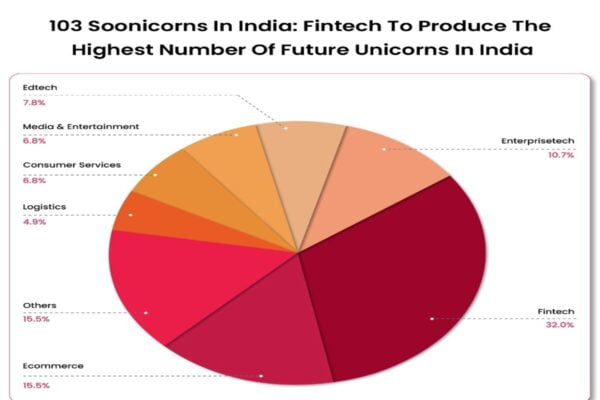
    • Fintech is positioned to produce the most unicorns over the next several years, with 33 soonicorns in the sector.
    • Only e-commerce has raised more money for startups than fintech between 2014 and Q1 2022: $24 billion.
    • Within fintech, lendingtech ($614 billion) will have the largest market opportunity by 2025, followed by insurtech ($339 billion) and payments ($208 billion).

    According to the number of unicorns produced, the fintech industry is one of the largest in India’s startup ecosystem. Fintech is second only to e-commerce in terms of the number of unicorns produced, with 22 of India’s 105 unicorns working in the industry.

    With 33 soonicorns, the fintech industry is predicted to produce the majority of future unicorns in India during the coming few years, according to Inc42’s “The State of Indian Startup Ecosystem Report, 2022.”

    More than 4.2K fintech startups, 647 of which are funded startups, may be found in India’s startup ecosystem. Over $24 billion in funding has been raised for these firms between 2014 and the first half of 2022. Fintech has raised the second most money in this area after e-commerce.

    The first fintech unicorn in India was Paytm, which was valued at $1 billion in 2015. Since then, 21 more unicorns have been added to the fintech ecosystem, with 11 more due in 2021. Four financial unicorns have been identified so far this year, with OneCard becoming the newest in July 2022.

    The achievement is all the more amazing when you consider that India created 44 unicorns in total in 2021. In 2021, one in four unicorns produced was a fintech unicorn, according to this statistic.

    If the trends in India’s finance startup ecosystem are to be believed, this industry will produce more unicorns than any other in terms of quantity.

    unicorns

    Opportunities For Future Fintech Unicorns

    Research estimates that the market opportunity for fintech will be $1.3 Tn by 2025.

    Lendingtech, one of many fintech subsectors, will have the largest market opportunity by 2025 (614 billion dollars), followed by insurtech (339 billion dollars) and payments (208 billion dollars). The demand-supply discrepancy is directly tied to the market opportunity in these three industries.

    Lending is one of the biggest opportunities in fintech, according to Nithin Kamath, founder and CEO of investing tech unicorn Zerodha, who was speaking at Inc42’s Fintech Summit 2022.

    “That has a big potential because most people in the country don’t have enough money. The question of who would insure this risk is secondary, but it has a sizable TAM, according to the CEO of Zerodha.

    His claim is supported by the fact that, according to RBI data, India’s credit card penetration rate is currently approximately 5.55%.

    Due to this, the lending tech industry as a whole is anticipated to expand between 2021 and 2025 at a CAGR of 32%. This might be welcome news for companies like Fi, Uni, Lendingkart, Axio, Fino, and other soon-to-be lending tech unicorns.

    In addition to leading tech, insurtech is another industry in India with low penetration, making it the fastest-growing fintech sector in the nation.

    IRDAI figures show that India’s insurance penetration was 4.2% in FY21. Insurance spending has grown in India as a result of the COVID-19 pandemic, with life insurance premiums anticipated to reach INR 24 Lakh Cr ($317.98 Bn) by FY31.

    Since the launch of UPI in 2016, the payments market has experienced exponential development. The NPCI’s most recent statistics show that UPI transactions surpassed 6 Bn in July 2022.

    Both lending tech and payments firms anticipate experiencing a second wave of growth as a result of the imminent decision to connect credit cards with UPI.

    Challenges The Future Fintech Unicorns Face

    unicorns

    Recent changes to RBI policy on credit cards and digital lending have been proactive in reducing risk for consumers and controlling startups, forcing the fintech industry to rethink its entire set of business models.

    The RBI said on June 20 that credit lines cannot be loaded onto non-bank Prepaid Payment Instruments (PPIs), thus banning credit cards from anybody other than banks and sending India’s credit card startups into a frenzy.

    Businesses like Slice were forced to switch from loading credit lines to a system more akin to buy now pay later (BNPL) players. Even soonicorns in the fintech industry, like Jupiter, had to abandon their prepaid card operations.

    For the past few years, the fintech subsector of cryptocurrency has operated in legal limbo. That hasn’t stopped the government, meanwhile, from enforcing a harsh taxation framework, with a 30% tax on all cryptocurrency gains and a 1% TDS, as well as ongoing discussions about a 28% GST.

    However, the most recent guidelines for digital lending are designed to shield consumers against lending fraud, aggressive recovery tactics, high-interest rates, and credit costs. The standards forbid lenders from automatically raising credit limits without the borrower’s express permission.

    In order to protect the interests of the consumer, the government is attempting to establish a fintech environment. It is past time for fintech companies to reconsider their business plans with the interests of their clients in mind.

    However, 40% of founders were pessimistic about the success of government policies fostering startups and entrepreneurship in the poll that is a part of Inc42’s The State Of Indian Startup Ecosystem Report 2022. Furthermore, according to 51% of founders, sudden changes in policy harm the startup ecosystem.

    What Fintech’s Future Holds

    Fintech startups, however, have not been as profitable as they could have been. Only around a third of India’s unicorn fintech companies are profitable, and some of the biggest names in the fintech industry are still in the red.

    With a profit of INR 1,122.30 Cr. in FY21, Zerodha is one of India’s profitable fintech unicorns. Only Billdesk, MobiKwik, Oxyzo, Chargebee, Razorpay, and groww are other profitable unicorns.

    A lot of financial firms have forecasted that they will break even during the upcoming quarters. For instance, Paytm has targeted September 2023 as its cutoff date for profitability.

    unicorns

    Fintech consolidation is expected to increase in response to a prolonged funding slowdown, nevertheless, if profitability does not increase over the course of the following several quarters.

    Personalization will continue to be a major focus for many financial businesses as technology like data analytics, big data, AI, and machine learning are poised to drive innovation.

    One of the most significant parts of India’s startup ecosystem is fintech, which promotes innovation in fields that are constrained by outdated technology and hindered by a general reluctance to adopt new ones.

    Public Sector Undertakings (PSUs) and huge Indian corporates used to dominate industries like banking, insurance, and investment, but India’s fintech startups are quickly upsetting the status quo and providing clients with more options.

    Edited by Prakriti Arora

  • 5G Auction Is The Biggest Scam In Indian History: 5G Sold For Lesser Than The Amount Of Scam In 2G After. 2G Had 1.76 Lac Crore Scam, Entire 5G Spectrum Sold For Only 1.5 Lac Crore

    5G Auction Is The Biggest Scam In Indian History: 5G Sold For Lesser Than The Amount Of Scam In 2G After. 2G Had 1.76 Lac Crore Scam, Entire 5G Spectrum Sold For Only 1.5 Lac Crore

    5G Scam Is The Biggest In Indian History: 5G Sold For Lesser Than The Construed Loss In 2G, After 12 Years In A Booming Telecom Market, More Acche Din To Come.

    Some of India’s richest tycoons are being drawn into the fight for the fifth-generation airwaves, and billionaires like Mukesh Ambani and Gautam Adani are going to join a host of other parties offering up to $14 billion for frequency rights that might determine who dominates the digital era.

    As Asia’s third-largest economy auctions its airwaves to provide the newest technology to its more than 1.3 billion residents, the competition to deploy fifth-generation (5G) telecoms services is heating up in India.

    India’s digital sector is anticipated to grow when the introduction of fifth-generation technology, which can be up to 10 times quicker than 4G.

    Bidding for 5G is heating up among Indian telecom players with deep pockets.

    Several factors are at play, and a large investment is required to build additional infrastructure so the service can take off.

    According to Deloitte India partner and telecoms sector leader Peeyush Vaish, “We’re now one step closer to getting access to the fifth generation network.” The country’s major telcos take part in the ongoing 5G spectrum auctions. It is anticipated to transform the Indian telecommunications industry dramatically.

    The sale commenced on July 26. The government said on Saturday that there had been bids totalling 149.85 billion Indian rupees ($18.9 billion) for the process.

    Reliance Industries Jio, the telecom business headed by Mukesh Ambani, India’s richest man, is leading the way.

    Competitors Bharti Airtel and Vodafone Idea have also submitted bids, while Adani Enterprises, owned by billionaire Gautam Adani, has also done so.

    The unexpected entry of Adani Data Networks, which has expressed interest in purchasing airwaves for a private network, has sparked the public’s curiosity.

    Second-richest individual in the nation, Mr Adani, is now directly competing with Mr Ambani for the same asset.

    These businesses have “tremendous interest” in the 5G auction due to its role in all business sectors, from agriculture to energy.

    Could this be a Jio moment for the enterprise telecom industry, where a new entrant with deep pockets, competitive advantages, and innovative technology ends up capturing a significant portion of the pie?

    2G ‘scam’ and A Raja

    5G

    During the UPA government, allegations over the allocation of coal blocks and the 2G spectrum significantly influenced Indian politics. The second UPA government suffered greatly as a result of the CAG reports.

    The CAG Vinod Rai estimated a presumptive loss to the exchequer of Rs 1.76 lakh crore as a result of the 2G spectrum being allocated without an auction in November 2010. While the government didn’t technically lose anything, if the 2G spectrum had been put up for sale, the exchequer was expected to gain Rs. 1.76 lakh crore.

    It is interesting to note that CAG estimated the assumed loss in the 2G auction to be between Rs 58,000 crore and Rs 1.76 lakh crore, yet the largest figure was only mentioned in the media and stuck in people’s minds.

    One of the defendants was A Raja, who was the telecom minister at the time. In exchange for bribes to benefit specific telecom businesses, he was accused of changing the first-come, first-served rule by moving the deadline for applications to be given spectrum.

    Raja also served time in jail for committing the crime. But in 2017, A Raja and the other defendants in the case were brought before a special court. The court ruled that the case was without merit and had been fabricated by substantially inflating the truth. The CBI had filed an appeal with the Delhi High Court challenging the ruling, but the high court earlier this year denied the petition.

    A Raja, a former telecom minister, demands an investigation into the $5 billion 5G spectrum auction.

    Former CAG claimed that the 2G auction resulted in a loss of Rs. 1.76 lakh crore in 2010. However, the current 5G bids are lower than that. The former Telecom Minister called this a big scam.

    A total of Rs 1.5 lakh crore worth of bids were submitted for the recently ended 5G auction, with Mukesh Ambani’s Jio winning over half of the airwaves sold with an offer of Rs 88,078 crore.

    Vinod Rai, a former C&AG, damaged India’s reputation in November 2010 by asserting that there was a notional loss of 1.76 lakh crores in the allotment of the 2-G spectrum.

    For the far superior 5-G technology 12 years later, the government could only secure 1.5 lakh crores in the auction.  It seems like the government is concerned about his friends that prompted him to sell the 5G at a lesser amount than 2G.

    The BJP‘s alleged 5G scandal is the biggest scam in Indian history.

    If the 2G spectrum, which is mostly used for voice and text, was worth Rs.1.76 lakh crores, how can the 5G spectrum, which powers applications such as linked automobiles, remote surgery, augmented reality, and meta, be 1.5 lakh crores when it had an auction worth 4.3 lakh crores?

    Because the government fixed the base price of 5G spectrum at Rs 4.3 lakh crores but only received Rs 1.5 crore from the auction, there are claims that there was a scam.

    Similar comparisons have been made to the alleged “2G scam” in 2008, which the Supreme Court determined was not a scam. In that case, the UPA government collected 176,000 lakh crores for the 2G auction in 2008, and in 2022, the BJP government should have collected 400,000 lakh crores for 5G rather than the 150,000 lakh crores it did.

    The public is accusing the government of conducting a massive scam, dubbed “the biggest in Indian history,” in connection with the 5G auction, which is really the largest spectrum auction in India, lasting seven days and netting more than 1.5 lakh crores.

    Following this auction, the Modi government is being accused of major misconduct on social media, with the hashtag #5G Scam Bjp currently trending at the top. Some claim that the auction was fake and that everything was predetermined.

    During the 7-day 5G spectrum auction, which ended on August 1, billionaire industrialist Mukesh Ambani’s company Jio made the highest bid.

     He bought nearly half of the total spectrum by bidding for Rs 88,078 crores. It seems like the government is doing its best to help his friends so they can take over the entire telecom sector.

    The Adani Group purchased a 400 MHz spectrum for Rs 212 crore, according to Telecom Minister Ashwini Vaishnav. Spectrum in many bands, including the 700 MHz band, has been purchased by Jio. The 26 MHz bands of the spectrum have been purchased by Adani Group.

    5G

    Adani does not own any telecom company. Then what is he going to do with the 5g spectrum? Isn’t it because whoever holds the entire telecom sector would get to control the entire people’s choices? Reminding everyone that the #5gScam is the BJP’s gift to the country on Independence Day.

    The BJP’s recent scams include the NSE Scam (worth 5 lakhs crores), the Bitcoin Scam (worth 40000 crores), and the 5G Scam (worth 2.8 lakhs crores), but who is willing to question them?

    In 2010, the BJP alleged that the 2G spectrum was a scam. According to the CAG, the scam resulted in a presumed loss of Rs 1.76 lakh crore. A Delhi court cleared every defendant in 2017. According to the court, the CBI utterly failed to establish the charges.

    The opposition is claiming that the 5G spectrum auction is a con. The government disputed the allegation, which maintains that just a fraction of the spectrum has been sold. The opposition asks how superior technology can be sold for a low amount (Rs 1.50 lakh crore).

    How come 5G, the superior technology being sold for less than the presumptive loss amount you quoted in 2G? Where has the money gone?

     In 2019, when the 5G spectrum sale was planned, it was estimated that exactly for the portion that has been sold, about Rs 6 lakh crore would be raised. India is almost operating as a duopoly in the telecom industry. Where is the blooming telecom industry? Why has it contracted?

    Ex-Telecom Minister Raja on the 5G Spectrum Sale: “Where Has the Money Gone?”

    Raja, a former telecom minister who had accused the recently concluded 5G spectrum auctions of being a “massive scam,” questioned, “Where has the money gone?” in light of the large disparity between auction proceeds (Rs. 1.5 lakh crore) and estimated sales proceeds (Rs 5 lakh crore).

    On Thursday, he told reporters in Chennai that the government had predicted that 5G would bring in up to 5 lakh crore. However, the 5G auction price was merely 1.5 lakh crore.

    “When you search on the internet, you will receive results in 10 seconds when using 2G, 5 seconds when using 4G, and one second when using 5G. Such is the effectiveness of 5G. The 5G auction should have drawn bids worth at least Rs 5 to 6 lakh crore, according to comparisons of the statistics based on this efficiency.

    We don’t know if the planning or estimation was flawed, if they simply plucked these figures from the air, or if the Union government partnered with particular corporate companies to carry out this scam. The former telecom minister had stated that all of this needed to be looked at right now.

    Will Adani’s Entry Into the 5G Spectrum Race Change the Telecom Equation in India?

    5G

    Brokerages claim that the Adani Group’s involvement in the spectrum auction will intensify competitiveness in the enterprise 5G market and the forthcoming auctions.

    BofA Securities stated in a report regarding the Adani Group’s intentions to participate in the 5G auctions, “We consider this news flow negative for incumbent telecoms as it boosts competition in the next auction bidding as well as in the long-term chance to target the enterprise area.”

    According to brokerage firm CLSA, Adani’s involvement will raise questions about spectrum pricing in the 5G auctions.

    Why would Adani bid in an auction versus awaiting a direct spectrum assignment?

    While telcos offer enterprise services that address cybersecurity, big data, and data centres, the consumer mobility market focuses on offering telecom services like broadband, wifi, and mobile recharge.

    The bid will likely assist the Adani Group in capturing India’s rapidly rising data technology industry. The global market for big data technologies is anticipated to reach $116.07 billion by 2027, growing at a CAGR of 14% during the forecast period, according to a report by Fortune Business Insights.

    India’s telecom sector has almost reduced to a duopoly, with Vodafone having to go to the government and do a rescue act. Where is the vibrant telecom sector? Why has the telecom sector shrunk? Where are the 1-13 operators?

    Why did not a single foreign operator think 5g telecom in a moving market, supposedly moving market like India, is a great option to put their money in? The government is not going to answer such questions. But these need to be asked. Surprisingly, 1.5 lakh crore that has been collected by selling 5g airwaves is proof of how the vibrant telecom market has just reduced a duopoly.

  • In 48th GST Council Meeting, FM Nirmala Sitharaman Might Also Apply GST On Funeral, Child Birth, Life & Death, As Well As Air & Water. Indians Will Have To Pay GST Before They Die Or Else ED & CBI Might Raid Cemetery

    In 48th GST Council Meeting, FM Nirmala Sitharaman Might Also Apply GST On Funeral, Child Birth, Life & Death, As Well As Air & Water. Indians Will Have To Pay GST Before They Die Or Else ED & CBI Might Raid Cemetery

    In 48th GST Council Meeting, FM Nirmala Sitharaman Might Also Apply GST On Funeral, Child Birth, Life & Death as well as Air & Water. Indians Will have To Pay GST Before They Die Else ED & CBI Might Raid Cemetery

    India’s federal and state governments reached a historic agreement five years ago. From July 1, 2017, a uniform tax on goods and services, billed by Prime Minister Narendra Modi as “One Nation, One Tax, One Market,” replaced a bewildering assortment of local sales and entrance taxes.

    However, the revolutionary change is being hampered by the countless compromises that were made in order to include more than one billion people who reside in 29 states.

    In its 47th meeting, the GST Council unanimously resolved to raise the rates on key basic necessities. The common people may have to spend more to purchase everyday groceries after the implementation of the GST rate increase on these commodities on Monday, July 18, which would further increase their kitchen budget.

    Following July 18, it is projected that prices for items like curd, lassi, rice, and other products will increase as a result of higher Goods and Service Tax rates.

    A 5 percent Goods and Services Tax (GST) imposed on a number of food goods that are sold in labeled and pre-packaged form has made things worse for the middle-class population at a time when commodity prices are soaring in the market.

    What Will Be the Increase in the GST Rate Mean for Consumers and Retailers?

    Kitchen budgets will be impacted by the GST rate increase beginning on July 18, but retailers may also suffer some negative effects. This will put more strain on the average person, who is already experiencing the consequences of inflationary pressures due to retail inflation in June exceeding the RBI’s 6 percent benchmark by more than 7%.

    Retailers and store owners, on the other hand, will struggle to adjust to the price changes.

    Pre-packaged and labeled pulses and cereals such as rice, wheat, and flour (atta) will now be subject to 5% GST when branded and packaged in a unit container, whilst curd, lassi, and puffed rice will be subject to 5% GST when pre-packaged and labeled.

    In addition, hotel accommodations costing up to Rs 1,000 per day would now be taxed at 12%.

    While growing prices for everyday commodities continue to have an impact on household budgets, the average man appears to have little relief in the near future. Not just food, but also other necessities are becoming more and more out of reach due to the rapidly rising cost of goods.

    The typical Indian household budget has only become worse over time due to low wages and rising costs. After Finance Minister Nirmala Sitharaman’s major decision on the GST hike, citizens will have to pay significantly more for necessities like food while some services would be more expensive starting next week.

    Prices for several essential commodities will rise beginning July 18. You will now have to pay more for basic food products.

    The decision was made during the 47th GST meeting, which FM Nirmala Sitharaman headed over. She stated that beginning on July 18, 2022, some new products and some goods and services will have higher GST rates.

    From July 18, the cost of agricultural products, especially those with pre-packaged labels such cheese, lassi, butter milk, packaged curd, wheat flour, other grains, honey, papad, cereals, meat and fish (except frozen), mudi, and jaggery, is expected to increase.

    These products now have higher taxes. Currently, branded and packaged food items are subject to a 5% GST. Tax-free goods are those that are unpackaged and unmarked.

    GST

    Middle-class families, especially struggling young people living in rented homes, would bear a greater financial burden as a result of this decision made amid record-breaking unemployment. We are hurting them when they most need comfort.

    We are not far away from the situation when out dearest FM Nirmala Sitharaman Might Also Apply GST On Funeral, Child Birth, Life & Death as well as Air & Water. Indians Will have To Pay GST Before They Die Else ED & CBI Might Raid Cemetery.

    Should the government reconsider and repeal the tax? All these decisions are pre-planned about how to snatch away the rights of common people and how to brutalize the common people day and night.

    In July, GST receipts reached 1.49 lakh crore, the second-highest mop-up since the regime’s implementation in 2017 and 28% higher than in July 2021. Given the close link between nominal GDP growth and indirect tax collections, high retail and wholesale prices boosted greater collections.

    While the cost of vegetables and other necessities has already increased as a result of rising gasoline prices, unemployment has caused a decline in family incomes.

    Depriving people of their food is a ‘Acche Din’ for Narendra Modi’s government. Taking away impoverished people’s rice, wheat, milk, curd, and meat is the same as murdering them.

    When it comes to fugitive business criminals like Nirav Modi and Vijay Mallya, the government is “unable” to bring them back to India while they are abroad living luxurious lifestyles, but “is all out to hammer poor people hard” at the same time.”

    Finance Minister Nirmala Sitharaman stated on Tuesday that the Goods and Services Tax (GST) will not increase the burden on families.

    According to Nirmala Sitharaman, there is no GST on hospital ICU beds, crematorium services, funeral, burial, or mortuary services.

    In response to a discussion on price increases, Sitharaman said in a statement to the Rajya Sabha that she was trying to clear misinformation about the imposition of the fee on various goods and services.

    According to her, contrary to what the opposition has stated, there is no GST on crematoriums; rather, there is just a tax on new cremation construction.

    By stating that there is no GST on hospital beds or ICUs, she also aimed to clear up any misunderstanding regarding the GST and hospitals. Only rooms renting for Rs 5,000 per day are subject to the levy, she continues.

    The government’s price and GST decisions affected people from birth to death, and we know you have the mandate, but is this mandate a license to brutalize the people? 

    Additionally, the cost of cooking gas has gone up and is now Rs 1,100. With prices this high, how will the poor survive? It hurts that this government taxes everything, even the bread consumed by patients.

    Do poor people, auto-rickshaw drivers, and labourers now experience “achche din” (good days)?

    People are outraged. The government in a democracy should be aware of the needs of the average citizen. But that is not the case today. People are committing suicide as a result of unemployment and the sharp increase in the price of petrol and vegetables.

    GST

    But regretfully, the tax on necessities has been raised rather than the tax on consumer durables. The tax rate on grains, their products, and curd has been increased to 5%. Products like solar water heaters, leather, and services like hospital rooms above 500 and hotel rooms below 1000 have seen increases from 5 to 12 percent.

    A number of commodities, including LED bulbs, ink, blades, pumps, cycles, and various machinery, have seen their prices increase from 12 to 18 percent. Contract taxes, which were previously 12 percent, are now 18 percent.

    The tax rates have never been increased from 18 percent to 28 percent for luxury products. The government of India aims to erase the 28 percent rate, i.e., further cut the tax on luxury products and raise the burden on needs used by common people. As a result, the intention is extremely clear. Nothing is more backward-thinking than this position.

    The proposal to raise the tax rate on necessities was met with opposition from many states. Kerala’s finance minister had written to the GoM to express his opposition to taxing necessities.

    However, there was no voting. With the exception of the lottery tax rate modification, when Kerala forced a division, this has been the Council’s approach. Therefore, it is inaccurate to assert that the decision received the support of all states.

    And last, now is not the time to raise the food tax rate. Retail inflation is higher than 7%. The overall price index has gone up by 15%. In the month of June, the 24 percent of the index’s weighted foodstuffs saw a growth of 16.9%. Now, the situation will undoubtedly get worse as a result of this 5% tax. Therefore, the rate increases will cause tax leakages, inflationary, and regressive.

    The effects of unemployment and inflation were already having a negative impact on the public. The Modi administration’s policies are all designed to oppress the working and middle classes in order to enrich their friends in the BJP.

    What The Opposition Leaders Said?

    Former Karnataka Chief Minister and current Leader of the Opposition Siddaramaiah took a shot at the Central government for the most recent round of Goods and Services Tax increases on various essential food items, claiming that the government is trying to burden people with more taxes rather than helping them. He referred to the GST as the “Gabbar Singh Tax,” just like many other members of the opposition.

    GST

    The AAP leader charged, referring to Sitharaman’s answer to the issue of rising onion prices in 2019 “She is wonderful. When the price of onions increased, she stated that she does not eat onions.”

    “How will she react to price increases? She will respond that she doesn’t drink milk when you ask about the rise in milk prices. When you ask about the increase in the cost of wheat, dal, and rice, she will respond that she only eats carrots and radish to survive “Singh continued.

    The five economic pillars of savings, investment, production, consumption, and employment, according to Mr. Tewari, have been destroyed as a result of the Union government’s poor policies.

    “During the United Progressive Alliance’s administration, 27 crore people were lifted out of poverty. Then, according to a research released in 2021, as many as 23 crore people have fallen back into poverty,” he added, adding that 77% of the country’s wealth is held by 1% of the population.

    The number of billionaires in India had climbed from 100 to 142 in these years, according to him, and the combined fortune of the 92 richest Indians is equal to that of 55 crore people.

    India’s real economy, which was already in the worst condition in decades, was significantly disrupted by the pandemic, taking hundreds of millions of lives or restricting them. However, it had benefited billionaires like Adani who were unaffected by such circumstances.

    In conclusion, the government’s move to demonetize high-value currency notes on November 8, 2016, caused the economy to deteriorate. Next, the Goods and Services Tax (GST) was implemented, which hurt over 2.3 lakh small businesses. The government has now raised the GST on pencils, sharpeners, paneer, curd, and flour and did not spared no one, not even children.

    The average person suffers the most every time the government enacts a new rule or law. It appears that GST will be charged to regular people for each breath they take.

    There will come a time when FM Nirmala Sitharaman may also apply GST to air and water, as well as to life and death, childbirth, and funerals. Indians Will Have To Pay GST Before They Die Or Else The ED and CBI may raid a cemetery.

  • Over 43K Workers From 342 Tech Firms Fired in US and India till July 2022

    Over 43K Workers From 342 Tech Firms Fired in US and India till July 2022

    Over 43K workers from 342 Tech firms fired in the US and India till July 2022

    One of a company’s most vital parts is its employees. Regardless of the company’s size, it is impossible even to consider operating it without them. Your employees are your company’s main asset. Over 43K workers from 342 Tech firms fired in the US and India till July 2022

    However, at the year-end of 2022, some large, well-known firms will be firing employees. The corporate sector has been shocked by some of these layoffs, some of which are affecting many thousands of people at once.

    Financing for startups has been challenging to come by since the fourth quarter of 2022 due to the tightening of monetary policy by central banks worldwide and a decline in equity markets. Many start-ups had to cut back in order to appease their investors, which resulted in a decrease in the number of employees. In 2022–2023, more startup employees were let go.

    There are many other reasons for the layoffs, including cost-cutting, poor performance, and financial challenges. Even some of the firms received criticism for their drastic move.

    People lost their jobs as a result of the pandemic, and now a series of similar layoffs are causing a stir around the globe. Another significant factor in these layoffs is the global economic climate.

    Since April 1, 43,399 start-up workers have lost their employment globally. Indian start-ups laid off over 13% of these.

    Up until July of this year, more than 32,000 tech workers were laid off in the US, including those at major corporations like Microsoft and Meta (previously Facebook), and the worst is still to come for the industry, which has seen enormous stock auctions.

    According to data gathered by Crunchbase, as of late July, more than 32,000 workers in the US tech sector had been let go as a result of widespread employment layoffs.

    “We have publicly traded corporations and startups situated in the US. The report said we’ve included businesses with headquarters overseas but a substantial team in the US, like Klarna.

    Uber, Netflix, and a few digital currencies and loan platforms are among the companies laid off.

    Only a few tech companies this year—Robinhood, Glossier, and Better—have successfully managed their headcount.

    Recent information received from layoffs suggests. According to FYI, a website that monitors layoffs at startup companies, since April 1 of this year, over 43,000 employees from 342 IT organizations/startups throughout the world have been let go, with more than 13% of them coming from India.

    Tech firm layoffs in India

    Workers


    Since the pandemic began, almost 25,000 startup staff members in India have lost their jobs; this year alone, over 11,500 have been let off.

    Edtech companies like Unacademy (1,150 employees), BYJU’S (550 at Toppr and Whitehat Jr.), and Vedantu (624 employees), as well as the ride-hailing company Ola (almost 500), the medical services startup MFine (600 employees), and the used car company Cars24 (600 employees), among others, dominate the staff layoffs in India.

    Other unicorns and new businesses in India that have cut staff include Meesho, MPL, Trell, and Blinkit (now owned by Zomato).

    Big fires

    Due to key firms like Unacademy, BYJU’S, and Vedantu laying off a sizeable number of employees, the ed-tech sector saw the highest rate of layoffs in the first quarter of the fiscal year. The tracker shows that Unacademy fired 1,150 employees in two waves; Vedantu fired 624, while BYJU-owned Toppr and Whitehat Jr. fired 350 and 300 employees, respectively.

    The healthcare start-up sector experienced the second-highest amount of job losses. 940 workers were laid off in the first quarter of FY23, with 600 of those laid off by Bengaluru-based MFine alone. 600 employees were also let go by the used car website Cars24 in May.

    Take a look at the following firms that have recently laid off employees:

    • Ola:

    The urban mobility company is in the midst of letting off roughly 1,000 staff while also planning to expand the hiring process for its electric mobility division. According to the report, the reorganization process is anticipated to continue for a few more weeks, and the company plans to increase its focus on its electric mobility sector.

    • Byju’s:

    Edtech unicorn start-up, Byju’s, Over 600 people, both permanent and contract, have been let go by Byju’s.

    • Cars24:

    In May, more than 600 employees were let go from the used car marketplace Cars24. This accounted for more than 6% of its roughly 9,000-person staff.

    • Vedantu:

    Vedantu laid off 424 employees, or around 7% of its 5,900-person staff, as a result of the company’s anticipated cash crisis.

    • Microsoft:

    Workers

    Satya Nadella’s Microsoft As part of a “realignment,” Microsoft became the first major IT company to fire workers. The layoffs are apparently affecting about 1% of Microsoft’s 1,80,000 employees across its locations and product divisions. Microsoft’s Office, Teams, and Windows divisions have also slowed their hiring.

    Meta (previously Facebook) has set a hiring freeze for specific positions and issued a “serious times” warning to the staff. According to a Business Standard source, CEO Mark Zuckerberg informed staff that he expects one of the worst economic downturns in recent memory. For the uninitiated, the business had around 77,800 workers as of the end of March.

    • Twitter:

    While Elon Musk-run Tesla has been laying off hundreds of workers, Twitter has reduced the size of its recruiting team by 30%. Along with Salesforce, other well-known major firms like Nvidia, Snap, Uber, Spotify, and Intel have also seen a decline in employment. Leading cloud service provider Oracle has recently considered laying off thousands of staff to save up to $1 billion through cost-cutting measures.

    A return to 2020?

    There have been 23,681 start-up employment losses since the pandemic’s onset. 12,951 individuals could have lost their jobs in 2020 alone. While things significantly improved in 2021, there is no shortage of terrible news in 2022. Are we on the verge of a firing spree a la 2020?

    Director of the technology investment fund Blume Ventures Sajith Pai disagrees.

    We are observing an increased focus on costs and extending the runway at start-ups as the funding environment becomes more conservative. He claims that many of the larger start-ups are contemplating initiatives outside of their main business and are growing wary of team expansion.

    At the moment, it seems that the fundraising scene is also completely hopeless. India’s 292 venture capital deals totalled $7 billion in the first quarter of the current fiscal year, which was the lowest amount since the last quarter of FY21. The data gleaned from the research firm Venture Intelligence supports this.

    Ashish Bhatia, the co-founder of India Accelerator, said, “Sectors that rely largely on external and institutional funding for their operations may be the hardest hit,” and “One may expect more negative news in the coming months.” The overall job market in India is still strong across industries, so things won’t be as awful as they were in 2020, he claims.

    Common Reasons for Layoffs

    In reaction to their issues, several large corporations and organizations will be firing workers in 2022. There are various factors that differ from firm to company. Common causes of layoffs include the following:

    • Companies are unable to adjust to the situations following the lockdown and epidemic.
    • Inflation is now again on the rise.
    • Companies that are having financial problems.
    • The decrease in funding for companies.
    • As a result of Russia’s invasion of Ukraine, several companies have ceased doing business with the country.
    • The incompetence of the employees.
    • Modernization and reorganization of a company.
    • Companies that Must Halt Hiring

    Numerous businesses have halted employment due to the fragile state of the global economy and other factors. These businesses are:

    The hiring freeze at Meta is reportedly ongoing throughout the year. The corporation cites the industry-wide slowdown, the invasion of Ukraine, and changes in private data as the key justifications.

    Wayfair has stopped hiring for 90 days, and the global economic condition is to blame.

    The sole cause of Twitter’s hiring freeze and the firing of many of its top employees is the company’s ownership change—Elon Musk now owns it.

    Companies that may lay off employees

    Nevertheless, a number of companies have refrained from firing their workers. Businesses are highly inclined to take undesirable actions. These firms are:

    Given its big workforce and ongoing efforts to recover from a revenue decline, Walmart faces the same difficulties as Amazon.

    Workers

    Conclusion

    As was already mentioned, several companies are firing their employees.  This can be attributed to a variety of factors, including the state of the economy, pandemics, company downsizing, and even personnel inefficiency. In addition to all of these, fundraising is taking longer than expected, and investors are pressuring management to boost profitability. Given the status of the global economy right now, the worst may yet be ahead.